Introduction to the GRL18P2432 Photoelectric Sensor
The GRL18P2432 stands as a prominent model in the realm of industrial automation, representing a through-beam photoelectric sensor. This sensor operates on a fundamental principle: a separate emitter unit projects a beam of light, typically infrared or laser, towards a dedicated receiver unit. The GRL18P2432 is engineered to detect the interruption of this light beam by an object passing between the two units. Its robust construction, typically featuring an IP67-rated housing, makes it exceptionally suitable for harsh industrial environments where dust, moisture, and mechanical impacts are common. The model designation often implies specific characteristics, such as a sensing distance, which for through-beam types can be substantial, often reaching several meters, providing reliable detection for large-scale applications.
Key Technical Specifications and Operating Principles
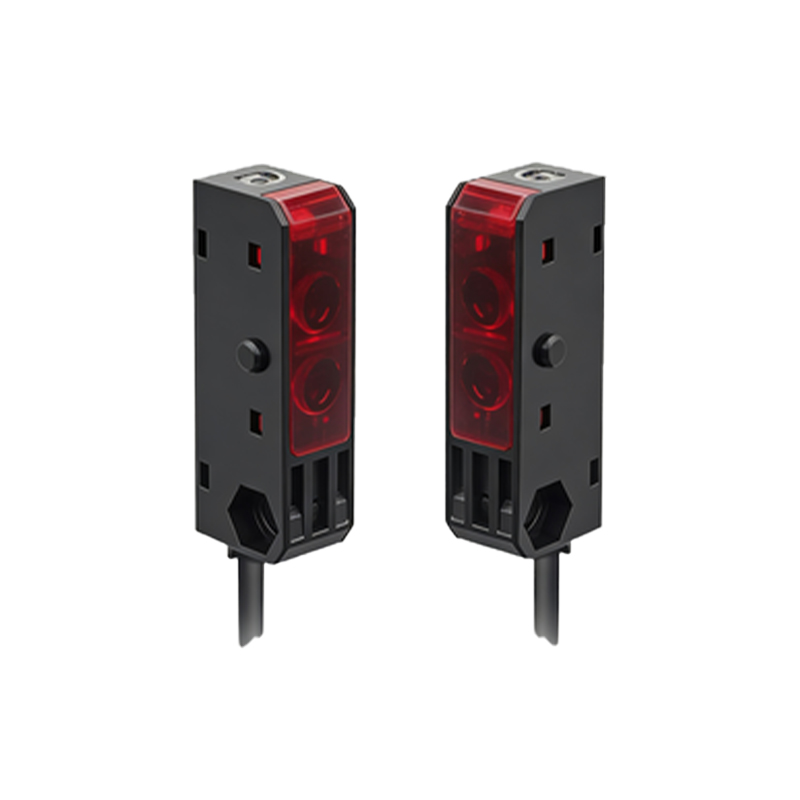
Delving into the technical core, the GRL18P2432 sensor's performance is defined by several critical parameters. The operating voltage range is typically 10-30V DC, ensuring compatibility with standard industrial control systems. Its output configuration is commonly a PNP transistor (sourcing) or NPN (sinking), with a normally open (NO) or normally closed (NC) contact, allowing seamless integration into programmable logic controller (PLC) input modules. The response time is remarkably fast, often in the microsecond range, enabling the detection of high-speed objects on production lines. The light source is a modulated LED, which provides immunity to ambient light interference, a crucial feature for stable operation under varying factory lighting conditions. The precise wavelength and beam pattern are optimized for long-range, accurate detection.
Primary Applications in Industrial Automation
The GRL18P2432 finds extensive use across diverse industrial sectors due to its reliability and long sensing range. In material handling and packaging, it is indispensable for object counting, jam detection on conveyor belts, and verifying the presence of boxes or products. Within the automotive industry, it ensures precise positioning of components on assembly lines and verifies robot end-effector movements. In warehouse automation, these sensors form the backbone of safety light curtains for personnel protection around machinery and are used in automated storage and retrieval systems (AS/RS) for pallet detection. Their ability to function reliably over long distances makes them ideal for monitoring large entry/exit points or detecting oversized objects.
Installation, Alignment, and Commissioning Best Practices
Proper installation is paramount for the optimal performance of the GRL18P2432. The emitter and receiver must be mounted on stable, vibration-free surfaces, precisely aligned on the same optical axis. Mounting brackets are often used to facilitate this alignment. During commissioning, technicians use built-in alignment indicators, such as LED status lights, to confirm a clear beam path. A stable "beam-on" indicator signifies correct alignment. It is critical to ensure the target object is sufficiently opaque to interrupt the beam completely. Environmental factors like heavy dust, steam, or extreme temperatures must be considered, and protective accessories like air purgers may be necessary to keep the lenses clean in challenging conditions.
Advantages Over Other Sensing Technologies
Compared to other proximity sensors like inductive or capacitive types, the GRL18P2432 offers distinct advantages. Its primary benefit is the very long sensing distance, far exceeding that of standard proximity sensors. It can detect any object that interrupts the light beam, regardless of material—metal, plastic, wood, or glass—unlike inductive sensors that only detect metals. It provides highly precise position detection due to the focused beam. However, it requires two separate units and precise alignment, which can be more complex than installing a single self-contained sensor. It is also susceptible to complete failure if the beam path is obstructed by accumulated dirt, whereas a diffuse reflective photoelectric sensor might still function at a reduced range.
Troubleshooting Common Operational Issues
Even with robust design, operational issues can arise. The most frequent problem is loss of signal due to misalignment caused by machine vibration or accidental impact. Realigning the units is the first corrective step. Contamination of the lens surfaces by oil, dust, or debris is another common culprit, requiring regular cleaning as per maintenance schedules. Electrical issues, such as incorrect wiring, unstable power supply, or a faulty load, can also cause malfunctions. Checking the output LED status against the sensor's manual is a key diagnostic step. In systems with multiple sensors, optical crosstalk between adjacent sensors can occur, which is mitigated by using sensors with different modulation frequencies or installing physical barriers.
Integration with Control Systems and Networking
Modern iterations of sensors like the GRL18P2432 are increasingly equipped with advanced features for Industry 4.0 integration. While the basic model provides a simple discrete signal, many now offer IO-Link capability. IO-Link transforms the sensor into an intelligent device, allowing for parameterization (e.g., setting sensitivity, timers) remotely from the PLC, continuous monitoring of operating status, and transmission of diagnostic data like internal temperature or lens contamination levels. This enables predictive maintenance, reducing unplanned downtime. The digital signal remains robust over longer cable runs compared to analog alternatives, ensuring data integrity in large factory setups.
Conclusion and Selection Considerations
The GRL18P2432 photoelectric sensor remains a cornerstone technology for reliable long-range object detection in automation. When selecting a sensor for an application, engineers must evaluate the required sensing distance, the environmental conditions (IP rating, temperature), the size and material of the target object, the required response speed, and the desired level of smart functionality (e.g., IO-Link). For applications demanding unwavering reliability over a long beam path where installing two units is feasible, the through-beam design exemplified by the GRL18P2432 is often the superior and most robust choice, ensuring continuous and accurate operation in demanding industrial landscapes.