Introduction to Proximity Switch Sensors
Proximity switch sensors are fundamental components in modern industrial automation, providing non-contact detection of metallic and, in some cases, non-metallic objects. Their operation hinges on generating an electromagnetic field and detecting changes within it when a target object enters the sensing range. Unlike mechanical limit switches, they have no moving parts that make physical contact, leading to higher reliability, longer operational life, and faster response times. This makes them indispensable in applications ranging from assembly line part counting and machine tool positioning to safety interlocking and robotic guidance systems. The core of their functionality in dynamic applications, particularly those involving back-and-forth motion, is governed by the reciprocating principle.
The Core Concept: Reciprocating Motion Detection
The term "reciprocating principle" in the context of proximity sensors refers to their ability to reliably detect an object that moves repeatedly towards and away from the sensing face along a linear or near-linear path. This is a common motion pattern in machinery such as pneumatic cylinders, hydraulic actuators, indexing tables, and reciprocating pumps. The sensor is typically mounted in a fixed position at one end of the object's travel path. Its primary task is to generate a discrete on/off output signal at a precise point in the object's cycle—for instance, to confirm the cylinder is fully extended, to initiate the next step in a sequence, or to prevent over-travel.
Operating Principles Behind the Detection
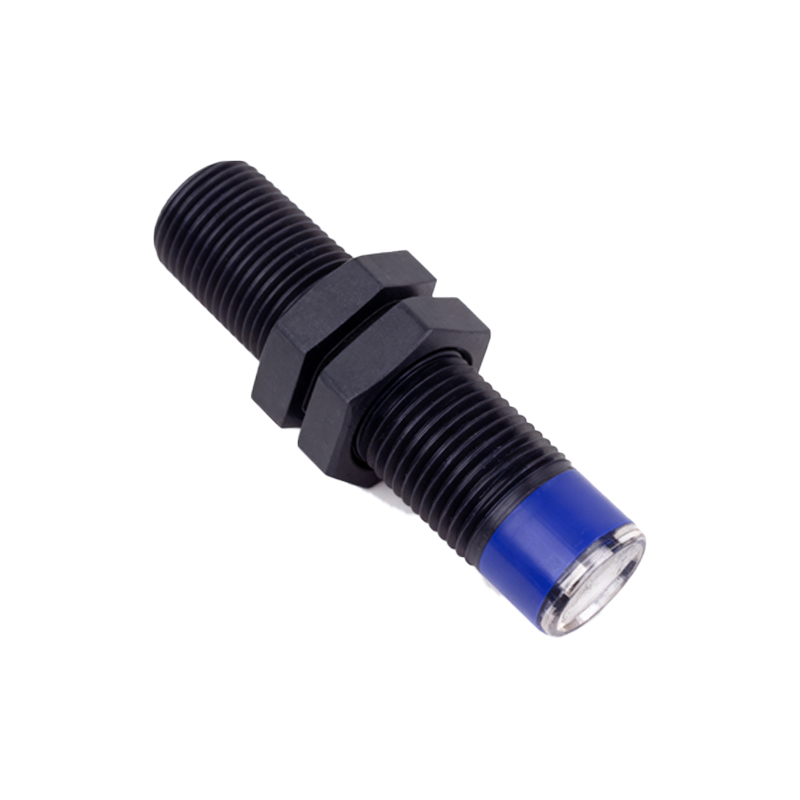
Different types of proximity switches handle this reciprocating detection based on their underlying technology. Inductive proximity sensors are the most common for detecting metallic targets. They contain an oscillator circuit that creates a high-frequency electromagnetic field at the active face. When a ferrous or non-ferrous metal target enters this field, eddy currents are induced in the target, which loads the oscillator and reduces its amplitude. This change is detected by a threshold circuit, which then switches the sensor's solid-state output. For non-metallic targets, capacitive proximity sensors operate on a similar principle but detect changes in capacitance caused by any material that alters the dielectric constant of the field.
Key Parameters for Reliable Reciprocating Operation
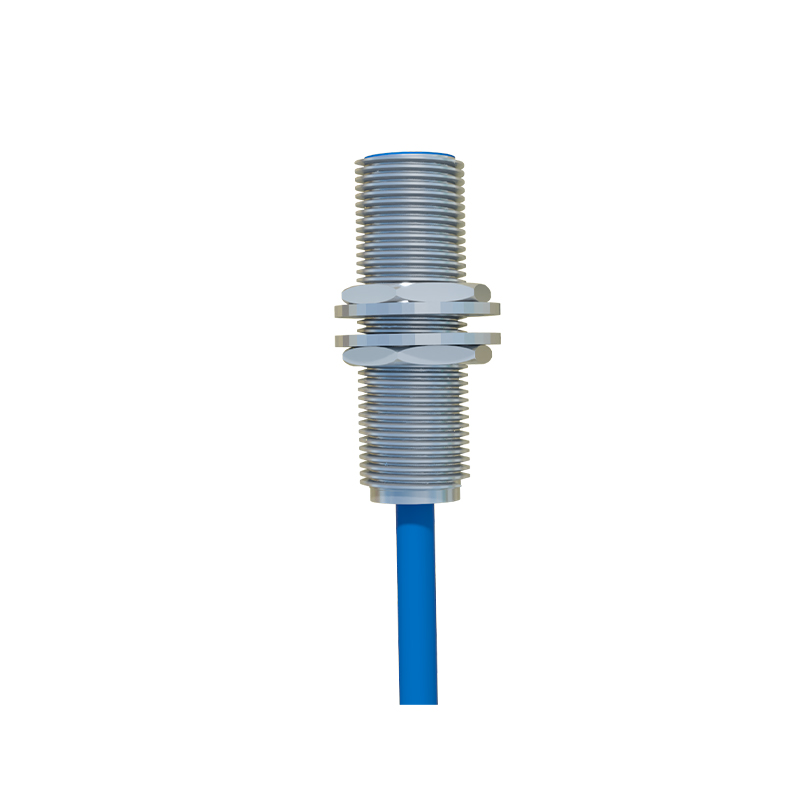
Several critical specifications ensure a proximity sensor performs flawlessly in a reciprocating application. The rated sensing distance (Sn) is the nominal range at which a standard target will trigger the sensor. However, the crucial parameter is the repeat accuracy, which defines how consistently the sensor can detect the target at the same point in each cycle. High repeat accuracy is paramount for precision positioning. Hysteresis is another vital feature; it is the difference between the switch-on point (as the target approaches) and the switch-off point (as it retreats). This built-in differential prevents output chatter when the target is near the sensing threshold, ensuring a clean, single switching event per pass.
Installation and Environmental Considerations
Proper installation is key to leveraging the reciprocating principle effectively. Sensors must be mounted securely to avoid vibration-induced misalignment. The approach direction of the target should be head-on to the sensing face for optimal performance. Factors like target material, size, and shape (which should ideally be a square of side length equal to or greater than the sensor's face diameter) directly affect the actual sensing distance. In harsh industrial environments, selecting sensors with appropriate ingress protection (IP) ratings for dust and water resistance, and ensuring they are shielded or non-shielded correctly to prevent mutual interference when mounted side-by-side, is essential for long-term reliability.
Application Examples in Automated Systems
A classic example is in a pneumatic cylinder with a built-in reed switch. Here, a permanent magnet is mounted on the piston. As the cylinder reciprocates, a tubular inductive proximity sensor mounted externally on the cylinder body detects the magnet at the end-of-stroke positions, sending signals to the programmable logic controller (PLC). In machining centers, inductive sensors monitor the reciprocating movement of tool changers or pallet shuttles, ensuring they are in the correct "home" or "engaged" position before initiating a high-speed operation, thus preventing catastrophic collisions.
Advantages Over Mechanical Alternatives
Utilizing proximity sensors for reciprocating motion detection offers significant advantages. Their non-contact nature eliminates mechanical wear, leading to minimal maintenance. They can operate at very high switching frequencies, suitable for rapid-cycle machinery. Their solid-state outputs integrate seamlessly with modern digital control systems. Furthermore, their ability to function without applying force to the target makes them ideal for detecting fragile objects or precise mechanisms where even slight contact could cause misalignment or damage.
Troubleshooting Common Issues
Common failures in reciprocating applications often stem from incorrect installation or environmental factors. If a sensor