Introduction to Reflective Photoelectric Sensing
Reflective photoelectric sensors are a cornerstone of modern industrial automation, offering non-contact detection of objects by utilizing a light emitter and a receiver housed within a single unit. Unlike through-beam sensors that require separate components, reflective types bounce a light beam off a target. High-precision variants take this fundamental principle to an advanced level, engineered for exceptional accuracy, repeatability, and stability in detecting minute objects, precise positions, or subtle changes in surface characteristics. These sensors are indispensable in applications where reliability and exactitude are paramount, from semiconductor manufacturing to intricate assembly lines.
Core Operating Principle
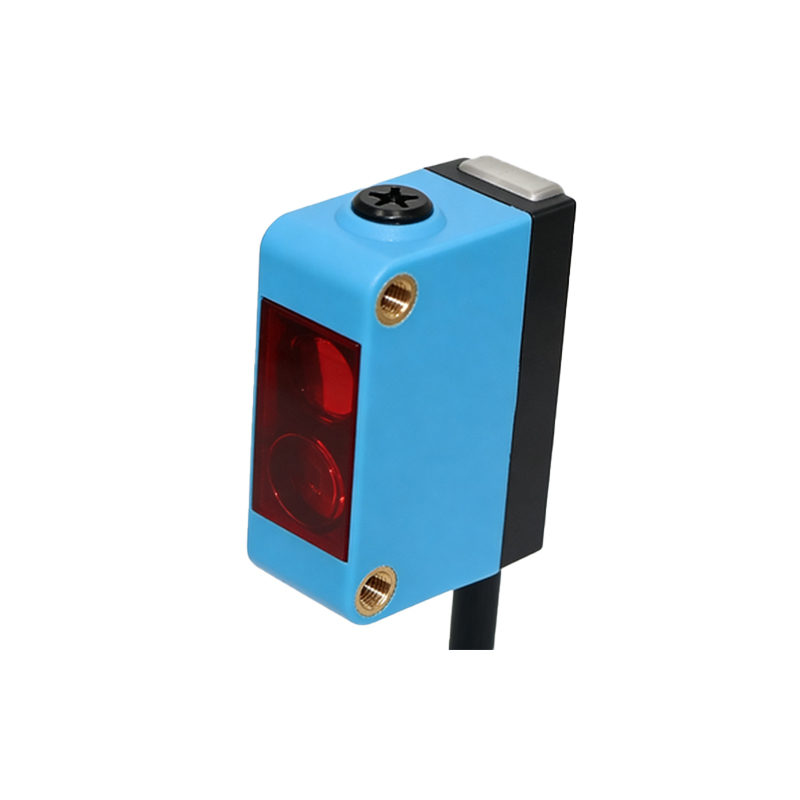
The operation hinges on the modulated light principle. The sensor's internal emitter, typically a focused LED or laser diode, projects a beam of light toward a target. The light reflects off the object's surface and returns to the integrated receiver. The sensor's electronics then evaluate the intensity of the received light. A high-precision sensor distinguishes itself through sophisticated signal processing. It often employs background suppression or diffuse reflection with precise optical alignment. Background suppression technology allows the sensor to ignore reflections from surfaces beyond a programmed sensing distance, focusing only on the target. This is achieved through triangulation or specialized receiver arrays, enabling detection with sub-millimeter accuracy regardless of the target's color or reflectivity.
Key Performance Characteristics
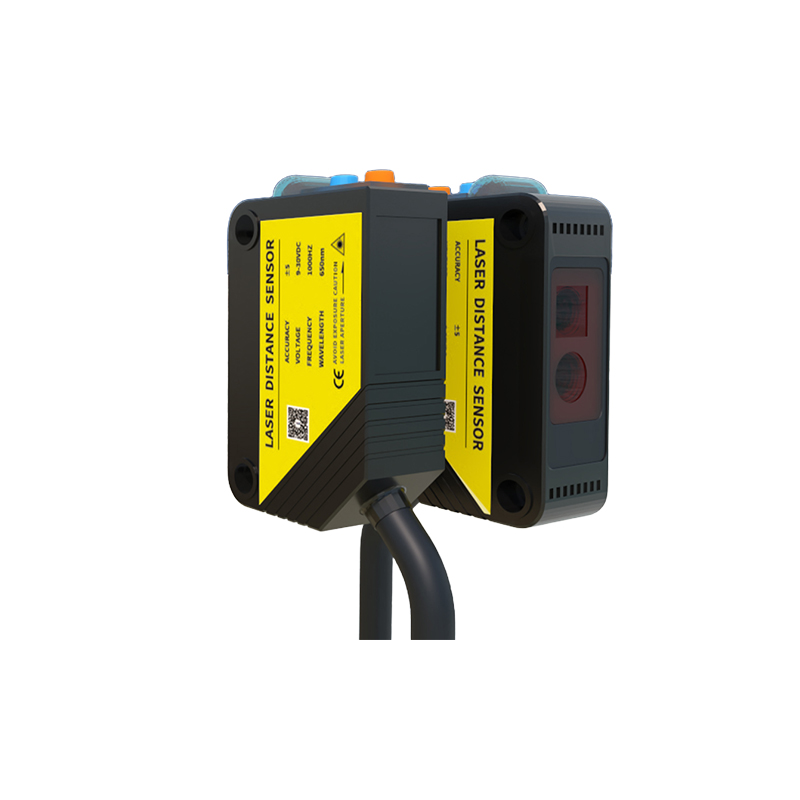
Several parameters define the high-precision nature of these sensors. Sensing distance repeatability, often specified in micrometers, indicates how consistently the sensor can detect an object at the same point. Spot size is critical; a smaller, sharply focused light spot allows for detecting very small features or edges. Response time, measured in microseconds, determines how fast the sensor can react to a passing object. High-precision models also exhibit exceptional stability against environmental interference such as ambient light, electrical noise, and temperature fluctuations. Many incorporate teach-in functions for easy setup and automatic compensation for gradual lens contamination or aging of the light source.
Primary Industrial Applications
The deployment of high-precision reflective sensors spans numerous sectors. In electronics manufacturing, they verify the presence of tiny surface-mount components on PCBs, inspect solder paste height, and detect wafer notches. Packaging machinery relies on them for precise label registration, cap placement verification, and counting of small pills or parts. Robotics use them for accurate edge guiding and precise positioning of end-effectors. In automotive assembly, they ensure correct gap dimensions between panels or detect the orientation of intricate parts. Their ability to work with challenging surfaces, including shiny metals or dark materials, makes them versatile problem-solvers.
Laser vs. LED Light Sources
The choice of light source is pivotal. Red LED sensors are common, cost-effective, and suitable for many general precision tasks. However, for the highest precision, laser-based sensors are preferred. Laser diodes produce an extremely small, intense, and collimated spot, enabling detection of microscopic objects and offering superior accuracy over longer distances. They provide a visible red dot for easy alignment. Newer models may use blue lasers, which offer better performance on organic materials or red surfaces, or infrared LEDs for covert operation. The selection depends on the required spot size, sensing distance, target material, and environmental conditions.
Critical Selection Criteria
Choosing the right high-precision sensor requires a detailed analysis of the application. First, define the object's size, material, color, and surface finish. Determine the required sensing distance and the necessary accuracy (repeatability). Consider the operating environment: will there be dust, moisture, or significant temperature swings? This dictates the required ingress protection (IP) rating. Electrical output type (PNP/NPN, analog, IO-Link) must match the control system. Mounting space constraints and the need for adjustable sensitivity or teach-in functionality are also practical considerations. Consulting with sensor specialists during the selection phase can prevent costly application failures.
Installation and Alignment Best Practices
Proper installation is crucial to achieving specified performance. Ensure the sensor is mounted securely to prevent vibration-induced errors. Alignment is critical; the light beam must be perpendicular to the target surface for optimal signal return. For background suppression sensors, the taught sensing window must be set precisely. Avoid mounting near strong ambient light sources or reflective surfaces that could cause false triggers. Use mounting brackets that allow for fine adjustments. Regularly clean the lens cover to prevent dust or oil buildup from attenuating the light signal. Many modern sensors feature alignment indicators or built-in amplifiers with signal strength displays to aid setup.
Future Trends and Innovations
The evolution of high-precision reflective sensors continues. Integration with Industrial Internet of Things (IIoT) is a major trend, with sensors featuring IO-Link communication providing detailed diagnostic data, parameter setting, and process values to higher-level systems. Miniaturization allows for embedding sensors in increasingly tight spaces. Enhanced algorithms provide better compensation for dirty environments and more intelligent object discrimination. Furthermore, the development of multi-pixel and CMOS-based receiver technology enables not just detection but also simple contour recognition or distance measurement with a single, compact device, blurring the lines between sensors and vision systems.