Understanding the Working Principle of Photoelectric Sensors
Photoelectric sensors operate by emitting a light beam, typically infrared or visible, and detecting changes in the received light intensity to sense the presence or absence of an object. The core components include a transmitter (light source), a receiver (photodetector), and signal processing circuitry. When an object interrupts or reflects the light beam, the receiver's output state changes, generating a digital signal—either high level (logic 1) or low level (logic 0). This binary output is crucial for integration with control systems like PLCs or microcontrollers, enabling automated detection in industrial applications such as conveyor belts, packaging, and safety systems. The effectiveness of the high-level signal depends on the sensor's design and the connected system's input requirements, ensuring reliable object detection without false triggers.
Defining High-Level and Low-Level Output Signals
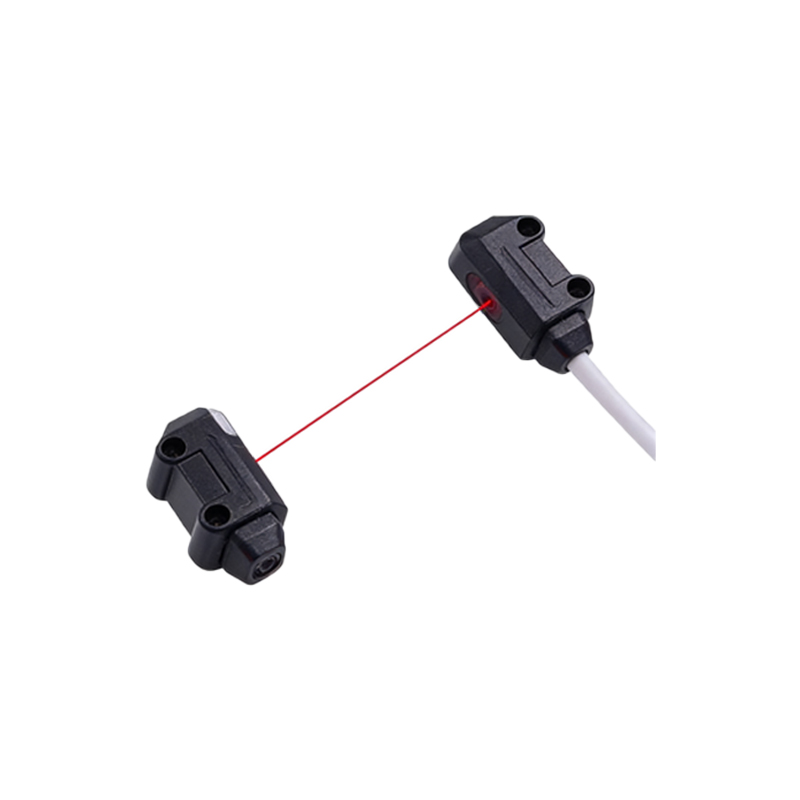
In digital electronics, a high-level signal represents a voltage close to the supply voltage (e.g., 5V or 24V in industrial settings), indicating an active or "ON" state, while a low-level signal is near 0V, indicating an inactive or "OFF" state. For photoelectric sensors, the output configuration—whether it is high-level effective or low-level effective—determines how the signal is interpreted by the control device. A high-level effective sensor outputs a high voltage when an object is detected, meaning the detection event corresponds to a logic 1. Conversely, a low-level effective sensor outputs a low voltage upon detection, aligning with logic 0. This distinction is vital for proper wiring and programming, as mismatched levels can lead to system malfunctions or safety hazards in automated processes.
Factors Influencing High-Level Effectiveness in Photoelectric Sensors
The effectiveness of a high-level output in photoelectric sensors is influenced by several technical factors. First, the sensor's internal circuitry, including the type of transistor used (e.g., NPN or PNP), dictates whether it sources or sinks current, affecting the output state. For instance, PNP sensors typically provide high-level outputs when active, suitable for positive logic systems. Second, environmental conditions like ambient light, dust, or moisture can interfere with signal integrity, potentially causing false high-level signals. Additionally, the load resistance and power supply stability play roles; insufficient voltage or excessive current draw may reduce the high-level voltage, making it ineffective for triggering downstream devices. Proper shielding, calibration, and adherence to manufacturer specifications ensure reliable high-level operation in harsh industrial environments.
Applications and Benefits of High-Level Effective Photoelectric Sensors
High-level effective photoelectric sensors are widely used in industries where positive logic control is standard, such as automotive manufacturing, food processing, and robotics. Their primary benefit lies in compatibility with many PLCs and microcontrollers that expect a high voltage input to register an active event. This simplifies circuit design, as the sensor directly interfaces with high-impedance inputs without additional pull-up resistors. In safety-critical applications, like machine guarding or emergency stops, a high-level effective signal can provide fail-safe detection—if the sensor fails or wiring breaks, the output defaults to low level, signaling a fault. Moreover, these sensors offer fast response times and high accuracy, enhancing efficiency in high-speed production lines where precise object detection is essential for quality control.
Common Issues and Troubleshooting Tips
Despite their reliability, high-level effective photoelectric sensors may encounter issues that affect performance. One common problem is signal dropout, where the high-level output becomes unstable due to power fluctuations or electromagnetic interference. To mitigate this, use shielded cables and stable power supplies with proper grounding. Another issue is incorrect object detection, often caused by misalignment or dirty lenses; regular maintenance and alignment checks can prevent this. If the sensor fails to output a high level when expected, verify the wiring connections—ensure the load is correctly connected between the output and ground for PNP sensors. Additionally, consult the sensor's datasheet to confirm the output type and voltage thresholds, as using an incompatible load resistance can degrade the high-level signal. Testing with a multimeter or oscilloscope helps diagnose signal integrity problems quickly.
Conclusion: Optimizing Photoelectric Sensor Performance
In summary, whether a photoelectric sensor is high-level effective depends on its design and application requirements. High-level outputs are effective when properly matched with control systems that utilize positive logic, offering advantages in simplicity and safety. To maximize performance, engineers should consider factors like sensor type, environmental conditions, and electrical compatibility during selection and installation. Regular calibration and troubleshooting ensure long-term reliability in demanding industrial settings. By understanding these principles, professionals can leverage photoelectric sensors to enhance automation, improve productivity, and maintain robust operational standards across various sectors.