Introduction to Proximity Sensor P-015M05N0
The P-015M05N0 is a high-performance inductive proximity sensor designed for reliable non-contact detection of metallic objects in demanding industrial environments. Engineered with precision, this sensor offers a compact form factor, robust construction, and consistent switching performance. Its core function is to detect the presence or absence of a target without physical contact, thereby eliminating mechanical wear and enabling high-speed operation. The model designation typically indicates key specifications: a sensing distance of 1.5mm, an M5 threaded cylindrical housing, and a normally open (NO) output configuration. This makes it an ideal component for automation systems where space is constrained and reliable detection is critical.
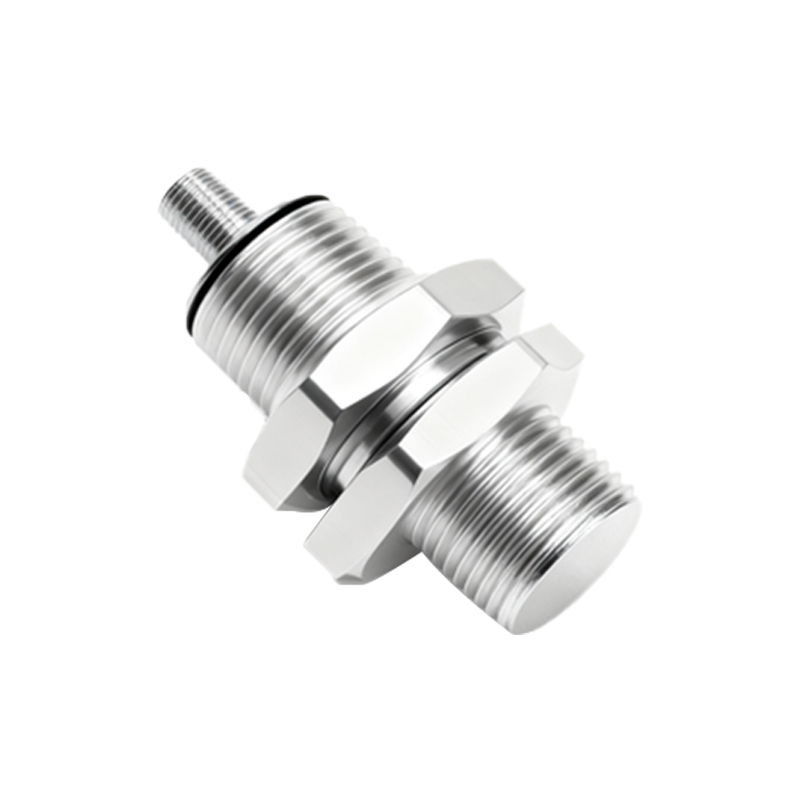
Key Technical Specifications and Operating Principles
Operating on the principle of electromagnetic induction, the P-015M05N0 generates an oscillating electromagnetic field from its sensing face. When a ferrous or non-ferrous metal target enters this field, eddy currents are induced in the target, causing a change in the oscillation amplitude within the sensor's coil. This change is detected by the internal circuitry, which triggers a solid-state switch. Key electrical specifications often include a operating voltage range of 10-30V DC, ensuring compatibility with standard industrial control voltages. The output is typically a 3-wire configuration (brown for +V, blue for 0V, and black for the switched output signal) with a PNP (sourcing) transistor, providing a clear digital signal to a PLC or controller. Its switching frequency can reach several hundred Hertz, suitable for high-cycle applications.
Mechanical Design and Environmental Robustness
The mechanical design of the P-015M05N0 is a significant contributor to its reliability. The housing is usually constructed from nickel-plated brass or stainless steel (M5 size), providing excellent resistance to corrosion, oils, and coolants commonly found in machining and assembly settings. The sensing face is made of a durable polymer that protects the internal coil. Many variants feature IP67 or higher ingress protection ratings, meaning they are dust-tight and can withstand temporary immersion in water. This ruggedness allows for deployment in harsh conditions, such as on machine tools, robotic arms, or conveyor systems, where exposure to vibration, shock, and contaminants is a constant challenge.
Installation Considerations and Wiring Guidelines
Proper installation is crucial for optimal performance. The sensor should be mounted securely using its M5 thread, ensuring the sensing face is parallel to the expected path of the target object. It is critical to maintain the specified nominal sensing distance (Sn) of 1.5mm, accounting for factors like target material, size, and temperature. For reliable operation, the actual operating distance should be set to approximately 70-80% of the nominal value to accommodate system tolerances. Wiring must adhere to the manufacturer's color code: connect brown to positive DC supply, blue to negative/ground, and black to the load (e.g., PLC input). The load should be connected between the black wire and the negative supply. Shielding the cable may be necessary in electrically noisy environments to prevent false triggering.
Typical Industrial Applications and Use Cases
The compact size and precision of the P-015M05N0 make it suitable for a vast array of automation tasks. Common applications include position verification of small parts in assembly machines, end-of-stroke detection on pneumatic cylinders with magnetic pistons, and counting metallic items on high-speed packaging lines. It is extensively used in semiconductor manufacturing equipment for wafer handling, in CNC lathes for tool presence detection, and in robotic grippers to confirm part pickup. Its fast response time enables precise control in sorting and indexing operations. The sensor's reliability is key in safety-interlock systems, where it might confirm a guard door is closed before machine activation.
Advantages Over Alternative Sensing Technologies
Compared to mechanical limit switches or photoelectric sensors, the P-015M05N0 offers distinct advantages. The absence of moving parts grants it a virtually infinite mechanical lifespan, limited only by its electronic components. It is immune to ambient light interference, a common issue with photoelectric sensors, and performs consistently even in the presence of dust, dirt, or opaque fluids that would block a light beam. While its detection is limited to metals, this specificity can be an advantage in mixed-material environments. Its all-metal housing also provides superior resistance to physical damage compared to plastic-bodied optical sensors. For detecting small metallic objects at very short ranges, it is often the most cost-effective and reliable solution.
Troubleshooting and Maintenance Best Practices
Despite their robustness, proper maintenance ensures long-term service. Common issues