Understanding the Core Principle
Long-range retroreflective photoelectric sensors are a specialized category of non-contact detection devices widely used in industrial automation. Unlike diffuse or through-beam models, this sensor type houses both the light emitter (typically an LED or laser diode) and the receiver in a single housing. It operates by projecting a modulated light beam towards a retroreflective target, such as a prismatic reflector or specialized tape. This target is designed to reflect the light directly back along its original path to the receiver, regardless of the angle of incidence. The sensor detects an object when it interrupts this established light path between the sensor and the reflector. This design allows for significantly longer sensing distances compared to diffuse sensors, while offering easier installation and alignment than through-beam systems which require separate emitter and receiver units.
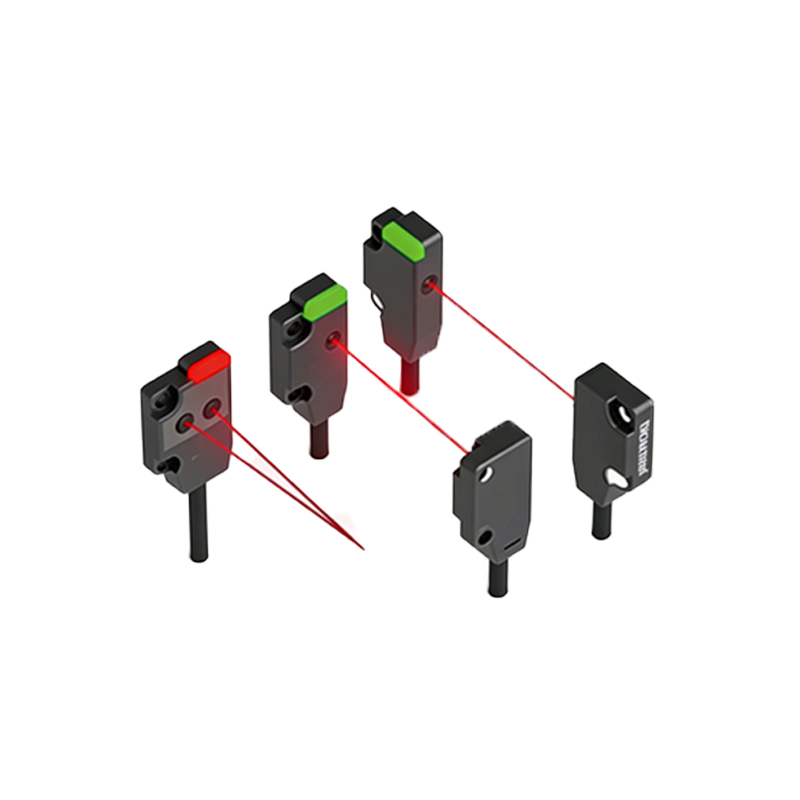
Key Components and Technological Features
The performance of a long-range retroreflective sensor hinges on several advanced components. First, the light source is critical; infrared LEDs are common for general purposes, while visible red LEDs aid in alignment. For extreme ranges or precise detection, laser diodes are employed, offering a highly collimated beam. The receiver incorporates a sophisticated lens and a phototransistor or photodiode tuned to the emitter's wavelength. Modern sensors utilize modulated (pulsed) light and synchronous detection circuits. This technology allows the sensor to ignore ambient light (like sunlight or factory lighting) and only respond to its own specific pulsed signal, ensuring high stability and reliability in challenging environments. Polarization filters are another key feature in many models. These filters prevent the sensor from being "fooled" by shiny objects like polished metal or glass, which could otherwise reflect sufficient light to be mistaken for the true reflector.
Typical Applications in Industrial Settings
The robust and long-distance capability of these sensors makes them indispensable across various sectors. In material handling and logistics, they are deployed for pallet detection on high-bay racking, presence checking of large containers on conveyor lines, and vehicle detection at warehouse doorways. In the automotive industry, they monitor the passage of vehicle bodies through paint shops and assembly lines over distances of several meters. Packaging machinery utilizes them to detect the presence of products on fast-moving lines or to control the web break of materials. Their ability to function reliably in dusty or mildly foggy conditions (with appropriate excess gain) also makes them suitable for outdoor applications like parking lot vehicle counters, gate control, and long-range object detection in storage yards.
Advantages Over Other Sensor Types
Choosing a retroreflective model offers distinct benefits. The single-unit design simplifies installation, reduces wiring costs, and minimizes alignment headaches compared to through-beam sensors. It provides a much longer operating range than standard diffuse sensors, which rely on light reflected directly from the target itself. The use of a dedicated reflector ensures a strong, consistent return signal, leading to high signal stability and a generous operating margin. This makes the sensing system less susceptible to variations in target color, texture, or reflectivity. Furthermore, the availability of polarized models solves a common problem in factories, allowing for reliable detection even when glossy objects pass between the sensor and its reflector.
Critical Factors for Selection and Installation
Selecting the right sensor requires careful consideration of several parameters. The stated sensing range is paramount; always choose a sensor with a range exceeding your actual required distance to ensure an adequate operating margin. The size and quality of the retroreflector must match the sensor's specifications—larger reflectors generally support longer ranges. Environmental conditions are crucial: consider the IP rating for dust and water ingress, the operating temperature range, and the potential for airborne contaminants like dust or steam that could attenuate the light beam. For detection of small objects, the beam spot size is important; a laser sensor provides a very small spot for precision. During installation, precise alignment is necessary for maximum signal strength. Many sensors feature a built-in alignment aid, such as a visible beam or a signal strength LED. The reflector should be mounted securely to prevent vibration from misaligning the system.
Maintenance and Troubleshooting Tips
To ensure long-term reliability, periodic maintenance is recommended. The most common issue is the accumulation of dirt, dust, or grime on the sensor's lens or the surface of the reflector. This contamination can drastically reduce the effective sensing range by attenuating the light beam. Regularly clean both the sensor face and the reflector with a soft, lint-free cloth. Avoid using abrasive cleaners. During troubleshooting, if a sensor fails to detect, first verify the power supply. Then, check the alignment and cleanliness of the sensor and reflector. Use the sensor's diagnostic LED (if available) to monitor the received light intensity. Ensure that no new obstructions or highly reflective surfaces have entered the detection path. Understanding the sensor's excess gain specification can help predict its performance in dirty environments.