Introduction to Photoelectric Sensor Technology
Photoelectric sensors have become indispensable components in modern industrial automation, serving as the eyes of countless systems. These devices operate by emitting a light beam, typically from an LED or laser diode, and detecting changes in the received light intensity caused by the presence, absence, or characteristics of a target object. Their applications span from simple object detection on conveyor belts to complex positioning tasks in robotics and precise measurement in quality control. The core principle relies on the photoelectric effect, where light energy is converted into an electrical signal. Despite their widespread adoption and proven reliability, the evolution of industrial demands towards higher speed, precision, and intelligence exposes several inherent and emerging bottlenecks that constrain their performance and limit their application scope. This paper provides a technical analysis of these critical bottlenecks.
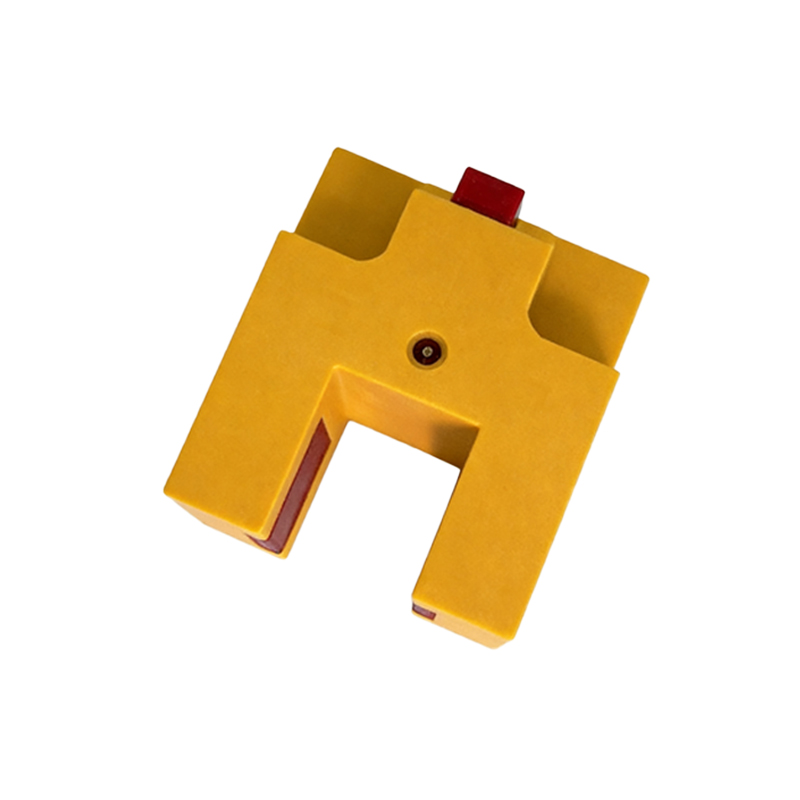
Bottleneck 1: Environmental Interference and Signal Integrity
A primary and persistent challenge for photoelectric sensors is their susceptibility to environmental interference. Ambient light, particularly from industrial lighting like LEDs or fluorescent lamps, can saturate the receiver, causing false triggers or missed detections. Dust, smoke, fog, and steam can scatter or absorb the emitted light beam, severely attenuating the signal and reducing operational range and reliability. Furthermore, vibrations in harsh industrial settings can misalign the precise optical path between the emitter and receiver, especially in through-beam sensor configurations. While techniques like modulated light (using a specific frequency) and synchronous detection help filter out constant ambient light, they are less effective against dynamic interference or physical obstructions. This environmental vulnerability remains a significant barrier to deployment in unconditioned or extreme industrial environments.
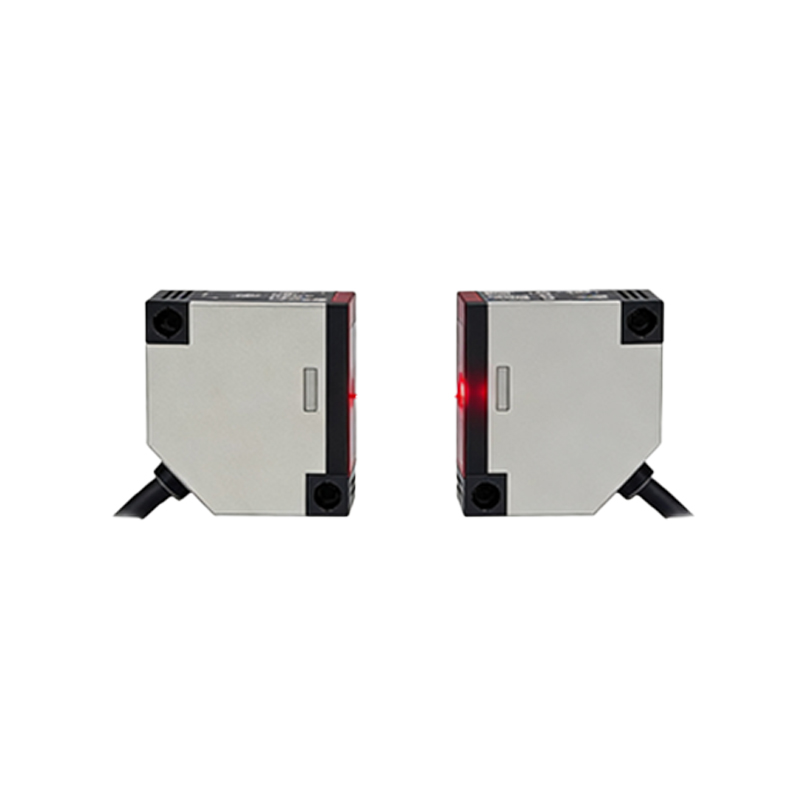
Bottleneck 2: Limited Resolution and Sensing Distance Trade-offs
The performance of photoelectric sensors is fundamentally governed by a trade-off between sensing distance, spot size (resolution), and response time. For diffuse-reflective sensors, the detection range is relatively short, and the effective spot size increases with distance, reducing the ability to detect small objects precisely. Through-beam and retro-reflective sensors offer longer ranges but require precise alignment and are bulkier. The diffraction limit of light itself constrains the minimum achievable spot size, limiting the resolution for detecting very fine features or precise edges. High-speed applications demand fast response times, which often conflicts with the need for strong signal averaging to combat noise, especially at longer distances. This intrinsic trade-off triangle limits their use in applications requiring simultaneous long-range, high-speed, and high-precision detection.
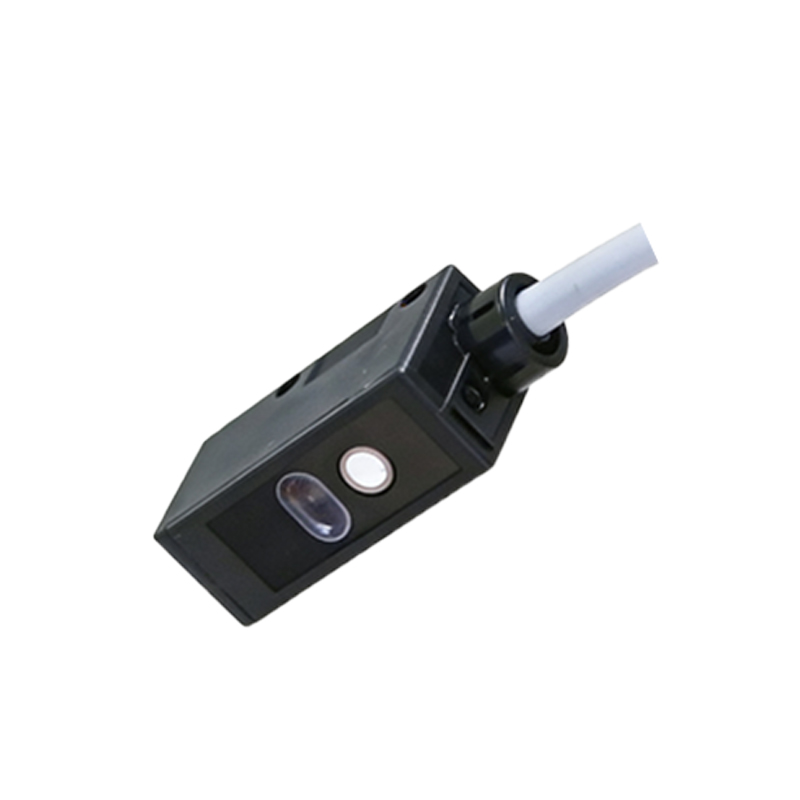
Bottleneck 3: Material and Surface Dependency
The performance of standard photoelectric sensors is highly dependent on the target object's surface properties. Diffuse sensors struggle with low-reflectivity materials (e.g., matte black surfaces) or transparent objects (e.g., glass, clear plastic), as they reflect minimal light back to the receiver. Specular or shiny surfaces can reflect the beam away from the receiver, causing detection failure. While polarized filters can help with glossy surfaces, and specialized sensors exist for clear object detection, these are often application-specific solutions that add cost and complexity. This material dependency reduces the generalizability and plug-and-play capability of photoelectric sensors, often necessitating custom tuning or sensor selection for different materials on the same line.
Bottleneck 4: Integration Complexity with Smart Systems
The modern industrial landscape is driven by Industry 4.0 and the Industrial Internet of Things (IIoT), which demand not just raw data but contextual, intelligent information. Traditional photoelectric sensors primarily provide a simple digital on/off switch or an analog distance value. Integrating them into complex smart systems poses challenges. They often lack built-in advanced diagnostics, predictive maintenance capabilities, or easy networking protocols beyond basic IO-Link. Extracting richer data—such as trend analysis of signal strength for preventive maintenance or integrating proximity data with other machine parameters—requires additional gateway devices, programming, and system integration effort. This creates a bottleneck in the seamless flow of information from the sensor level to higher-level control and analytics platforms.
Bottleneck 5: Power Consumption and Physical Size Constraints
As applications move towards mobile robotics, portable devices, and densely packed machinery, the physical size and power consumption of sensors become critical. Traditional photoelectric sensors with robust housings and powerful emitters for long-range can be too large and energy-intensive for these applications. Miniaturization efforts often come at the cost of reduced sensing range, lower light output, or increased vulnerability to environmental factors. Developing sensors that are simultaneously compact, low-power, and high-performance remains a significant engineering challenge, limiting their adoption in space-constrained and battery-operated systems.
Future Directions and Mitigation Strategies
Addressing these bottlenecks requires multi-faceted advancements. Sensor fusion, combining photoelectric sensing with other technologies like time-of-flight (ToF), vision, or ultrasonic sensing, can overcome individual limitations. Advanced signal processing using embedded AI chips can enable sensors to learn and adapt to specific environmental noise patterns or material properties. The development of new light sources, such as VCSELs (Vertical-Cavity Surface-Emitting Lasers), offers better beam quality and efficiency. Furthermore, the standardization and wider adoption of smart sensor interfaces like IO-Link will simplify integration and data accessibility. Research into novel materials and optical designs may also yield sensors less susceptible to environmental contaminants. The future lies in creating more robust, intelligent, and integrated photoelectric sensing solutions that transcend current limitations.