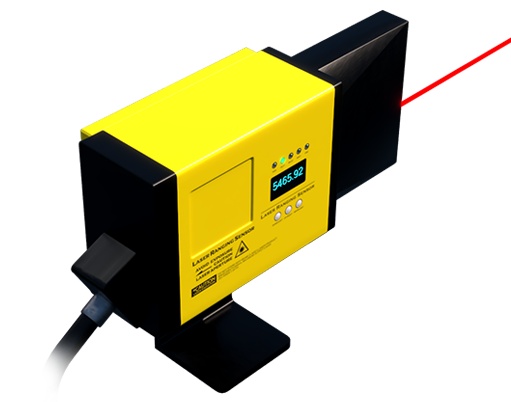
Laser sensors represent a critical component in modern automation, robotics, and measurement systems. These devices operate by emitting a focused beam of light and analyzing the reflection to determine distance, presence, or characteristics of an object. The core principle involves measuring the time-of-flight of the laser pulse or detecting changes in the beam's properties. This technology offers unparalleled precision, speed, and reliability compared to many other sensing methods, enabling applications from factory floor collision avoidance to sophisticated 3D scanning.
Within this ecosystem, semiconductor companies provide the essential integrated circuits (ICs) that bring these sensors to life. Freescale Semiconductor, now a part of NXP Semiconductors following a 2015 merger, was a pioneering force in the embedded processing and sensor market. The company's legacy in this field remains highly relevant. Freescale developed a broad portfolio of microcontrollers (MCUs), microprocessors (MPUs), and sensor solutions that were, and through NXP continue to be, fundamental building blocks for laser sensor systems.
A laser sensor is rarely just a laser diode. It is a complex system requiring precise control, signal processing, data interpretation, and communication. This is where Freescale's components excelled. For instance, designing a time-of-flight (ToF) laser distance sensor requires a high-performance microcontroller to generate the precise pulse for the laser emitter, accurately time the returning signal from the photodetector, and calculate the distance. Freescale's ARM Cortex-M based Kinetis MCUs or its high-performance i.MX application processors provided the necessary computational muscle, real-time control, and low-power operation for such tasks.

Furthermore, laser sensors often work in conjunction with other sensing modalities like inertial measurement units (IMUs) for stabilization or environmental sensors for condition compensation. Freescale was a leader in manufacturing MEMS-based accelerometers, gyroscopes, and pressure sensors. System designers could leverage a unified platform from a single vendor, simplifying design integration and software development. This ability to create sensor fusion solutions—combining laser data with inertial or positional data—greatly enhanced the capability and accuracy of the final product.
The communication interface is another vital aspect. Processed data from a laser sensor must be relayed to a central control system. Freescale's products offered extensive connectivity options, including CAN bus for automotive and industrial networks, Ethernet for high-speed data transfer, and various low-power wireless protocols. This ensured that laser sensor systems could be seamlessly integrated into larger IoT (Internet of Things) and Industry 4.0 frameworks.
Consider practical applications. In automotive LiDAR (Light Detection and Ranging), a key technology for autonomous driving, systems require immense processing power to handle point cloud data from laser arrays. Freescale's (now NXP's) Layerscape and i.MX processors are engineered to meet these demanding computational and safety integrity requirements. In industrial automation, a laser scanner for contour profiling or object detection on a high-speed conveyor belt might be built around a robust Freescale ColdFire or QorIQ processor, chosen for its deterministic response and reliability in harsh environments.

The transition from Freescale to NXP has only strengthened this technological offering. NXP has continued to invest in and expand the combined portfolio, focusing on secure, connected processing at the edge. For engineers designing the next generation of laser sensing solutions, the heritage Freescale components, now under the NXP banner, provide a trusted foundation. The development tools, software libraries, and community support that grew around Freescale's products continue to be valuable resources.
In summary, laser sensors are sophisticated instruments that rely on advanced semiconductor components to function effectively. Freescale Semiconductor established itself as a key enabler in this domain by providing the essential processing, control, and complementary sensing ICs. Its technology, carried forward by NXP, empowers engineers to create precise, intelligent, and connected laser sensing systems that drive innovation across countless industries, from smart factories and autonomous vehicles to advanced consumer electronics and scientific instrumentation. The design principles and component reliability championed by Freescale remain integral to the evolving landscape of optical sensing.