Introduction to Eddy Current Sensing Technology
Eddy current proximity sensors, also known as inductive proximity sensors, are non-contact electronic devices widely utilized in industrial automation for detecting the presence, absence, or position of metallic objects. Operating on the principle of electromagnetic induction, these sensors generate an alternating magnetic field from an oscillator coil. When a conductive target, typically ferrous or non-ferrous metal, enters this field, circulating currents known as eddy currents are induced on the target's surface. These eddy currents create their own opposing magnetic field, which interacts with the sensor's original field. This interaction alters the impedance of the sensor's coil. An integrated evaluation circuit within the sensor continuously monitors this impedance change. Once the change exceeds a predefined threshold—corresponding to a specific sensing distance—the sensor's output state switches, providing a reliable detection signal. This fundamental mechanism allows for precise, wear-free operation in demanding environments such as machine tools, assembly lines, and robotic systems.
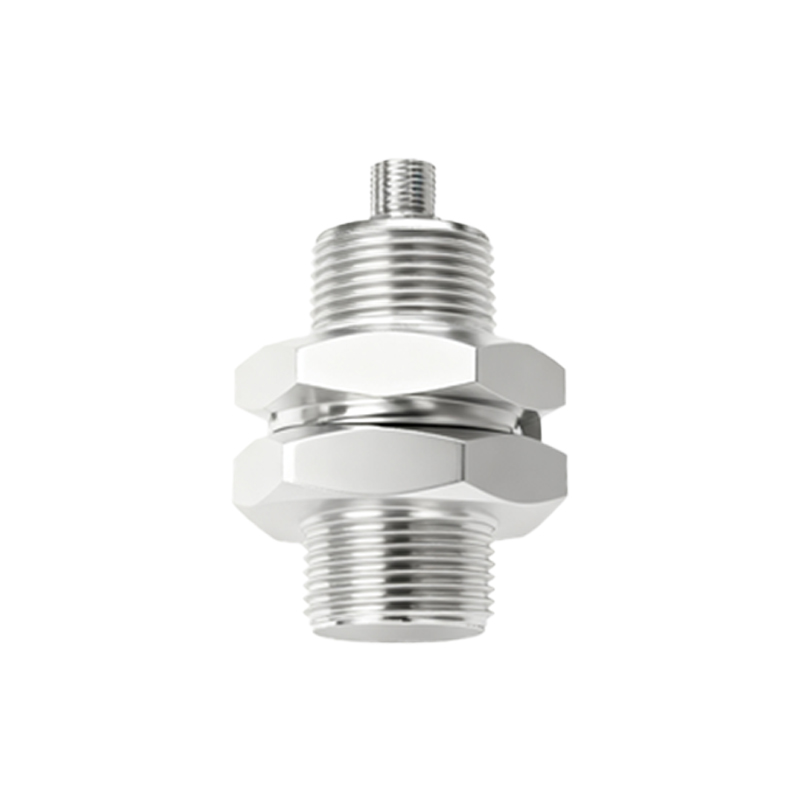
Core Components and Internal Circuitry
The architecture of a standard eddy current proximity sensor comprises several key components. At its heart is a ferrite core with a coil wound around it, connected to a high-frequency oscillator. This oscillator generates the alternating electromagnetic field. The sensor also contains a signal conditioner or demodulator that converts the complex impedance changes into a measurable DC voltage signal. Following this, a Schmitt trigger or comparator circuit evaluates the signal against the set threshold to produce a clean, binary output—either a switching signal (PNP/NPN) or an analog output proportional to distance. Modern sensors often incorporate additional circuitry for temperature compensation to maintain stability across varying operational conditions, as well as protection against short-circuits, overload, and reverse polarity. The entire assembly is typically housed in a robust, sealed metal or polymer casing, ensuring resilience against vibration, moisture, and industrial contaminants.
Factors Influencing Sensing Performance and Range
The effective sensing distance and performance of an eddy current sensor are not constants; they are influenced by several material and environmental factors. The most significant factor is the target material's properties. Ferrous metals like mild steel provide the longest nominal sensing range, often defined as the standard. For non-ferrous metals such as aluminum, copper, or brass, the effective sensing distance is reduced, typically to 30-60% of the rated range, due to their lower permeability and higher conductivity. The target's size, thickness, and shape also play critical roles; a target should generally be at least as large as the sensor's active face and of sufficient thickness to allow full eddy current development. Furthermore, the presence of other metals in the vicinity, extreme ambient temperatures, and strong external electromagnetic fields can interfere with performance, necessitating careful installation and selection according to manufacturer specifications.
Key Advantages in Industrial Applications
Eddy current proximity sensors offer a compelling set of advantages that solidify their position in industrial settings. Their non-contact nature eliminates mechanical wear and tear, granting them an exceptionally long operational lifespan and reducing maintenance costs. They are capable of high-speed switching, with response frequencies often reaching several kilohertz, making them suitable for counting fast-moving parts on conveyor belts. Their insensitivity to non-metallic substances like dust, oil, and water (provided the housing is appropriately rated) allows for reliable operation in dirty or washdown environments. Additionally, they provide high repeat accuracy, meaning the switching point remains consistent over millions of cycles, which is vital for precision positioning and quality control in manufacturing processes.
Common Applications and Selection Guidelines
These sensors find diverse applications across numerous sectors. Typical uses include position detection of machine parts (e.g., cylinder piston position), end-of-travel limit sensing, monitoring rotational speed via gear tooth detection, and part presence verification in automated assembly. When selecting a sensor, engineers must consider the required sensing distance, the target material, the output type needed (e.g., 2-wire DC, 3-wire DC, or analog 4-20mA), the electrical connection style, and the environmental conditions (IP rating, temperature range). For instance, a flush-mounted cylindrical sensor is ideal for embedded installation to avoid mechanical damage, while a non-flush version offers a longer range. Understanding these parameters ensures optimal sensor integration, maximizing system reliability and efficiency.
Comparison with Other Proximity Sensor Types
While eddy current sensors excel with metals, it is instructive to compare them with other common proximity technologies. Capacitive sensors can detect both metallic and non-metallic materials but are more susceptible to environmental factors like humidity. Ultrasonic sensors offer longer ranges and can detect various materials, but they are generally slower and more expensive. Photoelectric sensors provide very long