Understanding Proximity Sensor Accuracy Fundamentals
Proximity sensor accuracy is a critical performance parameter that defines the sensor's ability to consistently and reliably detect an object at a specified distance. It is not a single, isolated specification but a composite measure influenced by several underlying factors. Fundamentally, accuracy refers to the closeness of agreement between the sensor's output signal (the point at which it switches) and the true position of the target under repeatable conditions. This is often expressed as a percentage of the sensor's nominal sensing distance (Sn) or as an absolute value in millimeters. For instance, a sensor with a stated accuracy of ±5% of Sn at a sensing distance of 10mm implies the actual switch point can vary between 9.5mm and 10.5mm under ideal, standardized test conditions. Understanding this baseline is essential for proper sensor selection and integration into automated systems where precise positioning is paramount.
Primary Factors Influencing Sensing Precision
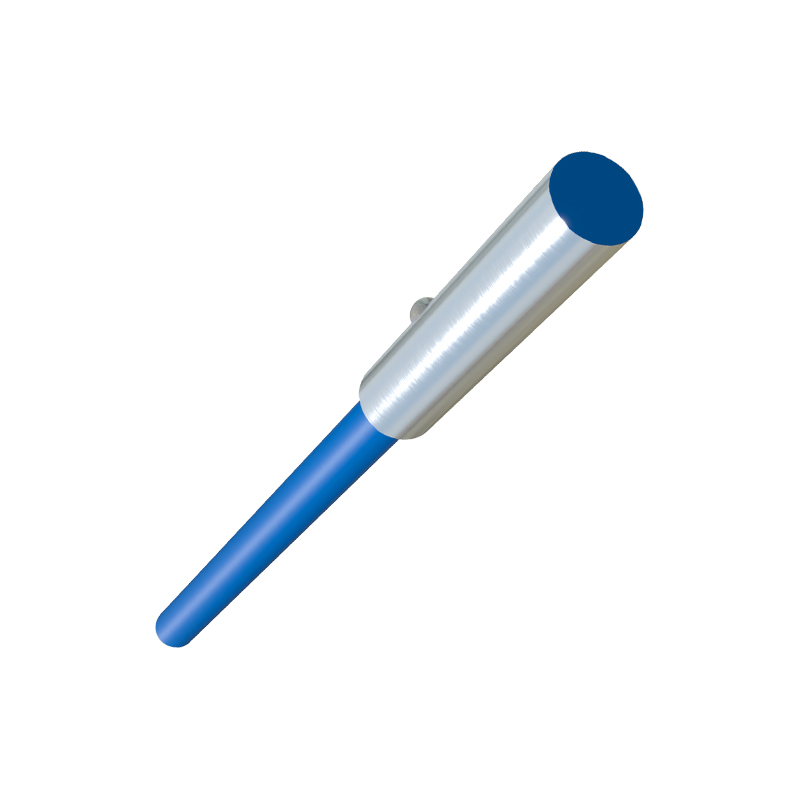
Several key factors directly impact the accuracy of inductive, capacitive, and ultrasonic proximity sensors. The target material is paramount for inductive sensors; ferrous metals like mild steel provide the nominal sensing distance, while non-ferrous metals like aluminum or copper cause a significant reduction, often requiring correction factors. The target size and shape also play a crucial role. A target smaller than the sensor's active face or an irregularly shaped object can lead to inconsistent detection points and reduced effective range. Environmental conditions, particularly temperature fluctuations, cause thermal drift in electronic components, shifting the switching point. Industrial environments may also introduce electrical noise from motors or variable frequency drives, which can interfere with sensor signals and cause false triggering or shifts in accuracy. Finally, the sensor's own design, including oscillator stability, coil winding precision, and the quality of the ASIC (Application-Specific Integrated Circuit), sets the inherent accuracy ceiling.
The Role of Hysteresis in Stable Operation
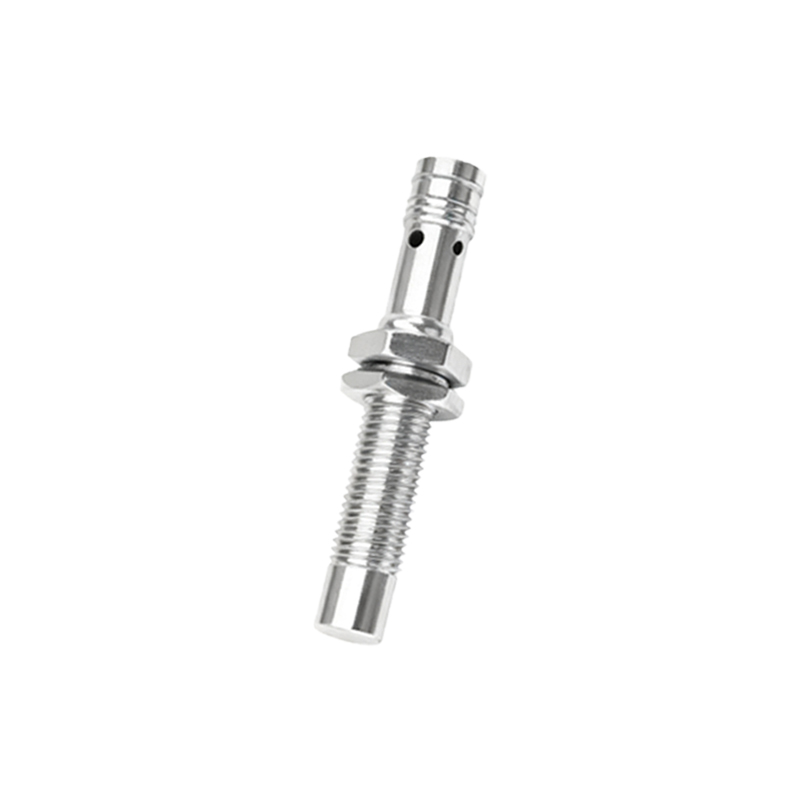
Hysteresis is an intentional and vital design feature in proximity sensors, not an error. It is the difference between the switch-on point (as the target approaches) and the switch-off point (as the target moves away). This differential, typically 3% to 15% of the sensing distance, prevents output oscillation or "chatter" when a target is positioned right at the sensing edge. While hysteresis does create a dead band, it is essential for stable, bounce-free switching in real-world applications with vibration or minor target position variations. When evaluating sensor datasheets, it is important to distinguish between the accuracy specification (repeatability of the switch point) and the built-in hysteresis. A high-accuracy sensor with appropriate hysteresis will provide both precise detection and reliable, noise-immune operation.
Calibration, Compensation, and Advanced Technologies
To achieve high accuracy, modern sensors employ various calibration and compensation techniques. Factory calibration ensures each sensor meets its published specifications at a reference temperature (usually 20°C or 25°C). Temperature compensation circuits are integrated to counteract thermal drift across the sensor's operating temperature range, maintaining accuracy in both hot and cold environments. For the most demanding applications, teach-in or programmable sensors allow users to set the exact switch point for a specific target material and condition on-site, effectively calibrating the sensor to its real-world application. Furthermore, technologies like analog output sensors (e.g., 4-20mA or 0-10V) provide a continuous distance signal, enabling systems to calculate precise position with sub-millimeter resolution, far exceeding the binary accuracy of a standard switching sensor.
Optimization Strategies for System Integration
Achieving optimal system accuracy requires careful attention to integration practices. First, always select a sensor with an accuracy specification that meets or exceeds the application's tolerance requirements, considering the worst-case scenario of all influencing factors. Ensure the target is made of the correct material, is large enough (typically equal to or greater than the sensor face diameter), and approaches the sensor coaxially for consistent results. Proper mounting is critical; flush-mountable sensors should be installed in metal to suppress their lateral sensing field, while non-flush sensors require the specified clearance from surrounding metal. Implementing robust electrical practices, such as using shielded cables, proper grounding, and separating sensor wiring from power lines, minimizes noise-induced inaccuracies. Finally, for critical measurements, consider establishing a periodic verification routine to check sensor performance against a master gauge.
Conclusion: Balancing Accuracy with Application Needs
In summary, proximity sensor accuracy is a multifaceted characteristic governed by target properties, environmental factors, and sensor design. Engineers must move beyond simply reading the nominal sensing distance on a datasheet. A deep understanding of hysteresis, temperature effects, and material influences is necessary to predict real-world performance. By strategically selecting the right sensor technology (indu