Introduction to Proximity Sensing Technology
Proximity sensors have become indispensable components in modern industrial automation, enabling non-contact detection of objects. Among the diverse range of sensors available, the DVM008L1 stands out as a robust and reliable inductive proximity sensor designed for demanding environments. This device exemplifies the evolution of sensing technology, offering precision, durability, and seamless integration into complex control systems. Its core function is to detect the presence or absence of metallic objects without physical contact, thereby reducing wear and tear and increasing system reliability. The adoption of such sensors is critical for enhancing operational efficiency, ensuring safety, and enabling sophisticated machine logic in manufacturing, packaging, and material handling sectors.
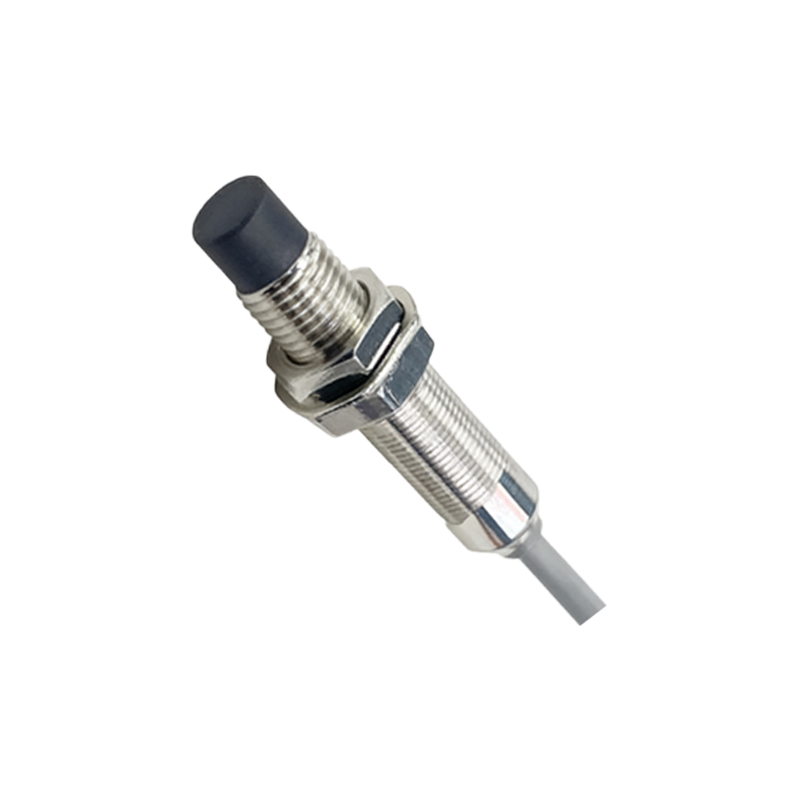
Technical Specifications of the DVM008L1
The DVM008L1 proximity sensor is engineered with specific technical parameters that define its performance envelope. Typically, it operates on a standard DC voltage range, such as 10-30V DC, ensuring compatibility with common industrial power supplies. Its sensing distance is precisely calibrated, often around 8mm, providing a reliable detection zone for metallic targets. The sensor features a normally open (NO) or normally closed (NC) output configuration, often with a PNP (sourcing) transistor output, which interfaces directly with programmable logic controllers (PLCs) and other control units. Constructed with a nickel-plated brass housing or a stainless-steel face, it offers high resistance to mechanical impacts, oils, and coolants, conforming to IP67 or higher ingress protection ratings. This robust construction ensures stable operation in environments with significant vibration, humidity, or temperature fluctuations.
Key Operational Features and Advantages
Several key features contribute to the DVM008L1's widespread application. First is its high switching frequency, allowing it to detect rapidly moving objects on production lines, which is essential for high-speed automation. Secondly, it incorporates built-in protection against short-circuit, reverse polarity, and overload conditions, safeguarding both the sensor and the connected circuitry from damage. The LED status indicator provides immediate visual feedback on the sensor's operational state, simplifying installation and troubleshooting. Furthermore, its compact cylindrical design (e.g., M8 or M12 threading) facilitates easy mounting in space-constrained locations. The non-contact nature of detection eliminates mechanical fatigue, leading to a virtually maintenance-free operation and a significantly longer service life compared to mechanical limit switches.
Primary Industrial Applications
The DVM008L1 finds utility across a broad spectrum of industrial applications. In automated assembly lines, it is used for part presence verification, ensuring components are correctly positioned before a robotic arm performs a task. Within CNC machining centers, these sensors serve as tool position detectors or workpiece clamps confirmers, contributing to machining accuracy and process safety. The packaging industry employs them for counting products, controlling fill levels, and detecting labels or seals on containers. In material handling systems, such as conveyor belts, the DVM008L1 monitors object passage, controls sorting gates, and prevents jams. Its reliability is also crucial in harsh environments like automotive manufacturing or metal stamping plants, where it must perform consistently amidst coolant sprays and metal chips.
Installation and Integration Guidelines
Proper installation is paramount for optimal performance of the DVM008L1 sensor. It is crucial to mount the sensor at the correct distance from the target object, considering both the nominal sensing range and any recommended safety margins. Installers must ensure that only the specified metallic material (usually ferrous metals like steel or iron for standard inductive sensors) passes through the sensing field, as non-metallic objects will not be detected. Electrical wiring should follow the manufacturer's diagram precisely, connecting the brown wire (typically +V), blue wire (0V), and black wire (output signal) to the appropriate terminals. The sensor body should be securely fastened, but care must be taken to avoid overtightening, which could damage the housing. For integration, the output signal is wired into the input module of a PLC, where ladder logic or other programming languages define the control actions based on the sensor's state.
Troubleshooting Common Issues
Even with robust design, occasional issues may arise. A common problem is failure to detect a target. This can be caused by the target being outside the sensing range, using a non-metallic target, or the sensing face being obscured by dirt or debris, which requires cleaning. Another issue is erratic switching, often resulting from electrical interference in the environment. This can be mitigated by using shielded cables, ensuring proper grounding, and keeping signal wires away from power lines. If the status LED fails to illuminate, check the power supply voltage and polarity. A consistently activated sensor without a target present might indicate a faulty unit or