Introduction to Photoelectric Sensors
Photoelectric sensors are indispensable components in modern industrial automation, utilizing light beams to detect the presence, absence, or distance of objects. These devices operate by emitting a light source—typically infrared, visible red, or laser—and then measuring the changes in the received light signal. The fundamental principle involves a transmitter and a receiver; the transmitter projects light, and the receiver captures the reflected or transmitted light. Variations in the light pattern, caused by an object interrupting or reflecting the beam, trigger an electrical output signal. This non-contact detection method offers significant advantages, including high precision, long sensing ranges, and minimal wear, making photoelectric sensors ideal for diverse environments, from clean rooms to harsh manufacturing floors. Their reliability in detecting various materials, regardless of color or surface texture, has cemented their role in quality control, packaging, material handling, and safety systems across industries.
Through-Beam Sensors
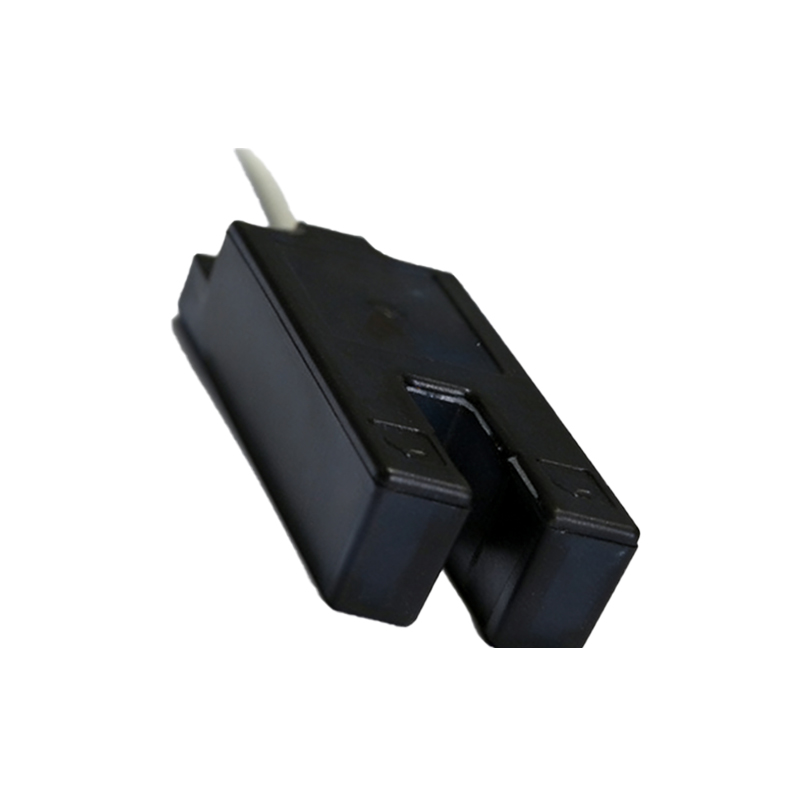
Through-beam sensors, also known as opposed-mode sensors, consist of two separate units: a transmitter and a receiver positioned directly opposite each other. The transmitter emits a continuous light beam toward the receiver. Detection occurs when an object passes between them, interrupting the beam and causing the receiver to signal an output change. This configuration provides the longest sensing ranges among photoelectric types, often exceeding 100 meters, and high immunity to environmental interferences like dust, fog, or target surface variations. Common applications include detecting large objects on conveyor belts, monitoring breakages in production lines, and ensuring safety in automated machinery by creating "light curtains" that halt operations when breached. Despite their effectiveness, through-beam sensors require precise alignment during installation and more wiring due to the two separate units, which can increase setup complexity and cost.
Retroreflective Sensors
Retroreflective sensors integrate both transmitter and receiver into a single housing, simplifying installation. They operate by directing light toward a retroreflector, such as a prismatic tape or mirror, which reflects the beam back to the receiver. When an object interrupts this reflected path, the sensor detects its presence. These sensors offer medium to long sensing ranges, typically up to 10 meters, and are less sensitive to alignment issues compared to through-beam types. However, they may struggle with highly reflective or transparent objects, which can cause false triggers by allowing light to pass through or reflect irregularly. To mitigate this, polarized filters are often used, allowing only light with a specific polarization to be recognized. Retroreflective sensors are widely used in packaging, automotive assembly, and door control systems where reliable detection of opaque objects is required without the need for separate receiver units.
Diffuse Reflective Sensors
Diffuse reflective sensors, or proximity-mode sensors, house the transmitter and receiver in one unit and rely on the reflection of light off the target object itself. The emitted light scatters upon hitting the object, with a portion returning to the receiver. Detection is based on the intensity of this reflected light, making these sensors highly versatile for detecting objects at close ranges, usually up to 2 meters. They are easy to install since no separate reflector is needed, but performance can be affected by object color, surface texture, and environmental conditions. Dark or absorbent materials may reflect insufficient light, while shiny surfaces can cause over-reflection and false readings. Advanced models incorporate background suppression or fixed-field technology to ignore objects beyond a set distance, improving accuracy. Diffuse sensors are common in robotics, liquid level detection, and small-part counting in electronics manufacturing.
Background Suppression Sensors
Background suppression sensors are a specialized subtype of diffuse reflective sensors designed to ignore objects beyond a predetermined distance. They use triangulation principles: the emitted light hits a target, and the reflected angle is measured by a position-sensitive receiver. Only objects within the specified range trigger detection, while those farther away are ignored. This capability makes them ideal for applications requiring precise distance-based sensing, such as detecting objects on a conveyor belt while disregarding the belt itself or background structures. They perform well with varying surface colors and materials, reducing setup adjustments. Typical uses include palletizing, wafer handling in semiconductors, and automated guided vehicle (AGV) navigation, where reliable detection in cluttered environments is critical.
Fiber Optic Photoelectric Sensors
Fiber optic photoelectric sensors separate the sensing element from the amplifier unit using flexible fiber optic cables. The transmitter and receiver are housed in the amplifier, while the fibers guide light to and from the sensing point. This design allows operation in extreme conditions—such as high temperatures, corrosive areas, or tight spaces—where traditional sensors would fail. The small sensing tips enable detection of minute objects, and the fibers are immune to electromagnetic interference. However, sensing ranges are limited, often under 1 meter, and the fibers can be fragile. These sensors are prevalent in food processing, pharmaceutical industries, and hazardous locations, offering hygienic and safe detection solutions.
Laser Sensors for Precision Applications
Laser photoelectric sensors utilize focused laser beams for high-precision tasks. They provide extremely narrow, concentrated light spots, allowing accurate detection of small objects or precise distance measurements through time-of-flight or triangulation methods. With sensing ranges extending beyond 50 meters and resolutions down to micrometers, laser sensors excel in applications like edge detection, thickness gauging, and alignment in electronics or automotive production. Their coherent light minimizes dispersion, enhancing performance in dusty or bright environments. Despite higher costs, their accuracy and reliability justify use in quality inspection, robotics, and research settings where standard sensors fall short.
Choosing the Right Sensor for Your Needs
Selecting the appropriate photoelectric sensor depends on multiple factors: sensing range, object properties, environmental conditions, and budget. Through-beam sensors suit long-range, reliable detection but require alignment. Retroreflective types offer a balance of range and ease for opaque objects. Diffuse sensors are versatile for close-range tasks, while background suppression models add precision. Fiber optic sensors thrive in harsh settings, and laser sensors deliver unmatched accuracy. Consider response time, output type (e.g., digital or analog), and industry standards like IP ratings for durability. Consulting datasheets and testing in real conditions ensures optimal performance, enhancing automation efficiency and safety.