Proximity sensors have become integral components in modern automation, consumer electronics, and industrial systems. Among various operating principles, reflection-based proximity sensing stands out for its versatility and reliability. This article delves into the mechanics, applications, and advantages of proximity sensor reflection technology, providing a comprehensive overview for engineers, designers, and technology enthusiasts.
At its core, a reflective proximity sensor operates by emitting a signal—typically infrared light, ultrasonic waves, or laser beams—toward a target object. The sensor then detects the reflected signal to determine the presence, distance, or position of the object. Unlike through-beam sensors that require separate emitter and receiver units, reflective sensors integrate both elements into a single device, simplifying installation and reducing costs. The key to accurate detection lies in the sensor's ability to analyze the reflected signal's intensity, time-of-flight, or phase shift, depending on the technology used.
Infrared reflective sensors are among the most common types. They emit infrared light and measure the amount reflected back. Objects with high reflectivity, such as white surfaces, produce strong signals, while dark or absorbent materials may require sensor calibration. These sensors are widely used in applications like touchless faucets, automatic hand dryers, and paper detection in printers. Ultrasonic reflective sensors, on the other hand, use sound waves to calculate distance based on the echo's return time. They excel in environments with dust, smoke, or varying lighting conditions, making them ideal for industrial automation and parking assistance systems. Laser-based reflective sensors offer high precision for demanding tasks like robotic guidance and quality inspection.
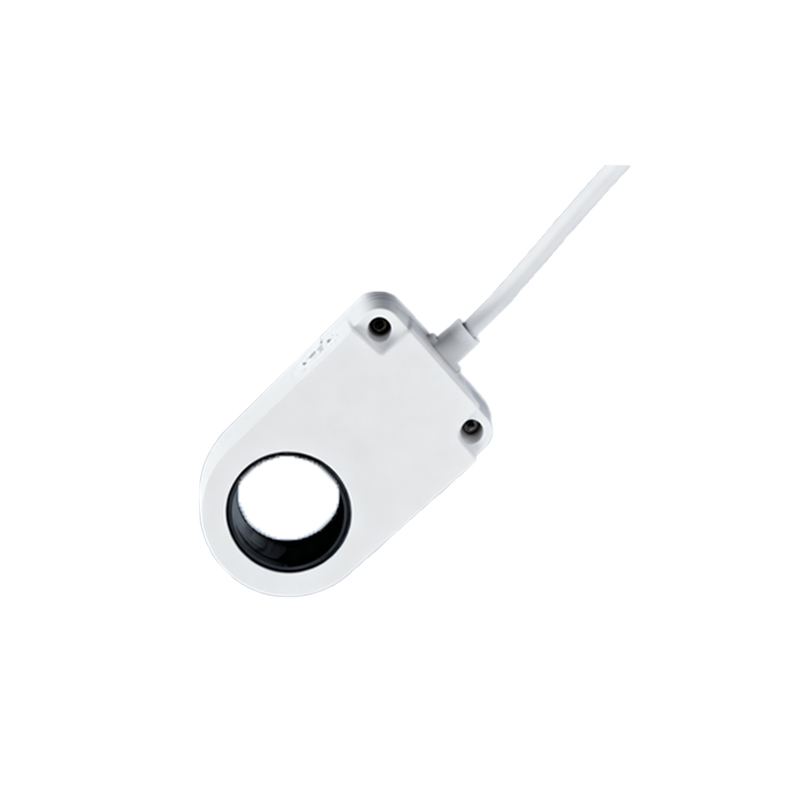
The effectiveness of reflective proximity sensors depends on several factors. Surface properties of the target, including color, texture, and material, directly impact reflection efficiency. For instance, glossy surfaces reflect more light than matte ones, potentially affecting accuracy. Environmental conditions such as ambient light, temperature, and humidity can also influence performance, necessitating protective housings or filtering algorithms. Modern sensors incorporate advanced features like background suppression, which ignores reflections from distant objects, and programmable logic to adapt to diverse scenarios.
In industrial settings, reflective proximity sensors enable non-contact detection in conveyor systems, assembly lines, and packaging machinery. They help prevent collisions, count products, and monitor equipment positioning. Consumer electronics leverage these sensors for screen dimming in smartphones during calls, gesture recognition in smart home devices, and automatic door activation. The automotive industry relies on them for obstacle detection and adaptive lighting systems. With the rise of IoT and smart manufacturing, reflective sensors are evolving to support wireless connectivity and data analytics, enhancing predictive maintenance and operational efficiency.
Despite their advantages, reflective proximity sensors face challenges. Cross-talk from nearby sensors can cause interference, while highly transparent or absorbent materials may go undetected. Engineers address these issues through careful sensor selection, shielding, and software tuning. Future trends point toward miniaturization, increased energy efficiency, and integration with AI for smarter decision-making. For example, sensors equipped with machine learning algorithms can distinguish between different object types or adapt to changing environments autonomously.
When implementing reflective proximity sensors, consider the sensing range, response time, and environmental ratings. Datasheets provide critical parameters like operating voltage, output type (digital or analog), and protection class. Proper alignment and mounting are essential to avoid false triggers. Regular maintenance, such as cleaning lenses or transducers, ensures long-term reliability. As technology advances, reflective sensors continue to push boundaries, enabling innovations in robotics, healthcare, and sustainable energy systems.
In summary, proximity sensor reflection technology offers a balance of simplicity, cost-effectiveness, and performance. By understanding its principles and applications, professionals can harness its potential to create safer, more efficient, and intelligent systems across industries. Whether for basic presence detection or complex spatial mapping, reflective sensors remain a cornerstone of modern automation.