Understanding Proximity Sensor Fundamentals
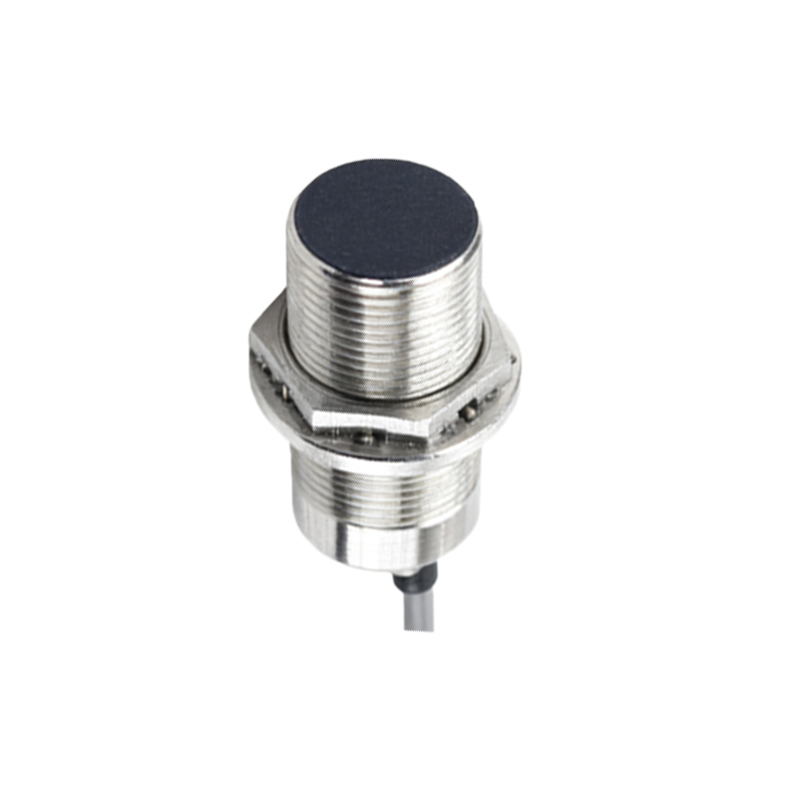
Proximity sensors, particularly inductive and capacitive types, are non-contact devices designed to detect the presence or absence of metallic or non-metallic objects within a defined sensing range. Their operation relies on generating an electromagnetic field or electrostatic field. When a target enters this field, it causes a detectable change in oscillation amplitude or capacitance, which is then converted into a switching signal. This core principle of non-contact detection is foundational to their application in motion control systems, eliminating mechanical wear and enabling rapid response. The absence of physical contact inherently suggests potential for high-speed applications, but suitability is dictated by specific performance parameters.
Key Parameters for High-Speed Performance
The fitness of a proximity sensor for high-speed reciprocating motion hinges on several critical specifications. First is the response time, typically measured in microseconds (µs) or milliseconds (ms). For instance, a sensor with a 0.1 ms response time can theoretically handle up to 5000 switching operations per second. The second is the switching frequency, expressed in Hertz (Hz), which defines the maximum number of detection cycles per second. A sensor rated at 5 kHz can detect an object passing by 5000 times in one second. For reciprocating motion, the sensor must reliably detect the target at both the forward and return points of the cycle. Finally, the sensing distance and the repeat accuracy are vital; a short, precise sensing range ensures consistent triggering without false signals due to vibration or positional drift inherent in fast-moving machinery.
Challenges in Reciprocating Applications
High-speed reciprocating motion presents unique challenges. The primary issue is the potential for signal bounce or chatter. As a target rapidly approaches and recedes, the sensor's output may oscillate between on and off states at the detection boundary, leading to an unreliable signal. This is exacerbated if the target's position varies slightly with each cycle. Mechanical vibration from the reciprocating mechanism can also induce false triggering in sensitive sensors. Furthermore, the sensor and its electronics must withstand constant, rapid thermal cycles and potential electromagnetic interference (EMI) from nearby motors or drives. Selecting a sensor with built-in hysteresis—a difference between the switch-on and switch-off points—is a common strategy to mitigate chatter.
Sensor Selection and Mounting Considerations
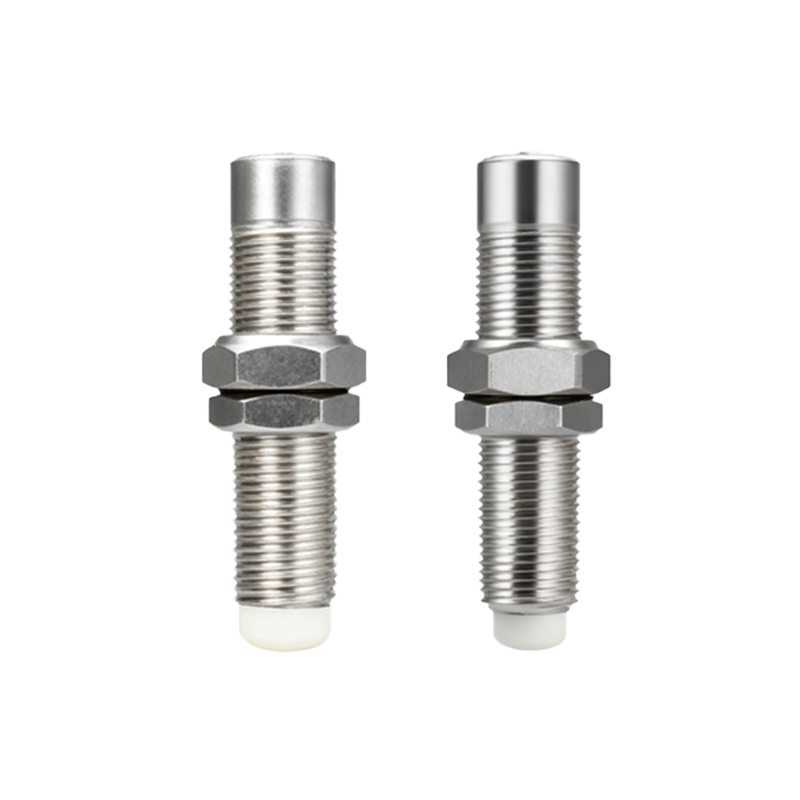
Choosing the right sensor is paramount. For metallic targets in high-speed applications, inductive proximity sensors with a high switching frequency (e.g., 5-10 kHz), fast response time (<0.5 ms), and a shielded (flush-mountable) design are preferred. Shielded sensors have a more focused field, reducing interference from nearby metal, which is crucial in compact, fast-moving assemblies. The mounting must be absolutely rigid to prevent any movement or vibration of the sensor itself. The target's approach should be axial to the sensor face for optimal performance. Ensuring the target is larger than the sensor's sensing face and moves within the guaranteed operating distance, not the maximum nominal range, provides a safety margin for consistent detection.
Comparison with Alternative Technologies
While proximity sensors are excellent, it's instructive to compare them with other options for high-speed reciprocating motion. Photoelectric sensors, especially diffuse-reflective or through-beam types, can offer even higher switching frequencies and longer ranges but may be susceptible to environmental contaminants like oil or dust. Encoders or resolvers provide continuous position feedback rather than simple presence detection. For pure, ultra-high-speed end-position detection in clean environments, photoelectric sensors might outperform. However, for robust, non-contact detection of metal targets in harsh industrial environments—with resistance to dirt, coolant, and vibration—a high-performance inductive proximity sensor is often the superior and more reliable choice.
Best Practices for Implementation
Successful implementation requires a systems approach. Start by calculating the required switching frequency based on the maximum reciprocation speed. Include a significant derating factor (e.g., use only 60-70% of the sensor's rated frequency) for reliability. Use sensors with IO-Link or similar digital communication not only for parameter setting but also for diagnostic data like operating temperature and switch cycle count, enabling predictive maintenance. Ensure stable power supply with proper filtering to prevent electrical noise. Finally, rigorous testing under real-world conditions, including temperature extremes and maximum operational speed, is non-negotiable. Monitor the sensor output with an oscilloscope to check for signal integrity and the absence of chatter.
Conclusion and Final Verdict
In conclusion, modern proximity sensors, specifically those engineered with high switching frequencies and fast response times, are indeed highly suitable for high-speed reciprocating motion applications. Their non-contact nature, robustness, and reliability make them a staple in automated