Introduction to Through-Beam Photoelectric Sensors
Through-beam photoelectric sensors, also known as opposed-mode sensors, consist of two separate units: a transmitter and a receiver. The transmitter emits a continuous beam of light, typically infrared or laser, which is detected by the receiver positioned directly opposite. When an object interrupts this light beam, the sensor triggers an output signal. This fundamental operating principle provides several inherent advantages, including long sensing distances, high precision, and exceptional reliability. Unlike diffuse or retro-reflective sensors, the through-beam configuration is less susceptible to environmental factors like object color, texture, or reflectivity, making it a cornerstone technology in demanding industrial environments. Its ability to detect virtually any opaque object, regardless of surface properties, establishes it as a versatile and robust solution for numerous automation challenges.
High-Speed Object Detection and Counting
One of the most prevalent applications of through-beam sensors is in high-speed detection and counting on production and packaging lines. Their rapid response time and precise beam allow them to accurately detect small, fast-moving items such as pharmaceutical vials, electronic components, or food products on conveyor belts. In bottling plants, for instance, these sensors verify the presence of bottles at critical points, ensuring proper filling, capping, and labeling. They are integral to automated counting systems, providing real-time data for inventory management and production control. The long sensing range enables installation over wide conveyors, while the immunity to target color ensures consistent performance even with varying product packaging.
Position Verification and Gate Control
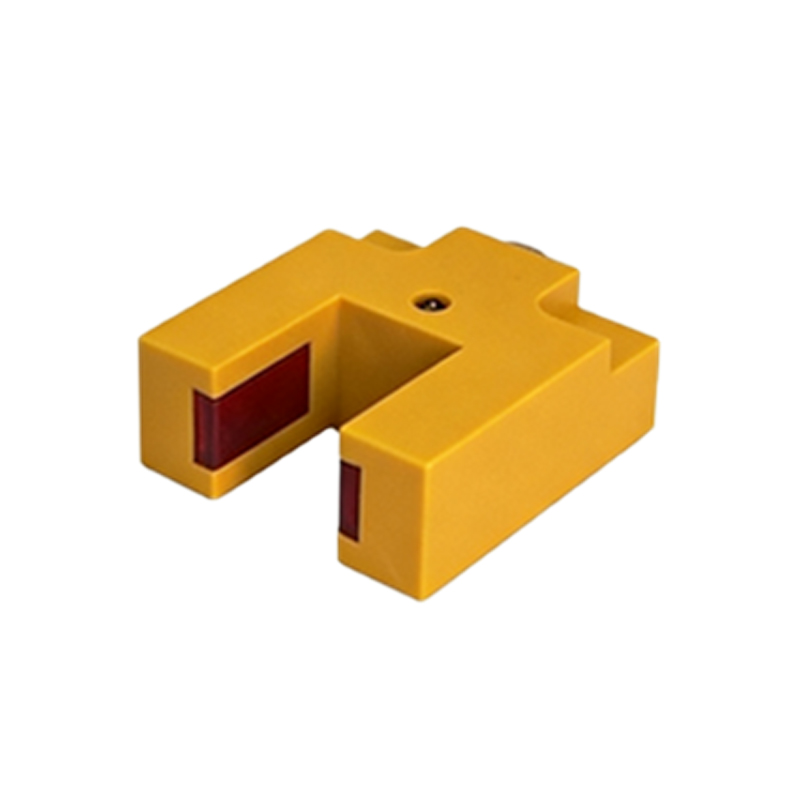
Through-beam sensors excel in position verification tasks where absolute certainty is required. They are commonly used to confirm the open or closed status of doors, gates, and safety guards on machinery. In automated storage and retrieval systems (AS/RS), these sensors verify the precise position of shuttle carts and confirm that storage bins are correctly aligned. Similarly, in elevator systems, they ensure elevator car doors are fully closed before movement is initiated, enhancing safety. The reliable beam-break principle makes them ideal for these critical safety and sequencing functions, where a false signal could lead to equipment damage or operational failure.
Web and Edge Guiding in Material Handling
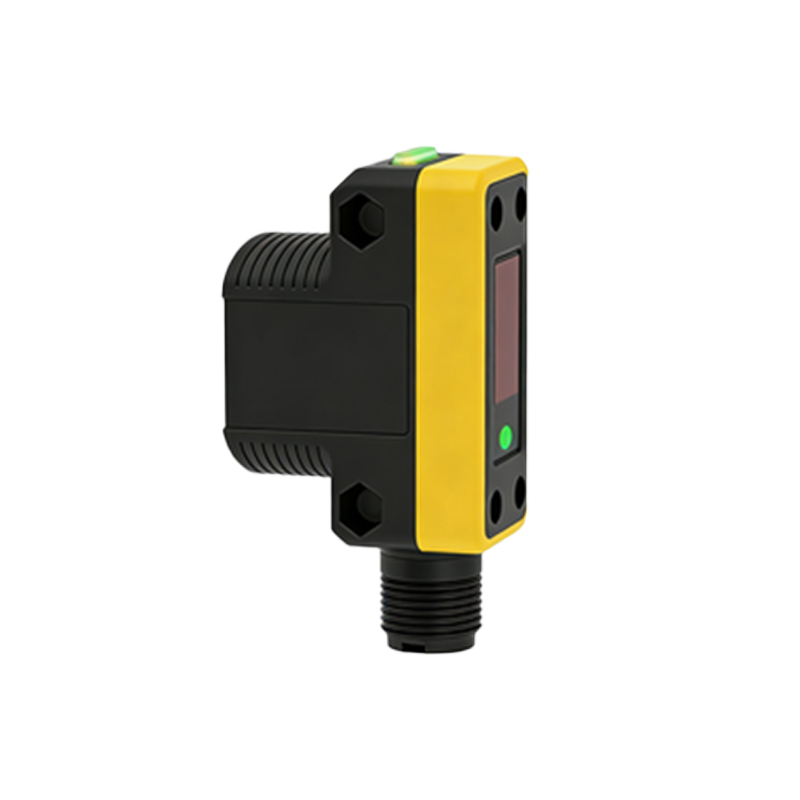
In continuous process industries such as paper, plastic film, textile, and metal foil production, maintaining proper alignment of moving webs is crucial. Through-beam sensors are deployed in edge-guiding systems to detect the lateral position of a material's edge. A sensor pair monitors the edge, and any deviation from the set path generates a corrective signal to steering rollers. Their ability to see a clean, sharp contrast between the material and the background, regardless of the material's sheen or color, provides stable and accurate guidance, preventing wrinkles, tears, and misalignment that can lead to costly waste and downtime.
Security and Access Control Systems
Beyond pure industrial automation, through-beam photoelectric sensors form the backbone of many security and perimeter protection systems. Arrays of sensor pairs can create invisible light curtains or fences around restricted areas. Any interruption of the beam triggers an alarm. This technology is used for intrusion detection in high-security facilities, safeguarding hazardous zones in factories, and as safety light curtains on industrial presses and robots to protect personnel. The long-range capability allows for securing large perimeters with a minimal number of devices, offering a reliable and low-maintenance security solution.
Dimensional Gauging and Sorting
The precise and collimated beam of a through-beam sensor makes it suitable for non-contact dimensional gauging applications. By using multiple sensor pairs, the height, width, or diameter of objects can be measured as they pass through the sensing field. This is extensively used in quality control to sort components by size, detect oversized or undersized products, and ensure dimensional conformity. In the lumber industry, for example, sensors measure board thickness. In automotive manufacturing, they verify the dimensions of parts like pistons or shafts before assembly, ensuring only components within tolerance proceed down the line.
Challenges and Selection Considerations
While highly reliable, the effectiveness of through-beam sensors can be challenged by harsh environments. Accumulation of dust, dirt, or condensation on the lenses can attenuate the light beam. In such cases, models with high-power LEDs or laser sources, along with routine maintenance protocols, are essential. Alignment is another critical factor; the transmitter and receiver must be precisely aligned, which can be challenging over very long distances or in environments with vibration. Selecting sensors with visible beam spots or alignment indicators significantly simplifies installation. Engineers must also consider the required sensing distance, response speed, output type, and housing material (e.g., stainless steel for washdown areas) to ensure optimal performance for the specific application.
Conclusion and Future Outlook
Through-beam photoelectric sensors remain an indispensable tool in the industrial automation arsenal. Their simplicity, reliability, and versatility ensure their continued use in core applications like counting, positioning, and safety. Future advancements are likely to focus on enhanced connectivity through IO-Link and Industrial IoT integration, allowing for predictive maintenance by monitoring lens contamination or output power degradation. The development of even more robust housings and lenses for extreme environments will further expand their applicability. As automation systems demand higher speeds and greater precision, the fundamental through-beam principle will continue to evolve, solidifying its role in the smart factories of tomorrow.