Introduction to Shunde's Photoelectric Sensor Industry
The Shunde district of Foshan, Guangdong, has emerged as a pivotal hub for advanced manufacturing in China, with its photoelectric sensor sector standing as a testament to its engineering prowess. These devices, fundamental to modern automation, utilize light beams to detect the presence, absence, or distance of objects without physical contact. Shunde's manufacturers have mastered the art of producing sensors that combine high reliability, environmental resilience, and cost-effectiveness, catering to a global clientele across diverse sectors such as packaging, automotive assembly, material handling, and consumer electronics. The concentration of expertise, supply chains, and a culture of rapid innovation in this region has created a unique ecosystem where photoelectric sensing technology is continuously refined and deployed.
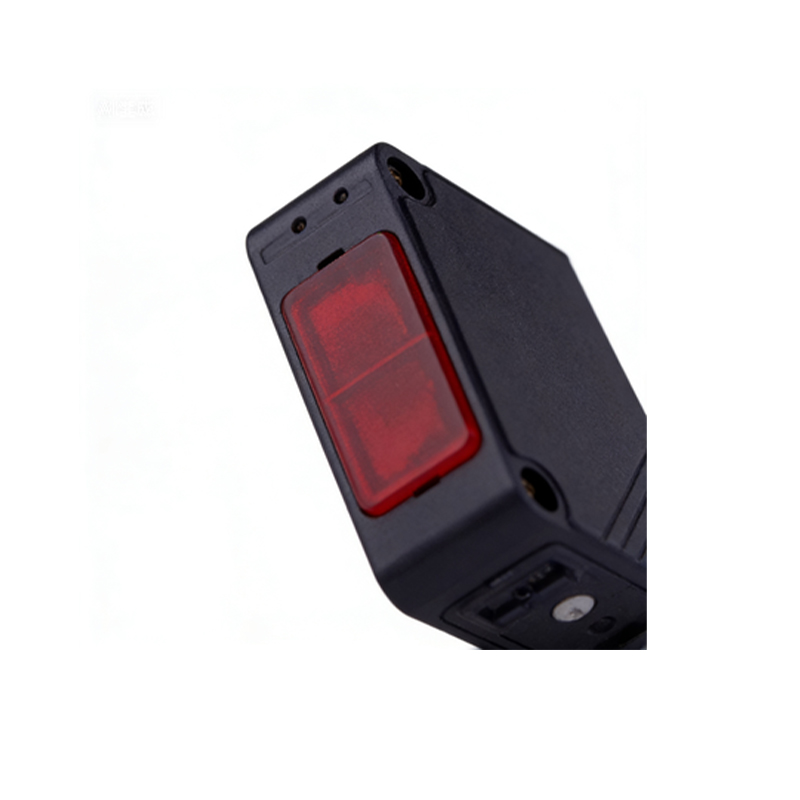
Core Technologies and Operational Principles
At the heart of Shunde's photoelectric sensors lie several key operational modes. Through-beam sensors, consisting of separate emitter and receiver units, offer the longest detection ranges and highest reliability by detecting the interruption of a light beam. Retro-reflective sensors use a single unit and a reflector, bouncing the light beam back, and are ideal for detecting objects that break this reflection. Diffuse reflective sensors detect objects by measuring the light scattered back from the target itself, providing a compact, one-unit solution. Furthermore, advanced models incorporate background suppression and foreground suppression technologies, allowing for precise detection of objects against complex or varying backgrounds—a common challenge in automated logistics and robotic picking systems.
Engineering for Harsh Industrial Environments
Durability is non-negotiable in industrial applications. Shunde's engineering focus extends deeply into robust design. Sensors are housed in rugged casings made from materials like stainless steel or engineering plastics with high IP (Ingress Protection) ratings, such as IP67 and IP69K, ensuring resistance to dust, water jets, and chemical exposure. Internal components are protected against electromagnetic interference (EMI) and voltage spikes common in factory settings. Temperature compensation circuits are integrated to maintain accuracy across a wide operational range, from freezing cold storage facilities to the high-heat environments near furnaces or welding stations. This relentless focus on environmental hardening ensures consistent performance and minimizes downtime.
Integration with Smart Manufacturing and IIoT
The evolution of Industry 4.0 and the Industrial Internet of Things (IIoT) has profoundly influenced sensor design in Shunde. Modern photoelectric sensors are no longer simple binary switches. They are intelligent nodes equipped with IO-Link communication, enabling bidirectional data exchange. This allows for remote configuration, real-time monitoring of device health (predictive maintenance), and the transmission of process values like signal strength. Sensors can now communicate directly with PLCs, robotic controllers, and cloud-based analytics platforms, providing a granular data stream that optimizes production flow, improves quality control, and enables flexible, data-driven manufacturing processes.
Application-Specific Innovations and Solutions
Shunde manufacturers excel at developing tailored solutions. For the packaging industry, high-speed sensors with minute response times detect labels, count products, and verify fill levels on blister packs or bottles. In automotive manufacturing, precision sensors with laser light sources are used for exact positioning of components on assembly lines or gap measurement on car bodies. For logistics and warehousing, miniature sensors guide AGVs (Automated Guided Vehicles) and read barcodes, while ruggedized versions monitor conveyor belt jams and palletizing operations. This application-driven innovation ensures that sensors solve real-world problems with high efficiency.
Quality Assurance and Global Standards Compliance
To compete and lead in the global market, Shunde's photoelectric sensor producers adhere to stringent international quality and safety standards. Production follows ISO 9001 quality management systems, and products are certified according to relevant IEC (International Electrotechnical Commission) standards, CE marking for the European market, and UL recognition for North America. Rigorous testing protocols, including life cycle testing, shock/vibration tests, and performance validation under extreme conditions, are standard practice. This commitment to quality assurance builds trust with OEMs (Original Equipment Manufacturers) and system integrators worldwide.
Future Trends and Sustainable Development
The future trajectory of Shunde's photoelectric sensor industry points towards greater miniaturization, enhanced intelligence, and energy efficiency. The integration of AI algorithms for pattern recognition and anomaly detection directly at the sensor edge is on the horizon. Furthermore, there is a growing emphasis on sustainable manufacturing practices, including the use of recyclable materials, designs for longer product lifespans, and reduced power consumption to lower the carbon footprint of automated systems. As global industries push for smarter and greener operations, Shunde is poised to deliver the next generation of sensing solutions that are both technologically superior and environmentally conscious.