Introduction to Weight Sensing Proximity Technology
Weight sensing proximity sensors represent a sophisticated fusion of two fundamental industrial measurement principles: proximity detection and load measurement. Unlike standard proximity sensors that merely detect the presence or absence of an object, these advanced devices are engineered to sense an object's approach and simultaneously quantify the force or weight it exerts upon contact or within a very close range. This dual functionality is critical in automated systems where both positional accuracy and load data are required for precise process control. The core innovation lies in integrating a sensitive load-sensing element, such as a strain gauge or piezoelectric component, with a high-precision proximity sensing system, often based on inductive, capacitive, or ultrasonic technology. This integration allows the sensor to first detect an object's imminent arrival and then measure the mechanical force applied, providing a continuous data stream for complex automation tasks.
Core Operating Principles and Sensor Fusion
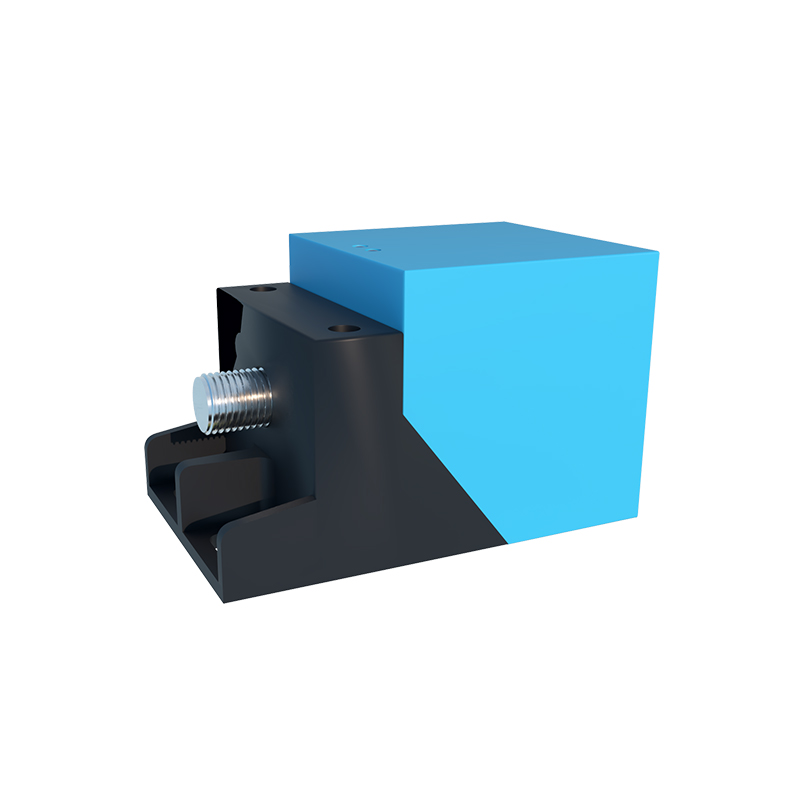
The operation of a weight sensing proximity sensor is a sequential, multi-stage process. The primary stage is proximity detection. In an inductive variant, for example, an oscillator generates a high-frequency electromagnetic field at the sensor's active face. When a metallic object enters this field, eddy currents are induced, causing a change in the oscillation amplitude. This change is detected by a threshold circuit, signaling the object's presence. Concurrently or immediately following this detection, the secondary stage—weight measurement—activates. The sensor's mechanical structure is designed to allow a defined micro-displacement upon physical contact or very close proximity where force is transferred. This force is directly measured by the integrated load cell. Modern sensors employ sophisticated sensor fusion algorithms to correlate the proximity signal's characteristics (like distance and approach speed) with the instantaneous force data, compensating for variables such as impact momentum to derive an accurate static weight measurement.
Key Components: Load Cells and Proximity Elements
The reliability and accuracy of these sensors hinge on their internal components. The load-sensing mechanism typically utilizes a strain gauge load cell. This cell consists of a metallic element that elastically deforms under load. Bonded to this element are strain gauges—patterns of conductive foil whose electrical resistance changes minutely when stretched or compressed. This change in resistance, measured through a Wheatstone bridge circuit, is proportional to the applied force. For the proximity element, capacitive sensors are often preferred in non-contact weight estimation scenarios or for non-metallic objects. They detect changes in capacitance caused by an object altering the dielectric properties of the field between two electrodes. Ultrasonic variants measure the time-of-flight of sound waves to gauge distance and can infer weight through advanced models when combined with force data from a secondary touch point. The housing is robust, often rated IP67 or higher, to protect these delicate electronics from industrial contaminants, vibration, and shock.
Signal Processing and Output Integration
Raw data from the strain gauges and the proximity oscillator are weak analog signals requiring significant conditioning. The sensor's internal microprocessor plays a crucial role here. It amplifies these signals, filters out electrical noise and mechanical vibrations, and digitizes them for processing. Advanced digital signal processing (DSP) techniques are applied to isolate the true weight signal from environmental artifacts. The processed data is then converted into standardized industrial output signals. Common outputs include a 4-20 mA analog current loop for the weight value and a discrete PNP/NPN transistor switch signal from the proximity function. Increasingly, sensors feature digital bus interfaces like IO-Link, which provide not only the measured values but also diagnostic data, parameterization capabilities, and temperature compensation coefficients, enabling seamless integration into Industry 4.0 and Industrial Internet of Things (IIoT) networks.
Industrial Applications and Implementation Benefits
The applications for weight sensing proximity sensors are vast and transformative. In automated assembly, they ensure a robotic gripper has both correctly picked up a component and is applying the correct force, preventing damage to delicate parts. In filling and packaging lines, they can verify the presence of a container via proximity and then check its fill weight in a single station, streamlining the process. On conveyor systems, they monitor the weight of products in motion, triggering sorting mechanisms if a weight threshold is exceeded. A major benefit is the consolidation of two measurement points into one device, reducing mechanical complexity, installation costs, and potential points of failure. This integration also improves data synchronization, as both proximity and weight data are timestamped and processed by a single unit, leading to more responsive and accurate control loops in high-speed production environments.
Calibration, Challenges, and Future Trends
Calibration is a critical procedure to ensure measurement integrity. It typically involves a two-point process: a zero or tare calibration to nullify the sensor's own weight and offset, and a span