Introduction to Sensing Technologies
In the realm of industrial automation, robotics, and consumer electronics, non-contact sensing is paramount. Two of the most prevalent and versatile technologies enabling this are infrared (IR) sensors and proximity light sensors. While they share the common principle of using light to detect objects, their operational methodologies, components, and optimal applications differ significantly. This article delves into the technical intricacies of both, providing engineers and designers with a clear framework for selection based on project requirements.
Fundamental Operating Principles
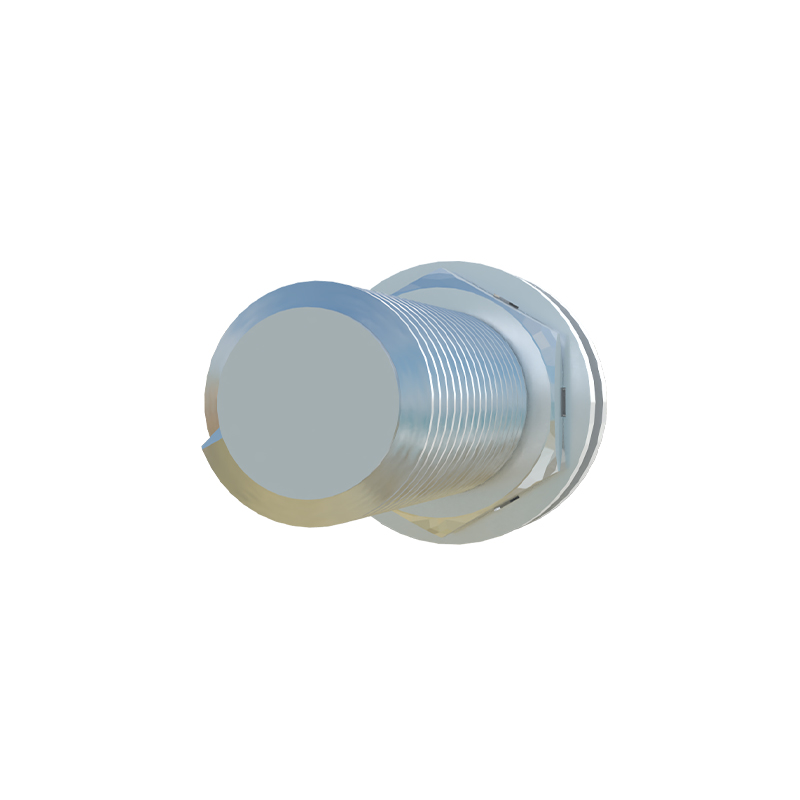
Infrared sensors operate by emitting and receiving infrared light, which is invisible to the human eye. They typically consist of an IR LED transmitter and a photodiode or phototransistor receiver. Detection occurs through two primary methods: reflection and beam break. In reflective mode, the sensor detects the IR light bounced back from an object. In beam-break mode, an object is detected when it interrupts a continuous beam between a separate transmitter and receiver. Proximity light sensors, often specifically referring to those using visible or modulated light, function on similar reflective principles but are finely tuned for short-range detection. They often employ a dedicated IC that houses both the emitter and receiver, along with signal conditioning circuitry to precisely measure the intensity of the reflected light to determine presence and, in some cases, approximate distance.
Key Components and Circuit Design
A basic IR sensor circuit revolves around driving the IR LED with an appropriate current-limiting resistor and reading the state of the photodetector, often requiring a pull-up resistor. For noise immunity, especially in environments with ambient IR light (e.g., sunlight), the emitted signal is often modulated at a specific frequency (e.g., 38 kHz), and the receiver circuit is tuned to that frequency. Proximity sensor modules are more integrated. Chips like the APDS-9960 or VCNL4040 combine a vertical-cavity surface-emitting laser (VCSEL) or LED with a photodiode, an analog-to-digital converter, and an I2C or digital interface. This integration simplifies design but requires careful PCB layout to minimize optical crosstalk between the emitter and receiver.
Performance Characteristics and Limitations
Infrared sensors excel in longer-range applications and can be configured for distances of several meters in beam-break setups. They are cost-effective and robust for binary detection tasks. However, their performance can degrade in direct sunlight or environments with strong IR sources, and they can be sensitive to the color and reflectivity of the target object. Proximity light sensors are optimized for near-field detection, typically from a few millimeters to about 20 centimeters. Their integrated design offers better ambient light rejection and can provide analog or digital output corresponding to distance. A primary limitation is their shorter range and potential higher cost per unit compared to basic IR setups. Both types can struggle with detecting transparent or absorbent materials.
Typical Industrial and Commercial Applications
IR sensors find extensive use in safety curtains on machinery, object counting on conveyor belts, touchless switches, and classic television remote controls. Their simplicity makes them ideal for high-volume, cost-sensitive applications. Proximity light sensors are ubiquitous in modern consumer electronics for features like automatic display dimming during phone calls, lid-closing detection in laptops, and gesture recognition. In industrial settings, they are used for precise object positioning, liquid level detection in transparent containers, and as non-contact limit switches in clean environments.
Selection Criteria for System Integration
Choosing between an IR sensor and a proximity light sensor hinges on several key parameters. First, define the required sensing range and resolution. For long-range or through-beam applications, IR is preferable. For precise short-range detection, a proximity sensor is better. Second, consider the environmental conditions: ambient light levels, potential contaminants, and temperature. Third, evaluate the output needs: a simple digital on/off signal or an analog/digital distance reading. Finally, factor in design constraints such as power consumption, board space, and system communication bus (e.g., discrete I/O vs. I2C). A thorough analysis at the design stage prevents performance issues and costly redesigns.
Future Trends and Advancements
The evolution of both technologies is geared towards greater integration and intelligence. Proximity sensors are increasingly being combined with ambient light sensors and RGB color sensors in single packages. Time-of-Flight (ToF) sensors, a sophisticated variant using modulated light pulses to measure distance accurately, are becoming more accessible. On the IR front, advancements in array sensors and thermal imaging are expanding applications into temperature screening and advanced presence detection. The trend is clear: sensors are becoming smaller, more multi-functional, and smarter, with embedded algorithms to filter noise