Introduction to Digital Photoelectric Sensor Accuracy
In the realm of industrial automation, the precision of sensing technology directly impacts system performance, product quality, and operational efficiency. Digital photoelectric sensors, which utilize light beams to detect the presence, absence, or distance of objects, are fundamental components. Their accuracy class is a critical specification that defines the sensor's performance limits under defined conditions. This parameter is not a single value but a comprehensive rating encompassing repeatability, hysteresis, linearity error, and temperature drift. Understanding this classification is paramount for engineers selecting the right sensor for applications ranging from high-speed packaging to precise robotic assembly, where a micron-level discrepancy can lead to significant downstream errors or production halts.
Defining Key Parameters of Accuracy
Accuracy class is derived from several measurable parameters. Repeatability refers to the sensor's ability to consistently output the same value when measuring the same target under identical conditions. Hysteresis is the maximum difference in output when the target approaches the sensing point from different directions. Linearity error quantifies the deviation of the sensor's actual output curve from an ideal straight line across its entire measuring range. Finally, temperature drift defines how much the output signal varies with changes in ambient temperature. Manufacturers typically test these parameters under controlled laboratory conditions (e.g., 23°C, 50% humidity) and compile the worst-case errors into a single accuracy class rating, often expressed as a percentage of full scale or in absolute units like micrometers.
Common Accuracy Classifications and Their Implications
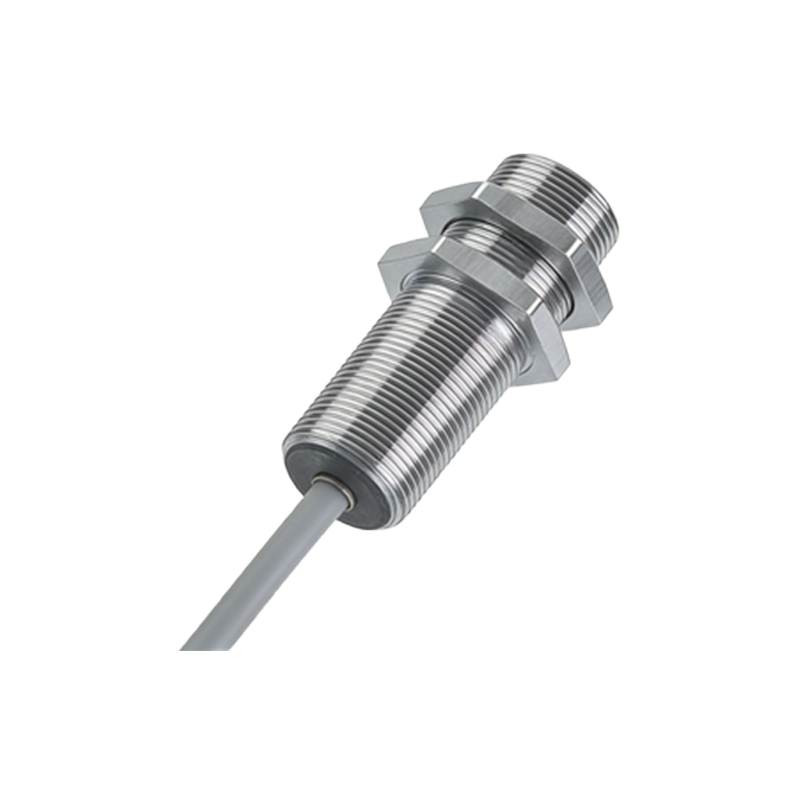
While there is no universal, enforced standard like IEC 60947 for photoelectric sensor accuracy, leading manufacturers often define their own classes. A typical spectrum might range from Class 5 (standard accuracy, e.g., ±1.0% of full scale) for general-purpose detection to Class 1 (high accuracy, e.g., ±0.1% of full scale or ±10µm) for precision measurement. Class 3 sensors offer a balanced mid-range performance. The choice directly affects cost and application suitability. A Class 5 sensor is perfectly adequate for detecting a box on a conveyor. However, verifying the precise height of semiconductor wafers or guiding a laser cutting head requires a Class 1 or even a specialized "ultra-precision" sensor, where the investment is justified by the value of precision.
Factors Influencing Real-World Accuracy
The published accuracy class is a baseline. In field applications, several factors can degrade performance. The target object's properties—its color, surface finish (matte vs. glossy), material, and even angle—can affect light reflection and absorption. Environmental contaminants like dust, oil mist, or steam can scatter or attenuate the light beam. Electrical noise from nearby motors or variable frequency drives may interfere with the sensor's signal processing circuitry. Vibrations can cause minute changes in alignment. Therefore, a system designed for a specific tolerance must account for these variables, often by derating the sensor's theoretical accuracy or implementing environmental protections like air purges or specialized housings.
Selecting the Appropriate Accuracy Class for Your Application
Engineers must perform a careful cost-benefit analysis. The first step is to determine the total allowable error budget for the process. If a positioning task requires a tolerance of ±0.5mm, selecting a sensor with a ±0.05mm accuracy is excellent, but a ±0.5mm sensor is insufficient as other system errors (mechanical play, actuator repeatability) will consume the entire budget. Consider the stability of the environment and the target characteristics. For a stable, clean environment with consistent targets, you can rely more heavily on the sensor's rated class. For harsh or variable conditions, choosing a sensor one class higher than theoretically necessary provides a crucial safety margin, reducing downtime and maintenance costs.
Calibration and Long-Term Stability
Even the highest accuracy class sensor can drift over time due to component aging or lens contamination. Therefore, understanding the sensor's long-term stability specification is vital. Some high-end models feature built-in calibration routines or reference channels that auto-correct for drift. For critical applications, establishing a periodic calibration schedule against a traceable standard is a best practice. This process verifies that the sensor continues to perform within its stated accuracy class. Modern digital sensors with IO-Link or other digital communication protocols can often report health status and even trigger maintenance alerts, facilitating predictive maintenance strategies.
Future Trends in Sensor Accuracy
Advancements are continuously pushing the boundaries. The integration of advanced CMOS imaging chips and embedded microprocessors enables sophisticated algorithms that can compensate for target color and surface variations in real-time, effectively improving usable accuracy. Multi-pixel technology and time-of-flight (ToF) principles are providing new ways to achieve sub-millimeter precision over longer ranges. Furthermore, the rise of Industrial IoT and edge computing allows for sensor networks where data from multiple sensors is fused to achieve an accuracy level beyond any single device, enabling smarter, more adaptive, and more precise automated systems.