Introduction to Photoelectric Proximity Sensors
Photoelectric proximity sensors are essential components in modern automation and industrial systems, utilizing light beams to detect the presence, absence, or distance of objects without physical contact. These sensors operate by emitting a light signal—typically infrared, visible red, or laser—and measuring the reflection or interruption of that signal. The core principle relies on the interaction between light and the target object, enabling high-precision detection across various applications, from manufacturing assembly lines to packaging machinery. Their non-contact nature minimizes wear and tear, ensuring longevity and reliability in harsh environments where dust, moisture, or vibrations are present. By converting light changes into electrical signals, these sensors provide real-time feedback to control systems, facilitating seamless automation processes.
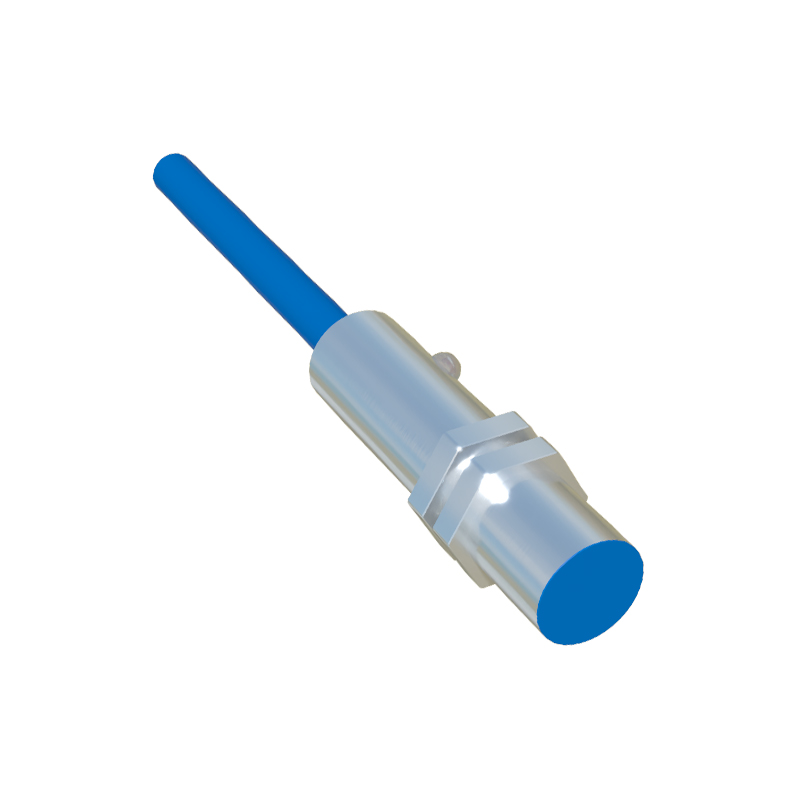
Working Principles and Key Components
The functionality of photoelectric proximity sensors is based on three primary modes: through-beam, retro-reflective, and diffuse reflective. In through-beam mode, a separate emitter and receiver are aligned; an object is detected when it interrupts the light beam between them, offering long-range and high-accuracy sensing. Retro-reflective mode uses a single unit that emits light toward a reflector, with detection occurring when an object blocks the reflected beam. Diffuse reflective mode involves the sensor emitting light directly onto the target, and the receiver detects the scattered reflection from the object's surface, suitable for shorter distances. Key components include the light source (often an LED or laser diode), a photodetector (such as a phototransistor or photodiode), and signal processing circuitry. Advanced models incorporate background suppression or foreground suppression technologies to ignore interfering surfaces, enhancing detection consistency in complex settings.
Types and Applications in Industry
Photoelectric proximity sensors are categorized by their sensing range, light type, and output configurations. Common types include standard diffuse sensors for general-purpose detection, background suppression sensors for precise distance-based sensing, and color mark sensors for distinguishing color contrasts on products. In industrial applications, they are widely used for object counting on conveyor belts, liquid level monitoring in tanks, part positioning in robotics, and edge detection in printing machines. For instance, in automotive manufacturing, these sensors ensure components are correctly aligned during assembly, while in food processing, they verify packaging integrity without contaminating products. Their versatility allows integration into PLCs (Programmable Logic Controllers) and IoT (Internet of Things) networks, supporting Industry 4.0 initiatives for smart factories.
Advantages and Limitations
The advantages of photoelectric proximity sensors are numerous. They offer fast response times, often in milliseconds, enabling high-speed operations in production lines. Their non-contact design eliminates mechanical stress, reducing maintenance costs and downtime. Additionally, they can detect a wide range of materials, including glass, plastic, metal, and liquids, regardless of color or texture in many cases. However, limitations exist: environmental factors like ambient light, fog, or dirt can interfere with accuracy, requiring regular cleaning or protective housings. Sensing range may be limited for opaque or highly reflective surfaces, and initial setup can be complex due to alignment needs. To mitigate these issues, manufacturers develop sensors with robust enclosures (e.g., IP67-rated for dust and water resistance) and adaptive algorithms for signal filtering.
Selection Criteria and Installation Tips
Selecting the right photoelectric proximity sensor involves considering factors such as sensing distance, target material, environmental conditions, and output type (e.g., NPN, PNP, analog, or digital). For long-range detection up to several meters, through-beam sensors are ideal, while diffuse sensors suit shorter ranges under 1 meter. In dusty or humid areas, choose models with high IP ratings and built-in diagnostics. During installation, ensure proper alignment of emitter and receiver units to avoid false triggers, and avoid placing sensors near strong light sources that could cause interference. Calibration should be performed according to the manufacturer's guidelines, adjusting sensitivity settings to match the application. Regular testing with sample objects helps verify performance, and using mounting brackets or adjustable holders can simplify positioning in tight spaces.
Future Trends and Innovations
The future of photoelectric proximity sensors is shaped by advancements in miniaturization, connectivity, and intelligence. Emerging trends include the integration of IO-Link communication for real-time data exchange and remote configuration, enhancing predictive maintenance capabilities. Smart sensors with embedded AI algorithms can self-adjust to environmental changes, improving reliability in dynamic settings. Additionally, the development of multi-functional sensors that combine proximity sensing with temperature or humidity monitoring is gaining traction, supporting comprehensive condition monitoring. As industries adopt more automated and flexible production systems, these sensors will evolve to offer higher precision, longer ranges, and lower power consumption, driving efficiency in sectors like logistics