Understanding the Core Technology
Long-range analog proximity sensors represent a sophisticated evolution in non-contact sensing technology. Unlike their simple digital counterparts that provide a basic on/off signal, these sensors output a continuous analog signal—typically voltage (0-10V) or current (4-20mA)—that is directly proportional to the distance of the target object. This is achieved through advanced sensing principles, most commonly utilizing high-frequency oscillation, capacitive, or ultrasonic technologies. For extended ranges, sensors often employ focused beam designs and specialized circuitry to amplify and stabilize the signal over greater distances, allowing for reliable detection from several centimeters up to multiple meters, depending on the model and technology.
Key Operational Principles and Signal Output
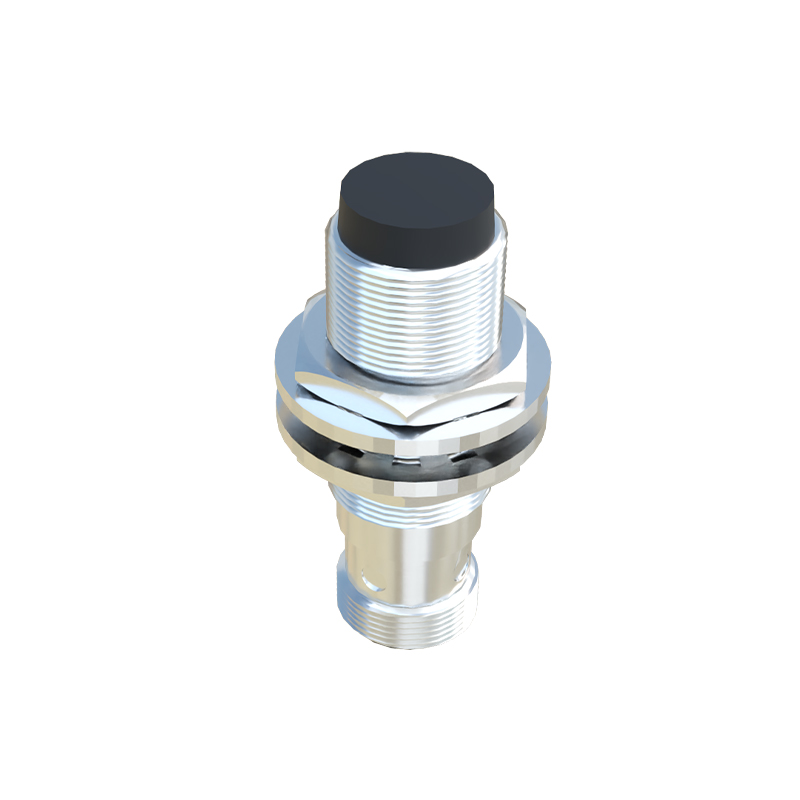
The fundamental operation involves emitting a field or beam and measuring changes caused by a target's presence. In an inductive sensor, a high-frequency electromagnetic field is generated by a coil in the sensing face. When a metallic object enters this field, eddy currents are induced, causing a change in the oscillation amplitude. This change is precisely converted into a proportional analog output. Capacitive sensors work similarly but react to both conductive and non-conductive materials by detecting changes in capacitance. The analog output provides a continuous readout, enabling systems to know not just if an object is present, but exactly how far away it is within the sensor's defined range, which is critical for precision control and measurement applications.
Advantages Over Digital Sensors
The primary advantage of the analog output is the richness of data it provides. This enables applications in positioning, edge guidance, thickness measurement, and tension control, where precise, real-time distance feedback is essential. They offer superior flexibility, as the setpoints for control actions can be programmed in the controller (PLC, etc.) rather than being fixed on the sensor itself. This allows for easy adjustment of thresholds without physical recalibration of the sensor. Furthermore, analog sensors provide better resolution and can detect slow-moving or minute changes in position that a digital sensor might miss between its fixed switching points.
Critical Application Areas
These sensors are indispensable in industries requiring precise spatial feedback. In material handling and packaging, they monitor roll diameters on winders and unwinders to maintain proper tension. In automated assembly lines, they guide robotic arms for precise part placement or verify component presence and orientation. In the wood and glass industries, they measure thickness profiles. On mobile equipment and cranes, they are used for anti-collision systems and boom angle measurement. Their ability to function reliably in harsh environments—withstanding vibrations, temperature variations, and contaminants—makes them suitable for outdoor and heavy industrial use.
Essential Selection Criteria
Selecting the right long-range analog sensor requires careful analysis of several parameters. First, define the required sensing range and the nature of the target material (metal, plastic, liquid). Consider the required output type: a 4-20mA current loop is highly resistant to electrical noise over long cable runs, while 0-10V is common for shorter distances. The sensor's linearity, repeatability, and response time are crucial for accuracy. Environmental factors like temperature rating, ingress protection (IP67/IP69K), and resistance to chemicals must align with the operating conditions. Finally, mechanical factors such as housing style (cylindrical or rectangular), size, and mounting requirements are practical considerations for integration.
Installation and Calibration Best Practices
Proper installation is paramount for optimal performance. Ensure the sensor is mounted securely to minimize vibration effects. Maintain the recommended sensing distance and avoid mounting multiple sensors too close together to prevent mutual interference. The sensing axis should be perpendicular to the target surface for most accurate readings. Calibration involves teaching the sensor the output signal corresponding to the near and far limits of the desired measurement range. This is typically done via pushbuttons or remote teach-in signals. Always use shielded cables and follow grounding guidelines to protect the sensitive analog signal from electromagnetic interference (EMI), which can cause signal drift and measurement errors.
Troubleshooting Common Issues
Common issues with long-range analog sensors often relate to signal integrity or environmental factors. Signal drift or noise can be caused by EMI, improper grounding, or power supply fluctuations. Ensure a stable power source and check cable integrity. Inaccurate readings may result from a dirty sensing face, an incorrect target material, or the target being outside the specified size or range. Temperature extremes can also affect performance; verify the sensor's operating temperature specification. Regularly consulting the sensor's diagnostic indicators, if available, and monitoring the raw analog signal on a PLC or meter are the first steps in effective troubleshooting.