Introduction to Photoelectric Sensors in Industrial Automation
Photoelectric sensors are pivotal components in modern industrial automation, enabling non-contact detection of objects through light beams. These sensors operate by emitting a light source—typically infrared, visible red, or laser—and detecting changes in the received light intensity caused by an object's presence, absence, or specific characteristics. In automated systems, they are extensively used for tasks such as object counting, positioning, edge detection, and level monitoring. Their advantages include high precision, fast response times, and durability in harsh environments. As industrial processes increasingly rely on smart manufacturing and the Industrial Internet of Things (IIoT), integrating these sensors with software platforms like Java has become essential for creating flexible, scalable, and data-driven automation solutions. Java, with its platform independence and robust libraries, offers a reliable framework for developing sensor control and data processing applications, bridging the gap between hardware operations and high-level software logic.
Fundamentals of Java Programming for Sensor Integration
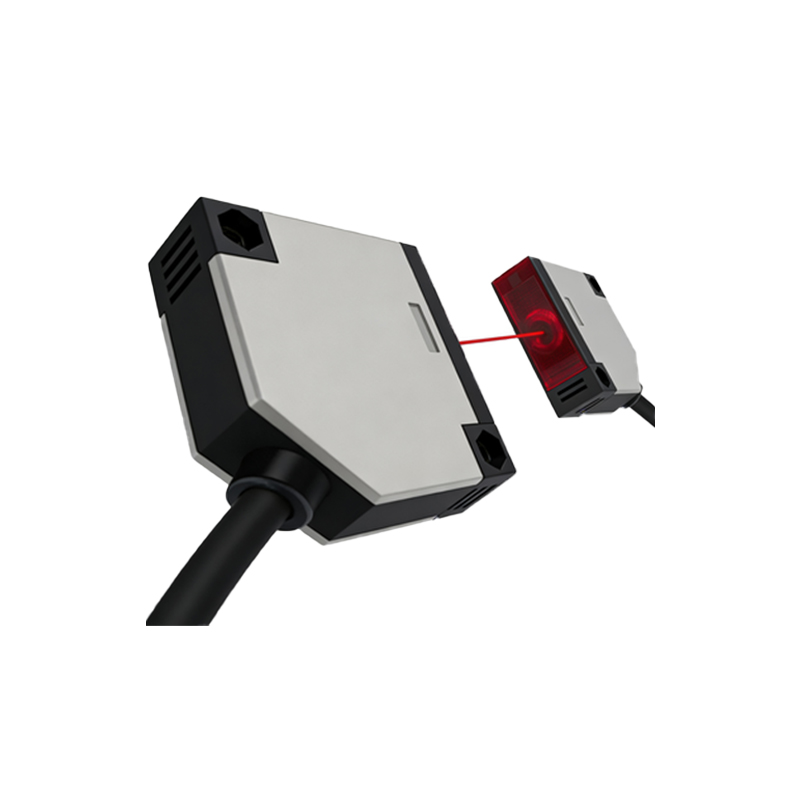
Java provides a versatile environment for interfacing with photoelectric sensors, typically connected via industrial communication protocols such as Modbus TCP/IP, Ethernet/IP, or serial interfaces like RS-232/485. To begin, engineers must understand Java's capabilities for hardware communication, including the Java Communications API (javax.comm) for serial port access or libraries like jSerialComm for cross-platform compatibility. Additionally, socket programming in Java enables network-based communication with sensors supporting Ethernet protocols. A basic Java program for sensor interaction involves establishing a connection, sending command bytes to read sensor status, and parsing the response data. For instance, using Java's InputStream and OutputStream classes, developers can transmit hexadecimal commands to query a sensor's detection state. Error handling mechanisms, such as try-catch blocks for IOException, are crucial to manage connection timeouts or data corruption, ensuring system reliability in real-time industrial settings.
Designing a Java Application for Photoelectric Sensor Control
A well-structured Java application for photoelectric sensor control typically follows a modular design to enhance maintainability and scalability. The core components include a communication layer, a data processing module, and a user interface or logging system. In the communication layer, Java threads or executors can be employed to handle concurrent sensor polling, allowing multiple sensors to be monitored simultaneously without blocking operations. For data processing, Java's object-oriented features enable the creation of sensor objects with attributes like sensor ID, detection threshold, and status flags. Algorithms can be implemented to filter noise—for example, using moving averages on sensor readings to prevent false triggers. Moreover, integrating Java with databases like MySQL via JDBC facilitates storing historical sensor data for analysis, supporting predictive maintenance initiatives. To illustrate, a sample code snippet might use a while loop to continuously read sensor inputs and trigger events, such as activating a pneumatic actuator via GPIO when an object is detected.
Advanced Techniques and Best Practices in Java Sensor Programming
For advanced industrial applications, Java developers can leverage multithreading and real-time processing frameworks to optimize photoelectric sensor performance. Utilizing Java's Concurrent API, such as ScheduledExecutorService, allows periodic sensor scanning at precise intervals, critical for high-speed production lines. Additionally, implementing design patterns like Observer or Publisher-Subscriber enables efficient event-driven architectures, where sensor detection events notify other system components, such as PLCs or cloud platforms. To ensure robustness, best practices include adding configurable parameters for sensor sensitivity and response delays via Java properties files, enabling on-the-fly adjustments without code recompilation. Security measures, such as encrypting sensor data transmissions over networks, can be integrated using Java's cryptography libraries. Furthermore, unit testing with JUnit and simulation tools helps validate sensor logic before deployment, reducing downtime. As IIoT expands, Java applications can also interface with MQTT brokers to stream sensor data to cloud analytics platforms, enhancing operational visibility and decision-making.
Common Challenges and Troubleshooting in Java-Based Sensor Systems
Despite Java's advantages, engineers may encounter challenges when programming photoelectric sensors, such as latency issues, hardware compatibility, or environmental interference. Latency can arise from Java's garbage collection or inefficient code; optimizing memory usage and employing real-time JVM options can mitigate this. For hardware compatibility, ensuring correct driver installations and baud rate configurations is vital—tools like logic analyzers can debug serial communication errors. Environmental factors like ambient light or dust may affect sensor accuracy; software solutions include implementing calibration routines in Java to adjust detection thresholds dynamically. Troubleshooting often involves logging sensor data with Java's logging frameworks (e.g., Log4j) to identify patterns in failures. Additionally, using Java's network debugging capabilities, such as Wireshark integration, helps diagnose protocol-specific issues. Regular updates to Java libraries and firmware, along with thorough documentation, are key to maintaining system integrity and minimizing operational disruptions in industrial environments.
Future Trends and Java's Role in Evolving Sensor Technologies
The future of photoelectric sensors in automation is shaped by trends like miniaturization, enhanced connectivity, and AI integration. Java is poised to play a significant role in this evolution due to its adaptability and widespread use in enterprise systems. Emerging technologies, such as smart sensors with embedded processors, can be programmed using Java ME (Micro Edition) for resource-constrained devices, enabling edge computing capabilities. Moreover, Java's support for big data frameworks like Apache Kafka facilitates real-time sensor data streaming for machine learning models, allowing predictive analytics for quality control or anomaly detection. As Industry 4.0 advances, Java-based platforms will likely integrate with digital twins and cyber-physical systems, providing virtual representations of sensor networks for simulation and optimization. By staying updated with Java advancements—such as Project Loom for lightweight concurrency—engineers can build more responsive and efficient sensor applications, driving innovation in automated manufacturing and smart infrastructure.