Introduction to Photoelectric Sensing Technology
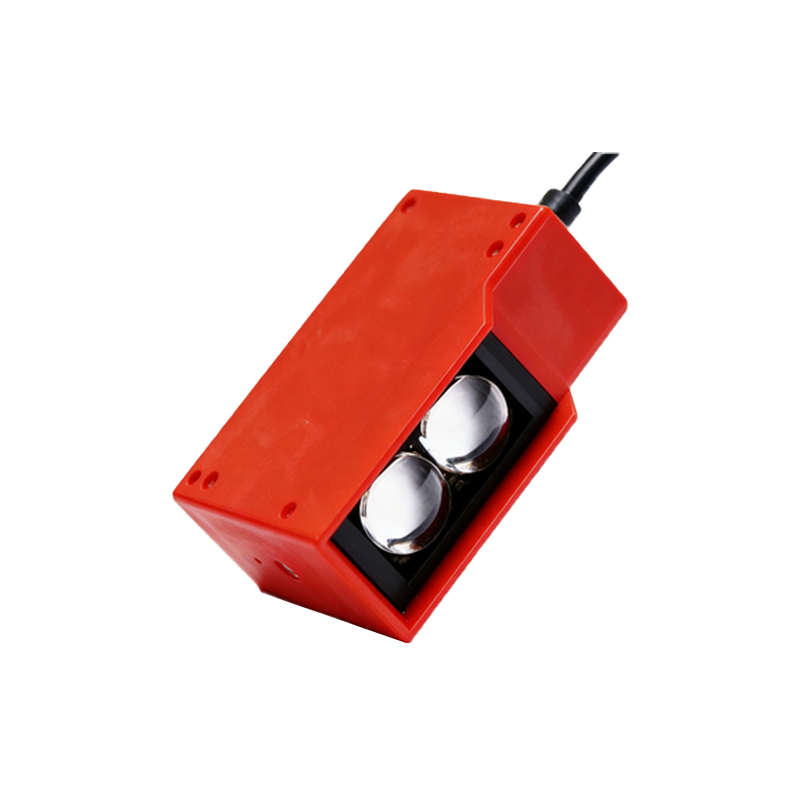
Photoelectric sensors are indispensable components in modern industrial automation, particularly for precision length measurement and cutting control. These devices operate by emitting a beam of light—typically infrared, visible red, or laser—toward a target object. A receiver then detects the presence, absence, or intensity of the reflected or transmitted light. This fundamental principle allows for non-contact detection and measurement, making photoelectric sensors ideal for applications involving fast-moving, delicate, or hot materials where physical contact is undesirable or impractical. Their high speed, accuracy, and reliability form the backbone of automated cutting processes across industries like textiles, paper, metal, and plastics.
Core Principles for Length Measurement
The accurate cutting of materials to a predefined length relies on the sensor's ability to detect specific positions or marks on the material. The most common method involves a "registration mark" sensing technique. A photoelectric sensor, often a diffuse or retro-reflective type, is positioned to detect a contrasting mark, a perforation, or the material's edge itself. Each time the sensor detects the mark, it sends a pulse signal to the system's programmable logic controller (PLC) or motion controller. The controller counts these pulses in conjunction with data from an encoder attached to a feed roller or conveyor. By knowing the precise distance the material travels between pulse signals (based on encoder counts and roller circumference), the system can calculate the exact length of material that has passed and trigger the cutter at the correct moment.
System Configuration and Sensor Selection
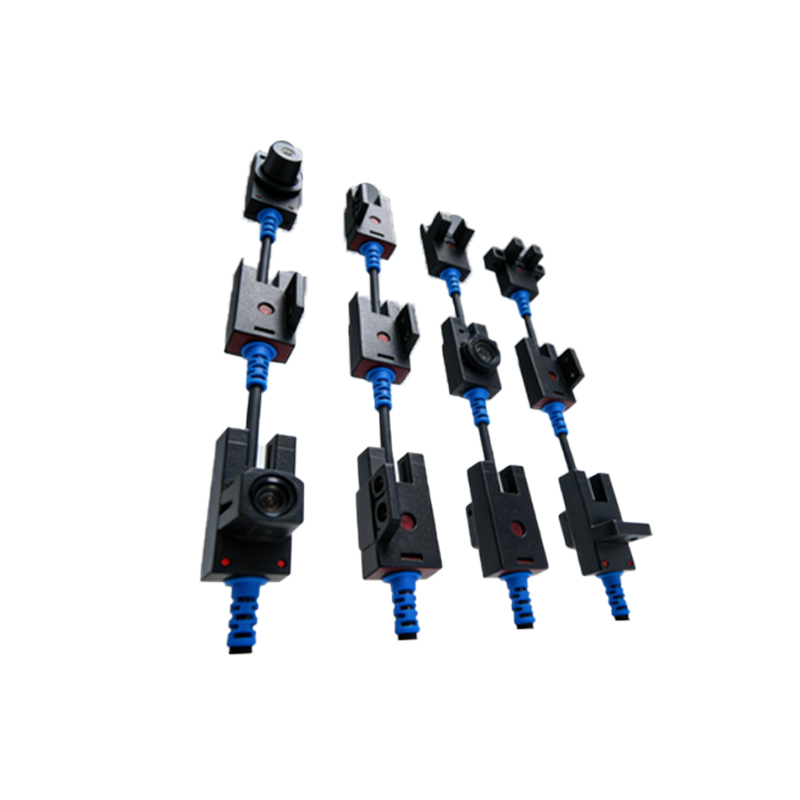
Selecting the appropriate photoelectric sensor is critical for successful length cutting. Key factors include sensing mode, sensing distance, and response time. For transparent materials like plastic films, a through-beam sensor, where the emitter and receiver are separate units, provides the highest reliability. For opaque materials, a diffuse-reflective sensor that detects light bounced off the target may suffice. Laser-based sensors offer a focused, precise spot for detecting very small marks or edges. The sensor's response time must be fast enough to detect marks at high line speeds without missing a trigger. Additionally, environmental factors such as ambient light, dust, oil mist, and material color must be considered, often necessitating sensors with modulated LED light sources and robust housings (IP67 or higher) for immunity to interference.
Integration with Cutting Machinery Control
The photoelectric sensor does not operate in isolation; it is a key input device within a closed-loop control system. The pulse from the sensor is one critical input. The other is the real-time speed feedback from the rotary encoder. The PLC processes these two data streams. It continuously calculates the length fed: Length = (Encoder Counts / Counts per Revolution) * Roller Circumference. When the calculated length equals the preset target cut length, the PLC sends an output command to actuate the cutting mechanism—whether it's a guillotine blade, rotary cutter, or laser cutter. Advanced systems may also incorporate automatic compensation for material stretch or slip, adjusting the trigger point dynamically to maintain precision over long production runs.
Calibration and Error Mitigation Strategies
Achieving and maintaining micron-level accuracy requires careful calibration and error handling. Initial setup involves teaching the system the exact distance between registration marks or calibrating the encoder counts per unit length. Common errors include missed marks due to sensor misalignment, false triggers from environmental noise, or material slippage. Mitigation strategies involve using sensors with adjustable sensitivity, implementing signal filtering in the PLC logic, and employing dual-sensor setups for verification. Regular maintenance, such as cleaning sensor lenses and checking mechanical alignment, is essential. For the highest precision applications, such as cutting semiconductor materials, laser displacement sensors that can measure exact position without physical contact are employed.
Advanced Applications and Future Trends
Beyond basic mark detection, advanced photoelectric sensing enables more sophisticated cutting paradigms. In flying cut-off applications, the cutter must synchronize its speed with the moving material before making the cut. Here, sensors provide continuous position feedback to a servo-driven cutter for perfect synchronization. Vision-based sensors, which are essentially smart cameras, can inspect for defects and adjust cut length to avoid waste. The future of photoelectric sensing in cutting lies in increased integration with Industrial Internet of Things (IIoT) platforms. Sensors with built-in IO-Link communication can transmit not just a switch signal but also parametric data like signal strength, device health, and environmental readings to a central system for predictive maintenance and process optimization, pushing the boundaries of accuracy and efficiency in industrial cutting.