Introduction to Photoelectric Sensor Cells
Photoelectric sensor cells are fundamental components in modern industrial automation, serving as the primary technology for non-contact detection, counting, and positioning of objects. These sensors operate on a simple yet powerful principle: they emit a beam of light, typically from an LED or laser diode, and detect changes in the received light intensity caused by the presence or absence of a target object. This capability makes them indispensable for a vast array of applications, from simple part counting on a conveyor belt to complex robotic guidance systems. Their reliability, speed, and versatility have cemented their role as the eyes of automated machinery, providing critical data for process control and quality assurance. Unlike mechanical limit switches, photoelectric sensors offer wear-free operation and can detect objects regardless of material composition—be it metal, plastic, glass, or even transparent films—with high precision and repeatability.
Core Operating Principles and Technologies
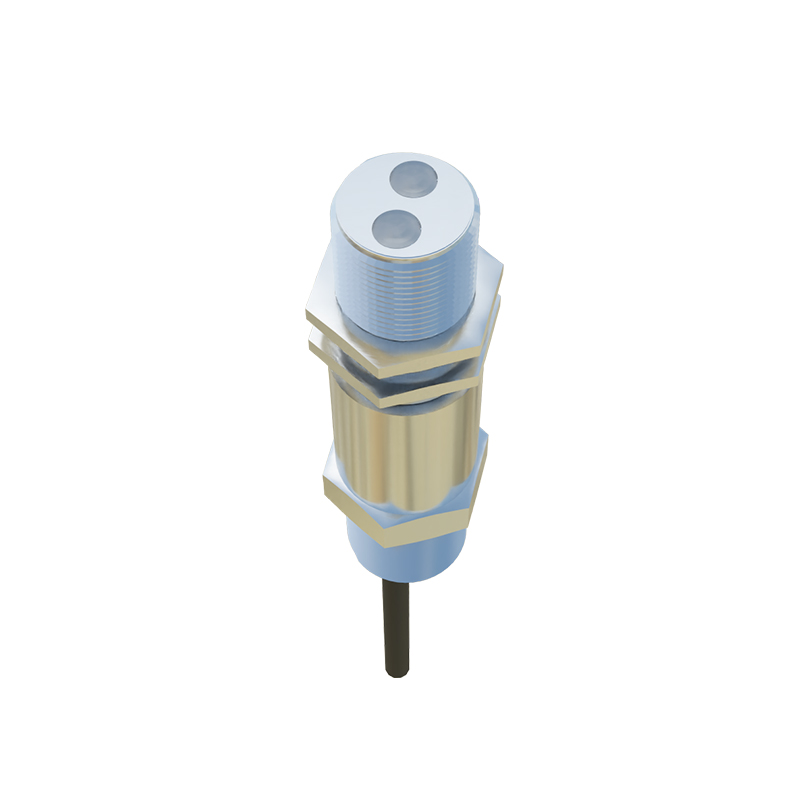
The functionality of a counting photoelectric sensor hinges on its specific operational mode. The three primary types are through-beam, retro-reflective, and diffuse reflective sensors. Through-beam sensors, also known as opposed-mode sensors, consist of separate emitter and receiver units placed opposite each other. An object is detected when it interrupts the light beam traveling from the emitter to the receiver. This mode offers the longest sensing range and highest reliability, as it is largely immune to the object's color, surface finish, or angle. Retro-reflective sensors house both emitter and receiver in a single housing, using a reflector to bounce the light beam back. Detection occurs when an object blocks this return path. Diffuse reflective sensors, or proximity-mode sensors, detect light reflected directly off the target object itself. While more compact and easier to install, their performance is influenced by the object's color, texture, and distance. For precise counting, through-beam and retro-reflective modes are often preferred due to their consistent and unambiguous detection signals.
Key Specifications for Counting Applications
Selecting the right photoelectric sensor for a counting task requires careful consideration of several technical specifications. Sensing distance, or range, is paramount and varies significantly between operational modes. Response time, measured in milliseconds or microseconds, determines how fast the sensor can detect an object and send a signal, directly impacting the maximum counting speed achievable on a high-speed line. Light source type is another critical factor; red LED light is common and cost-effective, while laser diodes provide a highly focused beam for detecting very small objects or achieving precise edge detection. Infrared and blue light sources are used for specialized applications, such as detecting transparent materials or resisting ambient light interference. Additionally, output type (e.g., NPN/PNP transistor, analog, or IO-Link) and environmental ratings (IP67/IP69K for dust and water resistance) must align with the control system and operating conditions of the plant floor.
Implementation in Counting Systems
Implementing a photoelectric sensor for counting involves more than just mounting the device. The physical setup is crucial to avoid false counts or missed objects. Proper alignment of through-beam or retro-reflective sensors is essential to ensure a stable light path. For diffuse sensors, the background and potential interfering objects must be considered. The sensor's output is typically connected to a programmable logic controller (PLC), counter timer, or a dedicated data acquisition system. The logic within this controller interprets the sensor's "on/off" pulses as countable events. Advanced sensors with built-in counters or dual digital outputs can provide direct counting functionality, simplifying system architecture. To ensure accuracy, especially with irregularly shaped or closely spaced objects, engineers often employ techniques like using two sensors in a quadrature setup to determine direction of movement or implementing timing filters in the PLC logic to debounce the signal and prevent multiple counts from a single object.
Overcoming Common Challenges and Interference
Despite their robustness, photoelectric counting systems can face challenges that compromise accuracy. Ambient light from factory windows or high-intensity lamps can saturate the receiver, causing false triggers. Selecting sensors with modulated light (pulsing at a specific frequency) and synchronous detection circuits effectively rejects constant or non-synchronous ambient light. Contamination, such as dust, oil mist, or debris on the lens or reflector, can attenuate the light beam. Regular maintenance schedules and sensors with lens-cleaning systems or high-power reserve ratings help mitigate this issue. For detecting transparent objects like glass or plastic films, specialized sensors with polarized filters or high-resolution background suppression technology are necessary to reliably distinguish the target from the background. Vibration and mechanical shock can also misalign sensors; therefore, secure mounting brackets and periodic alignment checks are standard practice in demanding industrial environments.
Advanced Features and Industry 4.0 Integration
The evolution of photoelectric sensors aligns with the broader trends of Industry 4.0 and smart manufacturing. Modern counting sensors are no longer simple binary switches. Many now feature advanced diagnostics, such as indicating signal strength via LED bargraphs or transmitting operational status via IO-Link communication. IO-Link, a point-to-point serial communication protocol, allows for parameterization, real-time monitoring of process data (like received light intensity), and remote troubleshooting, enabling predictive maintenance. Furthermore, sensors with teach-in functions simplify setup by allowing automatic adjustment of sensitivity thresholds. For complex counting and profiling tasks, laser scanner sensors create a curtain of light or a two-dimensional profile, enabling precise detection of object height, width, or orientation as they pass by, feeding richer data into the production control system for sophisticated analytics and process optimization.
Conclusion and Future Outlook
Photoelectric sensor cells remain a cornerstone technology for industrial counting and object detection. Their principle of operation is elegantly simple, yet continuous advancements in optics, electronics, and connectivity have dramatically expanded their capabilities and reliability. From ensuring packaging lines contain the correct number of items to tracking production throughput for Overall Equipment Effectiveness (OEE) calculations, these sensors provide the fundamental data that drives automated efficiency. As industries move towards greater flexibility and intelligence, the role of the photoelectric sensor will continue to evolve, integrating deeper into networked systems and providing not just count data, but actionable insights into the manufacturing process itself. The future points toward even smaller form factors, greater resistance to environmental extremes, and smarter, self-configuring sensors that further reduce engineering time and enhance system resilience.