What is a Proximity Sensor?
A proximity sensor is a non-contact electronic device designed to detect the presence or absence of an object within a specific range without any physical contact. It operates by emitting an electromagnetic field, beam of electromagnetic radiation, or acoustic signal, and then looking for changes in the field or return signal. The key advantage is its ability to detect objects reliably in harsh environments where physical contact is impractical, such as areas with dirt, oil, or extreme temperatures. These sensors are fundamental components in automation, providing critical input to control systems in manufacturing, robotics, and safety applications. Their non-contact nature ensures minimal wear and tear, leading to high reliability and long operational life.
Core Functions and Operational Principle
The primary function of a proximity sensor is to convert information about the presence or distance of a target object into an electrical signal. This signal is typically a simple ON/OFF switch, though some advanced models provide analog output proportional to distance. The operational principle varies by type. Inductive sensors generate an oscillating electromagnetic field; when a metallic object enters this field, it induces eddy currents, causing a change in oscillation amplitude that triggers the sensor's output. Capacitive sensors detect both metallic and non-metallic objects by measuring changes in capacitance caused by the object's dielectric properties. Ultrasonic sensors calculate distance by measuring the time-of-flight of reflected sound waves, while photoelectric sensors use light beams.
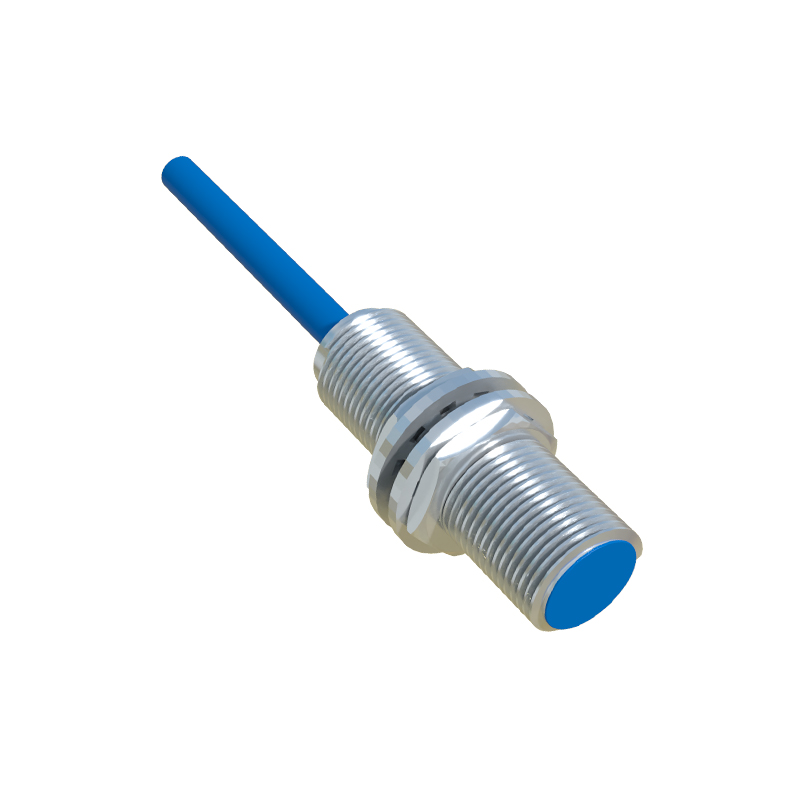
Main Types of Proximity Sensors
Several types of proximity sensors are engineered for specific applications and target materials. Inductive Proximity Sensors are the most common in industrial settings, exclusively for detecting ferrous and non-ferrous metals. They are robust, immune to environmental contaminants, and ideal for position sensing of machine parts. Capacitive Proximity Sensors can detect virtually any material, including liquids, powders, and plastics, by sensing changes in the electrical characteristics of the detection zone. They are often used in level detection and material handling. Photoelectric Sensors use a light transmitter and receiver to detect objects, excelling in long-range detection. Ultrasonic Sensors are versatile for distance measurement and level control, effective even with transparent or variably colored objects.
Key Output Signals and Wiring
Proximity sensors provide discrete digital (ON/OFF) or continuous analog output signals to interface with Programmable Logic Controllers (PLCs), motor drives, or other control units. The most common digital outputs are NPN (sinking) and PNP (sourcing) transistor configurations, defining how the sensor switches the load relative to the power supply common. Analog outputs, such as 4-20 mA or 0-10 VDC, provide a signal proportional to the distance between the sensor and the target, enabling precise positioning or dimension checking. Proper wiring and selection according to the control system's input specifications are crucial for reliable operation and avoiding damage to the sensor or controller.
Critical Selection Parameters
Selecting the right proximity sensor requires careful analysis of application parameters. Sensing Range, the maximum distance at which the sensor can reliably detect a standard target, is paramount. The target material (metal, plastic, liquid) dictates whether an inductive, capacitive, or other type is needed. Environmental factors like temperature extremes, presence of chemicals, washdown requirements, and electrical noise influence the housing material (often stainless steel or nickel-plated brass) and ingress protection (IP) rating. Response frequency indicates how quickly the sensor can detect objects passing by, critical for high-speed production lines. Physical size and mounting style (threaded barrel, rectangular) must also fit the mechanical design constraints.
Industrial Applications and Use Cases
Proximity sensors are ubiquitous in modern industry. In automotive assembly lines, they count parts, verify robot end-effector positions, and confirm door or hood closure. In packaging machinery, they detect missing labels, monitor fill levels in bottles, and control the position of sealing jaws. On conveyor systems, they detect jams, count objects, and provide precise stopping positions. In metalworking, they monitor tool wear and detect broken drills. Safety applications include presence sensing on machine guards to prevent operation when a door is open. Their role in enabling Industry 4.0 and the Industrial Internet of Things (IIoT) is growing, as they provide essential data for predictive maintenance and process optimization.
Advantages Over Mechanical Switches
Compared to traditional mechanical limit switches, proximity sensors offer significant advantages. Their non-contact operation eliminates physical wear on the sensing element and the target, dramatically increasing service life and reducing maintenance. They provide much higher switching speeds and frequencies, enabling faster machine cycles. They are inherently more reliable in dirty, wet, or corrosive environments where mechanical contacts would fail. Furthermore,