In the world of industrial automation, machinery, and smart devices, proximity sensors are the silent, reliable sentinels. They detect the presence or absence of objects without physical contact, enabling countless processes from assembly line counting to smartphone screen blanking. A common and crucial question for engineers, procurement specialists, and hobbyists alike is: "What is the price of a proximity sensor?" The answer is rarely a single figure. The cost spectrum is broad, typically ranging from under $10 for basic models to over $500 for highly specialized units. Understanding what drives this variation is key to making a cost-effective and technically sound purchase.
The primary determinant of price is the underlying sensing technology. Inductive proximity sensors, which detect metallic objects, are generally the most economical. Simple barrel-style inductive sensors can be found for $15 to $50. Capacitive sensors, capable of detecting both metallic and non-metallic materials like liquids or plastics, often carry a slight premium, ranging from $20 to $80. Photoelectric sensors, using infrared or laser light beams, cover a wide band from $30 for basic diffuse models to $200+ for long-range, precision versions. Ultrasonic sensors, ideal for distance measurement and level detection, usually sit in the $50 to $300 range. Magnetic (reed or Hall effect) sensors are often the cheapest for simple position detection, sometimes below $10.
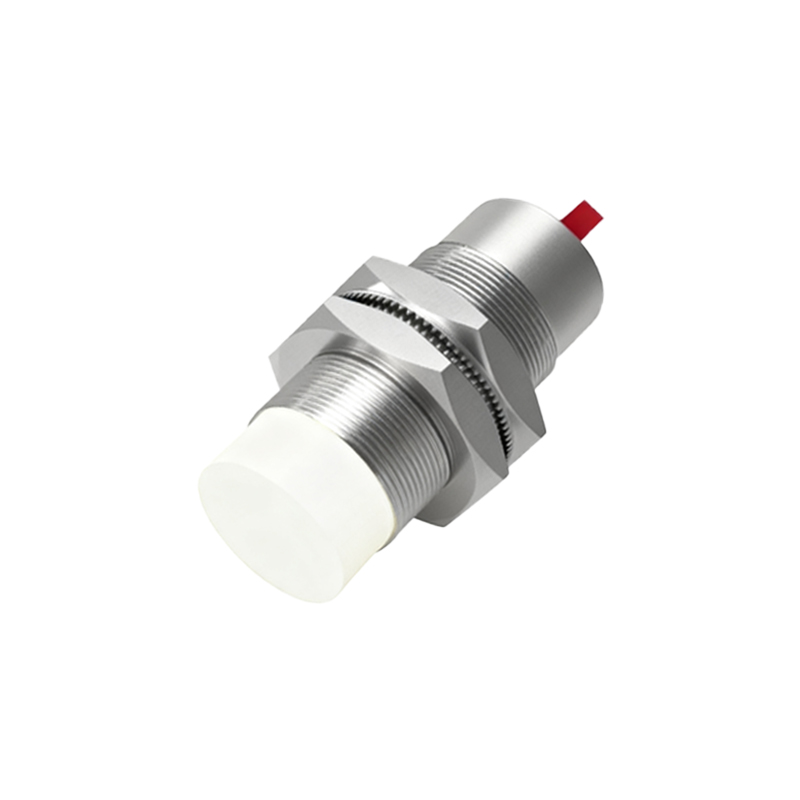
Beyond the core technology, specifications dramatically influence cost. Sensing range is a major factor. A standard 5mm inductive sensor is inexpensive, but one with a 30mm range will cost significantly more. The housing material also matters; sensors with robust stainless steel housings for harsh environments (washdown, chemical exposure) are pricier than those with nickel-plated brass or plastic bodies. Output type plays a role too. A basic two-wire AC sensor is cheaper than a three-wire DC model with a transistor output (NPN/PNP), while analog output or IO-Link communication capabilities add further cost for their programmability and data-rich features.
Brand reputation and supply chain are undeniable price factors. Established global brands like Siemens, Omron, Pepperl+Fuchs, and Schneider Electric command higher prices, justified by proven reliability, extensive quality control, global certification, and strong technical support. Their sensors might range from $50 to several hundred dollars. Conversely, generic or value-brand sensors from regional manufacturers or online marketplaces offer compelling upfront savings, often between $10 and $60. However, this may come with variances in longevity, consistency, and documentation. For a non-critical application, a value sensor is a viable option; for a mission-critical production line, the investment in a trusted brand often pays off in reduced downtime.
Quantity is a powerful lever. Purchasing a single sensor from a distributor will be at the highest unit price. Buying in bulk, whether a 10-pack or a pallet, unlocks substantial discounts. Many suppliers and manufacturers have tiered pricing clearly visible on their websites or available through quotes. Don't overlook the total cost of ownership. A slightly more expensive sensor with a longer rated lifespan (more operation cycles) and a higher IP (Ingress Protection) rating for durability might save money on replacements and maintenance in the long run.
So, how do you navigate this market smartly? First, meticulously define your application requirements: target material, required sensing distance, environmental conditions (temperature, contaminants), needed output signal, and response speed. This narrows the technology and specification choices immediately. Second, source from reputable distributors or directly from manufacturer websites. Use their filtering tools to compare models. Third, for common applications, consider checking assembled kits or popular models on platforms like Amazon or specialized electronics sites for competitive hobbyist-level pricing. Finally, never sacrifice required certifications (e.g., ATEX for hazardous areas) for cost. The safety and compliance risks are never worth the savings.
In conclusion, while a basic proximity sensor can be surprisingly affordable, their price is a direct reflection of their capability, robustness, and intelligence. By focusing on the precise needs of your project and considering long-term reliability, you can find the optimal sensor that offers the best value, not just the lowest initial price. The market offers a solution for every budget and purpose, from simple DIY projects to the most demanding industrial installations.