Laser sensors have become indispensable tools across numerous industries, from manufacturing and robotics to autonomous vehicles and consumer electronics. At the heart of their functionality lies the output signal—the critical data point that translates physical measurements into actionable information. This article delves into the nature, types, and processing of laser sensor output signals, providing a comprehensive overview for engineers, technicians, and enthusiasts.
Fundamentally, a laser sensor operates by emitting a focused beam of light toward a target. The sensor then detects the reflected or scattered light. The interaction between the emitted laser and the target alters the properties of the returning light. The sensor's internal electronics, primarily a photodetector, convert this optical information into an electrical signal. This raw electrical signal is the primary output, but it is rarely used in its raw form. It undergoes conditioning and processing to become a standardized output signal that external systems can interpret.
The most common types of output signals from laser sensors are analog and digital. Analog outputs provide a continuous voltage or current signal that varies proportionally with the measured parameter, such as distance, displacement, or presence. Common analog standards include 0-10V, 0-5V, and 4-20 mA current loops. The 4-20 mA signal is particularly valued in industrial environments for its robustness against electrical noise and its ability to indicate sensor health (a 0 mA reading typically signifies a fault). For instance, in a distance measurement application, 4 mA might correspond to the minimum sensing range, and 20 mA to the maximum.
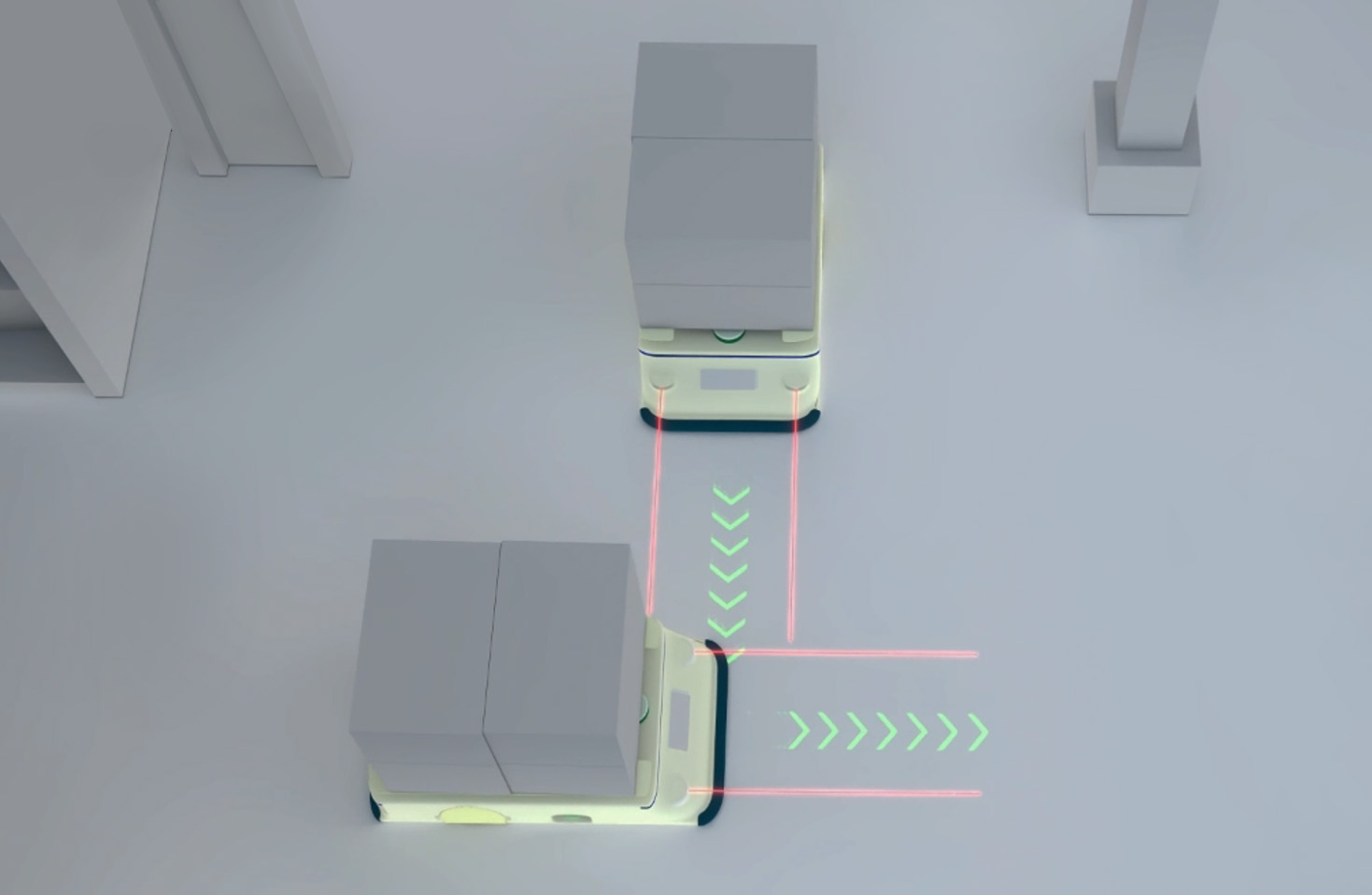
Digital outputs, on the other hand, provide discrete, binary information or serial data. Simple digital outputs include NPN (sinking) or PNP (sourcing) transistor signals that switch on or off to indicate a condition, such as an object being present within a predefined threshold. This is common in laser photoelectric sensors used for object detection or counting on conveyor belts. More sophisticated digital communication is achieved through serial interfaces like RS-232, RS-485, or modern industrial protocols such as IO-Link, PROFINET, or EtherNet/IP. These protocols allow for the transmission of not just the measured value, but also diagnostic data, parameter settings, and device identification, enabling advanced Industrial Internet of Things (IIoT) applications. IO-Link, a point-to-point serial communication standard, has gained significant traction for its simplicity and ability to integrate smart sensor data directly into control systems.

Another crucial digital output type is the pulse or frequency-modulated signal. Laser sensors used in speed measurement or precise incremental positioning often output a series of digital pulses, where the frequency of the pulses is directly proportional to the speed of the target. Similarly, some distance sensors may use a pulse width modulation (PWM) output, where the width of a constant-frequency pulse varies with the measured distance.
The choice between analog and digital output depends heavily on the application requirements, system architecture, and environmental conditions. Analog signals are straightforward for simple monitoring and control with programmable logic controllers (PLCs) but can be susceptible to signal degradation over long cables. Digital signals offer higher noise immunity, better resolution, and richer data but may require more complex interface circuitry and programming.
Once the output signal is generated, it must be accurately interpreted. This involves understanding the sensor's datasheet specifications: scaling (e.g., 1 mm per mV), linearity, resolution, and response time. Signal conditioning hardware, such as analog-to-digital converters (ADCs) for analog signals or communication modules for digital protocols, is typically required to integrate the sensor data into a data acquisition system, PLC, or microcontroller. For high-speed or high-precision applications, careful attention must be paid to sampling rates, filtering, and potential sources of error like ambient light interference or the target's surface properties (color, reflectivity, texture).
In conclusion, the output signal of a laser sensor is the vital link between the physical world and digital control systems. From simple on/off switching to complex, networked data streams, these signals enable precise measurement and automation. A clear understanding of the different signal types—their advantages, limitations, and processing needs—is essential for selecting the right sensor and implementing a reliable, accurate measurement solution. As laser sensing technology continues to advance, output signals will become even more intelligent, integrated, and fundamental to the operation of automated and intelligent systems.