Introduction to Proximity Sensing
Proximity sensors are a fundamental component in modern industrial automation, robotics, and countless consumer electronics. At their core, these devices detect the presence or absence of an object within a specified range without any physical contact. This non-contact operation is their defining characteristic, leading to high reliability, long operational life, and minimal maintenance. The principle revolves around the interaction between the sensor and the target object, which alters a physical field or beam. This change is then converted into an electrical signal that can be processed by a control system. The absence of mechanical wear and tear makes them superior to traditional limit switches in many demanding applications, from assembly lines to safety systems.
Core Operating Principle: Field Disturbance
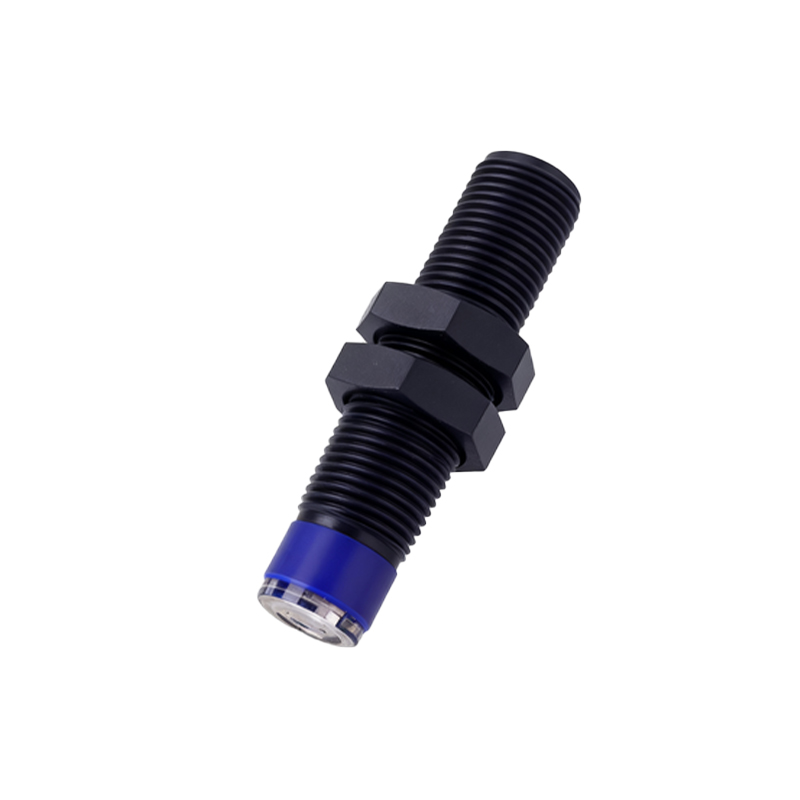
The universal principle behind all proximity sensors is the disturbance of a field. A sensor generates an electromagnetic, electrostatic, or ultrasonic field. When a target object enters this detection field, it causes a measurable change in the field's properties. For instance, in an inductive sensor, a metallic object disturbs an oscillating electromagnetic field. In a capacitive sensor, any object alters the capacitance of the system. The sensor's internal circuitry is precisely tuned to monitor this field. A threshold is set; when the disturbance exceeds this threshold, the sensor's output state switches, signaling the detection of an object. This process happens almost instantaneously, allowing for high-speed operation.
Inductive Proximity Sensor Technology
Inductive proximity sensors are specifically designed to detect metallic objects, primarily ferrous metals like steel and iron. The sensor contains four key components: an oscillator coil, a ferrite core, a detection circuit, and an output amplifier. The oscillator generates a high-frequency electromagnetic field that radiates from the sensor's active face. When a conductive metal target enters this field, eddy currents are induced on the surface of the metal. These eddy currents draw energy from the oscillator, causing a reduction in the amplitude of the oscillations. The sensor's detection circuit monitors this amplitude drop. Once the drop reaches a predetermined level, it triggers the output circuit to change state, typically from "off" to "on." The sensing range is relatively short, usually a few millimeters to several centimeters, and is influenced by the target's size, material, and shape.
Capacitive Proximity Sensor Technology
Capacitive sensors operate on the principle of capacitance change and can detect a much wider variety of materials, including metals, plastics, liquids, powders, and granular substances. The sensor face acts as one plate of a capacitor, with the target object acting as the other plate. The internal oscillator circuit measures the capacitance between the sensor and the ground. When any material with a dielectric constant different from air approaches the sensor, it increases the capacitance of the system. This increase alters the oscillator's amplitude or frequency. The subsequent detection circuit identifies this change and switches the output. A sensitivity adjustment is often provided to tune the sensor for specific materials or to ignore background objects. This makes them ideal for applications like liquid level detection, material handling, and non-metallic object counting.
Photoelectric Proximity Sensor Technology
Photoelectric sensors, often used for longer-range detection, function by emitting a beam of light (visible, infrared, or laser) and detecting changes in the received light. They are categorized mainly into three types: through-beam, retro-reflective, and diffuse (proximity) mode. The diffuse, or proximity, mode is most relevant here. The sensor contains both an emitter and a receiver. Light from the emitter strikes a target object and is scattered (diffused) in all directions. Some of this scattered light returns to the receiver. The sensor's electronics measure the intensity of this returned light. When the intensity exceeds a set threshold—indicating an object is within range—the output is activated. These sensors can detect objects of almost any material, color, or finish, but their performance can be affected by environmental factors like dust, fog, or ambient light.
Ultrasonic Proximity Sensor Technology
Ultrasonic sensors measure distance or detect presence using sound waves beyond the human hearing range (typically 40-400 kHz). The sensor emits short, high-frequency sound pulses from a piezoelectric transducer. These pulses travel through the air, hit a target object, and reflect back as an echo to the sensor. The sensor calculates the time interval between sending the signal and receiving the echo. This time-of-flight measurement is directly proportional to the distance to the object. For simple presence detection, a threshold distance is set. Ultrasonic sensors are excellent for detecting objects regardless of color, transparency, or material, and they perform well in challenging environments with dust, smoke, or vapors