Understanding the Core Challenge of Miniaturization
The relentless drive towards miniaturization in industrial automation and consumer electronics has led to the proliferation of ultra-small and ultra-short proximity sensors. These compact devices, often measuring just a few millimeters in length and diameter, present unique engineering challenges. The primary issue is not merely their reduced physical footprint but the consequent impact on their operational characteristics. Key parameters such as sensing range, switching frequency, and environmental robustness are inherently constrained by the laws of physics when component size is drastically reduced. Engineers must navigate a delicate balance between achieving the desired compact form factor and maintaining sufficient performance for the intended application. This often involves trade-offs, where a shorter nominal sensing range is accepted in exchange for seamless integration into tight spaces.
Optimizing Installation and Alignment for Maximum Performance
Precision in installation becomes paramount with ultra-short-range sensors. Even a minor misalignment can lead to complete failure to detect the target. It is critical to follow the manufacturer's specifications for mounting flush or non-flush, ensuring the sensor face is perfectly parallel to the target surface. The use of precision mounting brackets and jigs is highly recommended during assembly. Furthermore, the material and surface finish of the target object significantly influence performance. For inductive sensors, mild steel provides the longest sensing distance, while stainless steel or aluminum may reduce it considerably. Compensating for this may require selecting a sensor with a wider tolerance or adjusting the installation gap to be even smaller than the standard specification.
Selecting the Appropriate Sensing Technology and Output
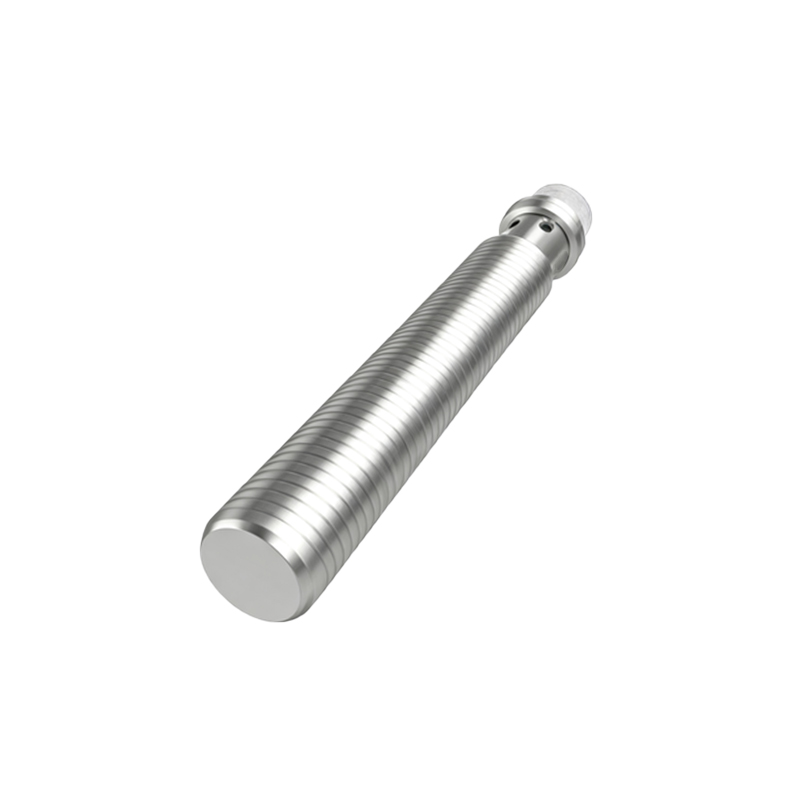
Choosing the right technology is the first step in overcoming size limitations. For metallic targets, inductive proximity sensors remain the standard, with newer models offering sub-miniature housings (e.g., M3, M4, M5 threaded barrels). For non-metallic objects, capacitive or ultrasonic sensors in miniature formats are available, though their effective range might be even more limited. The output type also matters. A standard two-wire AC/DC or three-wire DC sensor with a solid-state output (PNP or NPN) is common. However, for applications requiring extremely high-speed counting or response, a sensor with a push-pull or NAMUR output might be necessary, even in a small package, to interface correctly with high-speed counters or safety controllers.
Mitigating Electrical Noise and Interference Issues
The compact circuitry within these tiny sensors can be more susceptible to electromagnetic interference (EMI) and electrical noise from nearby drives, motors, or power lines. This susceptibility can cause false triggering or unstable output signals. To mitigate this, employ strict wiring practices: use shielded cables, ground the shield properly at the controller end, and keep sensor cables away from power lines. Many modern ultra-small sensors incorporate built-in noise immunity circuits. Ensuring a stable, clean power supply within the sensor's specified voltage range is equally crucial. In environments with severe interference, selecting a sensor with a higher degree of immunity (often specified in V/m) is a necessary precaution.
Addressing Environmental and Durability Concerns
The small size often means less material protecting the internal electronics from harsh conditions. When specifying an ultra-small sensor, its Ingress Protection (IP) rating and material construction are critical. For wash-down environments in food and beverage or pharmaceutical applications, sensors with an IP67, IP68, or IP69K rating in stainless steel housings are essential, even in miniature form. Temperature range is another factor; the compact design may dissipate heat differently. Always verify the sensor's operational temperature specification matches the application's ambient conditions, including potential thermal cycling.
Leveraging Advanced Features in Compact Designs
Manufacturers are continuously innovating to pack more functionality into tiny housings. Do not assume a small sensor is a basic sensor. Many now offer features like embedded IO-Link communication, which allows for parameter adjustment, condition monitoring, and advanced diagnostics remotely. This can be invaluable for predictive maintenance and optimizing performance in hard-to-reach installations. Other features to look for include short-circuit protection, reverse polarity protection, and welding-field immunity (for inductive types). These integrated protections enhance reliability and simplify circuit design.
Practical Application Tips and Troubleshooting Steps
In practice, start by defining the absolute minimum performance requirements for sensing distance, speed, and environmental resistance. Then, select a sensor that meets these with a small safety margin. During commissioning, use the target material to test the actual sensing distance under real conditions. If the sensor fails to operate consistently, systematically check: power supply voltage, wiring connections, target alignment, target material compatibility, and the presence of external interfering objects or fields. Remember, the effective sensing distance (Sn) can be