Introduction to Slot Type Photoelectric Sensors
A slot type photoelectric sensor, often called a through-beam or fork sensor, is a self-contained device featuring an integrated transmitter and receiver facing each other across a U-shaped or "forked" gap. The fundamental operating principle is straightforward: the transmitter emits a beam of light, typically infrared or visible red, across this open slot. The receiver on the opposite side continuously monitors for this light. When an opaque object passes through the slot, it interrupts the light beam. This interruption is detected by the receiver, which then triggers a change in the sensor's output signal. This simple yet robust "light-on" or "dark-on" detection logic makes it exceptionally reliable for counting, positioning, and end-of-travel detection applications in industrial automation.
Anatomy of a Slot Sensor: A Visual Breakdown
Examining a detailed image of a slot sensor reveals its key components. The housing is typically molded from rugged plastic or metal, designed to withstand industrial environments. The slot itself is the central, defining feature. On one inner wall, you will see the light-emitting element (the transmitter), often a Light Emitting Diode (LED). Directly opposite, on the other inner wall, is the phototransistor or photodiode that acts as the receiver. The width and depth of the slot are critical specifications, determining the size of objects it can detect. Many images also show status indicator LEDs, wiring terminals or a connector, and mounting holes. High-resolution images may even reveal optical lenses that help collimate the light beam for increased sensing distance and accuracy within the slot.
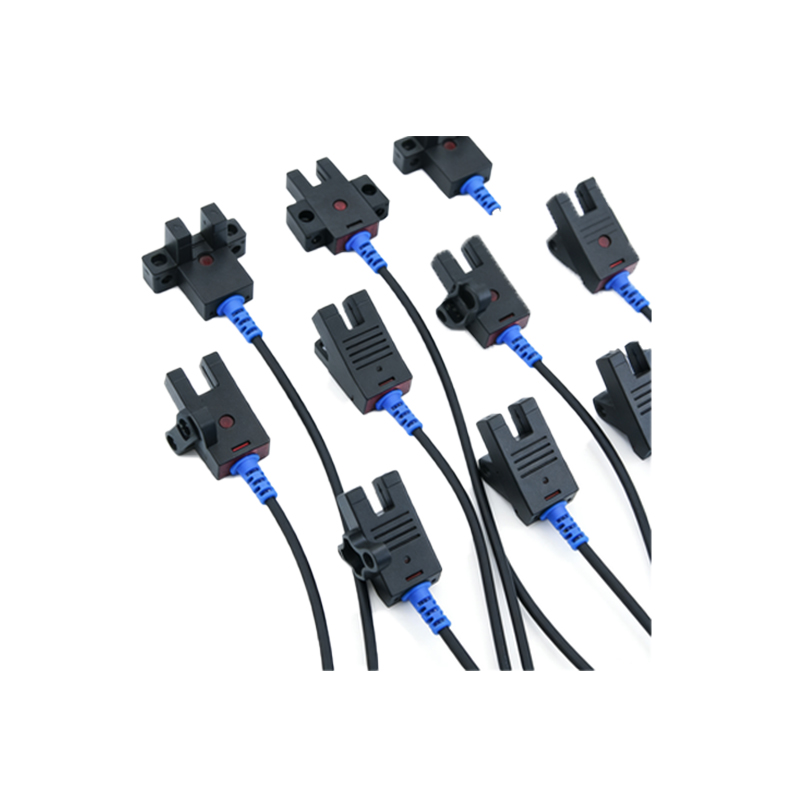
Key Specifications Illustrated in Diagrams
Technical diagrams accompanying sensor images are invaluable for selection. The slot width is the clear opening distance between the transmitter and receiver; an object must be smaller than this to pass through. The slot depth indicates how far back an object can be detected within the fork. Sensing distance, for a slot sensor, is essentially the effective working depth of the slot. Response time, often depicted in timing charts, shows the sensor's speed in reacting to a beam interruption. Output configurations (NPN/PNP, NO/NC) are usually symbolized in circuit diagrams. Furthermore, images of light beam patterns illustrate the effective sensing area, which is crucial for detecting very small objects like thin wires or PCB leads that must precisely break the beam.
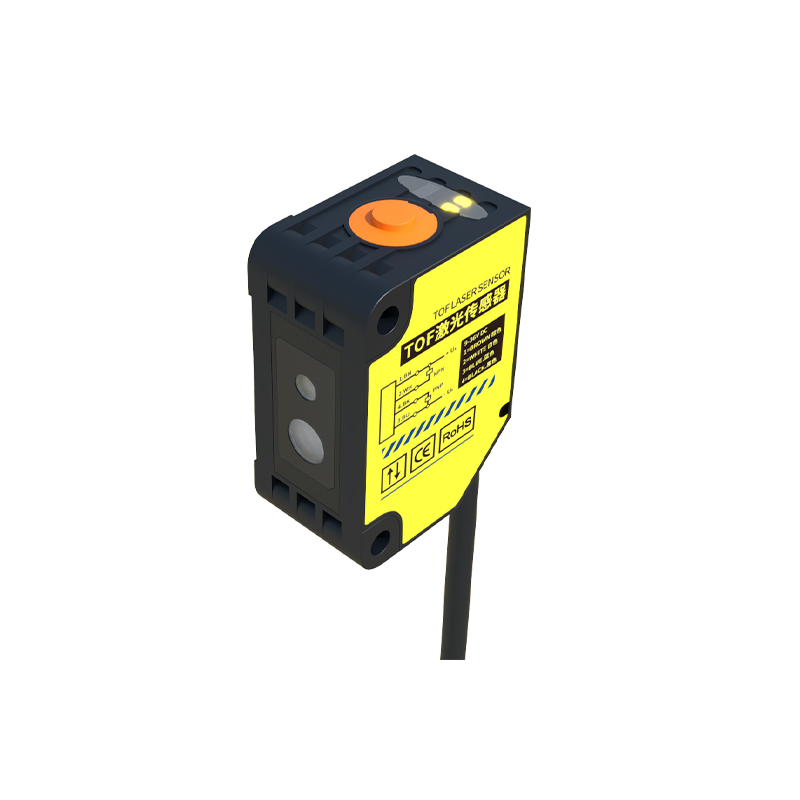
Comparative Imagery: Slot vs. Other Photoelectric Types
Side-by-side comparison images powerfully demonstrate the unique advantages of the slot type. Unlike a standard through-beam system which requires separate, aligned components on two sides of a machine, the slot sensor's components are pre-aligned in a single unit, eliminating complex setup. Contrasted with a diffuse reflective sensor, which detects an object by bouncing light off it, the slot sensor is immune to the object's color, reflectivity, or surface finish; it only cares about beam interruption. This makes it ideal for detecting transparent or shiny objects that diffuse sensors struggle with. Images also show how slot sensors differ from retro-reflective types, which use a reflector and can have a longer range but are susceptible to false triggers from highly reflective surfaces.
Common Applications in Industrial Settings
Photographs from factory floors showcase these sensors in action. A classic application is paper or sheet metal detection, where the material passes directly through the slot to verify presence or count sheets. They are ubiquitous in printer and copier mechanisms for detecting paper jams and monitoring media presence. Images show them mounted on conveyor systems, counting bottles, cans, or packages as they break the beam. In automated assembly, they are used for verifying the presence of a part in a fixture or checking if a component like a screw or pin is properly inserted. High-speed imaging often captures them in rotary encoder applications, where a slotted disk spins through the fork to measure speed or position.
Installation and Alignment Best Practices
Installation diagrams emphasize critical mounting considerations. The sensor must be securely fastened so that the target object's path consistently passes through the center of the slot, perpendicular to the light beam. Images highlight the importance of avoiding mounting strain on the housing and ensuring that no external object (like a vibrating machine part) can accidentally enter the slot. For environments with airborne contaminants like dust or oil mist, images may show sensors with built-in air blow nozzles to keep the optical windows clean, or the use of protective shrouds. Proper alignment is inherently simpler than with separate-head sensors, but visuals still stress ensuring the object's travel path is fully within the slot's depth.
Troubleshooting with Visual Cues
Many sensor images include diagnostic indicator LEDs. A typical setup includes a power (green) LED and a signal (orange/red) LED. In normal operation with no object present, the power LED is on, and the signal LED's state depends on the "light-on/dark-on" mode. When an object interrupts the beam, the signal LED toggles. Troubleshooting guides use simple graphics: if both LEDs are off, check power supply. If the power LED is on but the signal LED does not change when an object is inserted, it may indicate misalignment (though less likely with a slot type), a dirty optical surface, a faulty object that is too transparent, or a damaged sensor. Close-up images of dirty lenses versus clean ones provide a clear visual reference for maintenance.
Advancements and Specialized Variants
Recent product images reveal advancements in slot sensor technology. High-precision models feature extremely narrow slots and focused beams for detecting ultra-thin materials or verifying the presence of miniature components. Some images depict "contrast" sensors with a slot design, which can differentiate between two materials based on light transmissivity, not just interruption. Others show safety-rated slot sensors used in light curtains for personnel protection around machinery. Furthermore, there are hygienic models with stainless-steel housings and smooth surfaces for wash-down environments in food and pharmaceutical processing. These specialized images help engineers select the perfect variant for challenging applications beyond standard object detection.