Introduction to Photoelectric Proximity Sensing
Photoelectric proximity sensors, often simply called photoelectric sensors, are indispensable components in modern industrial automation and control systems. These devices operate on the principle of using a light beam, typically infrared, visible red, or laser, to detect the presence, absence, or distance of an object without any physical contact. The core mechanism involves an emitter that projects a light beam and a receiver that detects changes in the received light signal. When an object interrupts or reflects this beam, the sensor's output state changes, triggering a control action. This non-contact method offers significant advantages over mechanical limit switches, including higher reliability, faster response times, and no wear and tear from physical interaction. Their versatility allows them to detect objects of virtually any material—metal, plastic, wood, glass, or liquid—provided the object affects the light beam's properties.
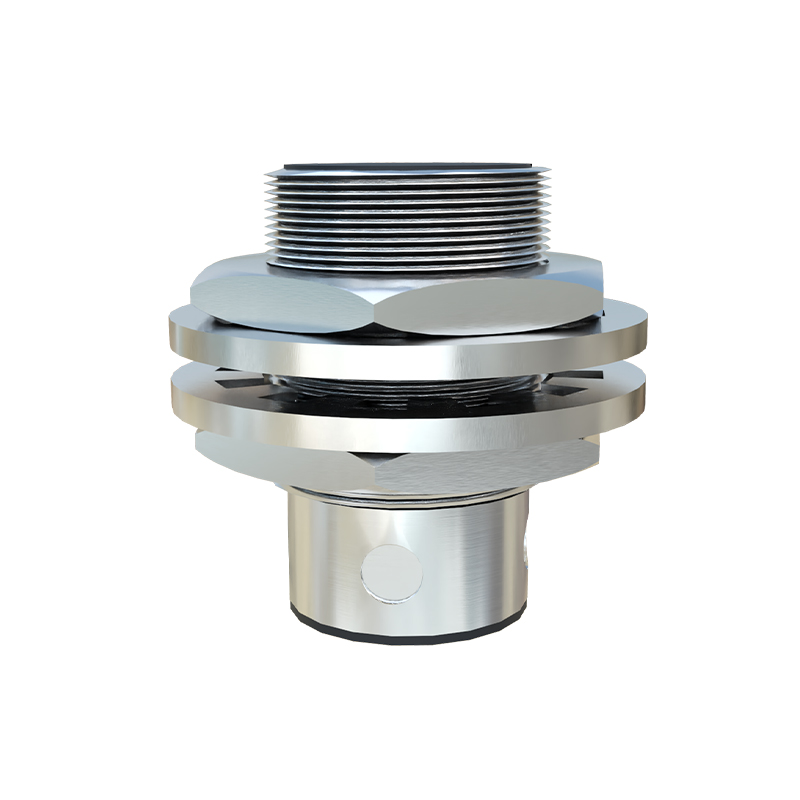
Core Operating Principles and Components
The fundamental operation hinges on the modulation of light. The emitter's light source is pulsed at a specific high frequency. The receiver is tuned to respond only to light modulated at this same frequency, making the sensor highly immune to ambient light interference from factory lighting or sunlight. Key internal components include the light-emitting element (often an LED or laser diode), the photodetector (such as a phototransistor or photodiode), and signal processing circuitry. The sensor's logic, typically programmable, determines the output condition. For instance, in a "light-on" mode, the output is activated when the receiver detects the light beam. Conversely, in "dark-on" mode, the output activates when the beam is blocked. This flexibility allows for easy integration into diverse control logic systems.
Primary Sensing Modes: Through-Beam, Retroreflective, and Diffuse
Photoelectric sensors are categorized mainly by their sensing mode, which defines the path of the light beam. Through-beam sensors, also known as opposed mode sensors, consist of separate emitter and receiver units placed opposite each other. Detection occurs when an object breaks the beam traveling directly from emitter to receiver. This mode offers the longest sensing ranges and highest reliability. Retroreflective sensors house both emitter and receiver in a single housing. They rely on a reflector, typically a corner-cube reflector, to bounce the beam back to the receiver. An object is detected when it blocks this reflected beam. Diffuse sensors, or proximity mode sensors, also have a combined emitter and receiver. They detect an object by the light diffused or reflected directly from the object's surface. While simpler to install as they require only one device and no reflector, their sensing range is shorter and more dependent on the object's color, texture, and reflectivity.
Specialized Types and Advanced Features
Beyond the basic types, specialized variants address niche applications. Background suppression sensors are a sophisticated type of diffuse sensor that uses triangulation to detect an object only within a precise, defined range, ignoring objects or surfaces beyond that set distance. This is crucial for detecting objects on a conveyor belt while ignoring the belt itself. Color sensors differentiate between colors by analyzing the reflected light's wavelength. Contrast sensors detect the difference in contrast or grayscale value between a mark and its background. Fiber optic sensors use flexible fiber optic cables to guide light to and from a small, remote sensing head, ideal for tight spaces, high-temperature environments, or areas with high electrical noise. Modern sensors also incorporate advanced diagnostics via IO-Link communication, teach-in functionality for easy setup, and robust housing ratings like IP67 and IP69K for harsh environments.
Critical Selection Criteria for Industrial Use
Selecting the appropriate photoelectric sensor requires careful analysis of the application parameters. The sensing range is paramount; through-beam offers the longest range, often over 100 meters, while diffuse modes are limited to a few meters. The target object's properties—size, material, color, and surface finish—directly influence the choice. A glossy object may be easily detected by a diffuse sensor, while a matte black object might require a through-beam or a focused background suppression sensor. The required response time, often in microseconds, must match the process speed. Environmental factors such as dust, fog, steam, vibration, and ambient temperature dictate the needed ingress protection and housing material. Finally, the electrical output type (PNP/NPN, analog, relay) and connection method must be compatible with the existing control system, such as a PLC.
Typical Applications Across Manufacturing and Logistics
The applications for photoelectric proximity sensors are vast and cross-sectoral. In packaging machinery, they count bottles, detect labels, and verify cap placement. On assembly lines, they confirm part presence and orientation for robotic pick-and-place systems. In