Introduction to Photoelectric Sensors
Photoelectric sensors are pivotal components in modern industrial automation, utilizing light beams to detect the presence, absence, or distance of objects. These sensors operate by emitting a light source—typically infrared, visible, or laser—and measuring the reflection or interruption of that light. In motor control applications, they serve as critical input devices, providing real-time data to control systems. Their non-contact nature ensures minimal wear and tear, making them ideal for high-speed and repetitive tasks. By converting optical signals into electrical outputs, photoelectric sensors enable precise monitoring and triggering actions in motor-driven systems, enhancing efficiency and safety across manufacturing lines, conveyor belts, and robotic arms.
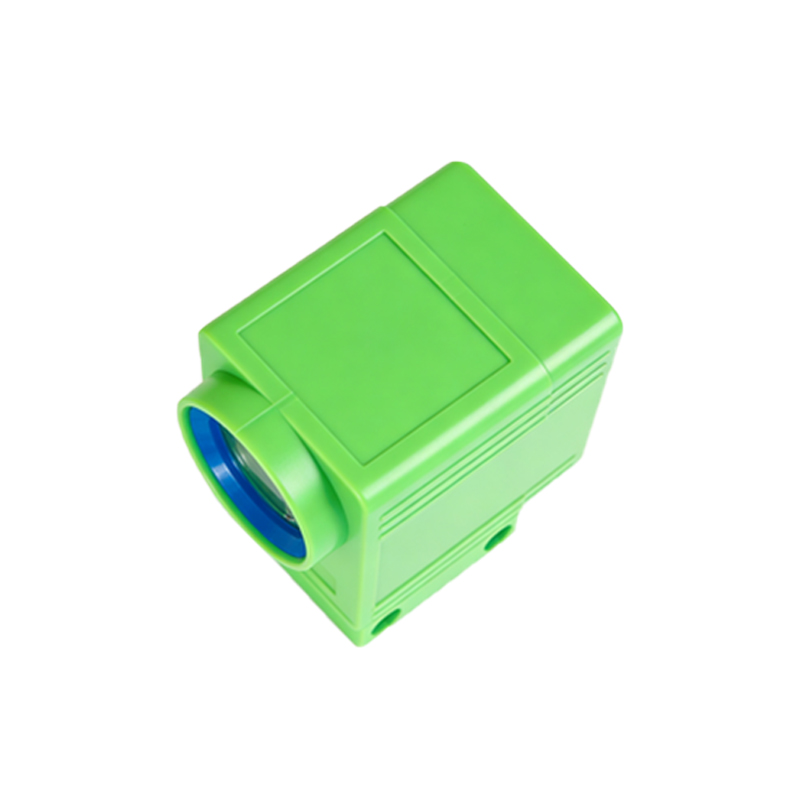
Working Principles of Photoelectric Sensors
The core functionality of photoelectric sensors revolves around three main types: through-beam, retro-reflective, and diffuse. Through-beam sensors consist of separate emitter and receiver units; when an object interrupts the light beam, the receiver detects the change, signaling the control system. Retro-reflective sensors use a single unit with a reflector, where the light bounces back unless obstructed. Diffuse sensors rely on light reflecting directly off the target object. In motor control, these sensors detect parameters such as position, speed, or rotation. For instance, a through-beam sensor can monitor a motor's shaft rotation by counting interruptions per revolution, while diffuse sensors might identify product placement on a conveyor, triggering motor start or stop commands. The electrical output—often in the form of digital signals or analog voltage—feeds into programmable logic controllers (PLCs) or motor drives for further processing.
Integration with Motor Control Systems
Integrating photoelectric sensors into motor control systems involves connecting them to controllers like PLCs, variable frequency drives (VFDs), or microcontrollers. When a sensor detects an object, it sends a signal to the controller, which then adjusts the motor's operation based on predefined logic. For example, in a packaging machine, a photoelectric sensor might detect a box on a conveyor, prompting the controller to activate a motor that moves the box to the next station. This integration allows for automated sequencing, where sensors provide feedback for closed-loop control, ensuring motors respond accurately to environmental changes. Advanced setups may include multiple sensors networked via industrial protocols like Ethernet/IP or Modbus, enabling synchronized control of several motors in complex assembly lines, thereby reducing manual intervention and boosting productivity.
Applications in Industrial Settings
Photoelectric sensors are extensively used in industrial motor control for tasks requiring precision and reliability. In automotive manufacturing, they monitor robotic arm positions, ensuring motors move components accurately during assembly. In material handling, sensors on conveyors detect item flow, controlling motor speed to prevent jams or overloads. They also play a role in safety systems; for instance, sensors can halt motors if a person enters a hazardous zone, using light curtains or barriers. Additionally, in CNC machinery, photoelectric sensors help calibrate motor-driven axes by detecting reference points, enhancing machining accuracy. These applications highlight how sensors contribute to energy efficiency by enabling motors to operate only when needed, reducing downtime and maintenance costs in sectors like food processing, pharmaceuticals, and logistics.
Benefits and Challenges
The use of photoelectric sensors in motor control offers significant advantages, including high accuracy, fast response times, and durability in harsh environments. Their non-contact operation minimizes mechanical failures, while their versatility supports diverse detection ranges and object types. However, challenges exist, such as sensitivity to ambient light, dust, or fog, which can cause false triggers. To mitigate this, sensors with modulated light or protective housings are employed. Regular calibration and alignment are necessary to maintain performance, especially in high-vibration settings. Despite these hurdles, the synergy between photoelectric sensors and motors drives innovation in Industry 4.0, facilitating smart factories where real-time data from sensors optimizes motor efficiency and predictive maintenance.
Future Trends and Innovations
Emerging trends in photoelectric sensor technology are reshaping motor control in automation. The integration of IoT connectivity allows sensors to transmit data to cloud platforms, enabling remote monitoring and analytics for motor health. Miniaturized sensors with enhanced resolution are becoming common, permitting finer control in compact spaces. Additionally, advancements in AI and machine learning enable predictive algorithms that use sensor inputs to anticipate motor failures or adjust speeds dynamically. In renewable energy systems, photoelectric sensors assist in solar tracking motors, optimizing panel alignment. As industries embrace digital twins and cyber-physical systems, the role of these sensors will expand, fostering more adaptive and energy-efficient motor control solutions for sustainable manufacturing.