Introduction to High-Frequency Proximity Sensing in Hoist Systems
The operational integrity and safety of industrial hoist systems are paramount in sectors ranging from manufacturing and warehousing to mining and construction. At the heart of modern hoist control and safety mechanisms lies a critical component: the proximity sensor. Specifically, high-frequency proximity sensors have emerged as a superior solution for precise, non-contact detection in these demanding environments. Unlike their lower-frequency counterparts, these sensors operate on the principle of eddy current generation, utilizing high-frequency oscillating electromagnetic fields to detect the presence of metallic targets with exceptional accuracy and speed. This technology is particularly suited for hoist applications where reliability, repeatability, and resistance to environmental contaminants are non-negotiable requirements.
Core Operating Principles and Technical Advantages
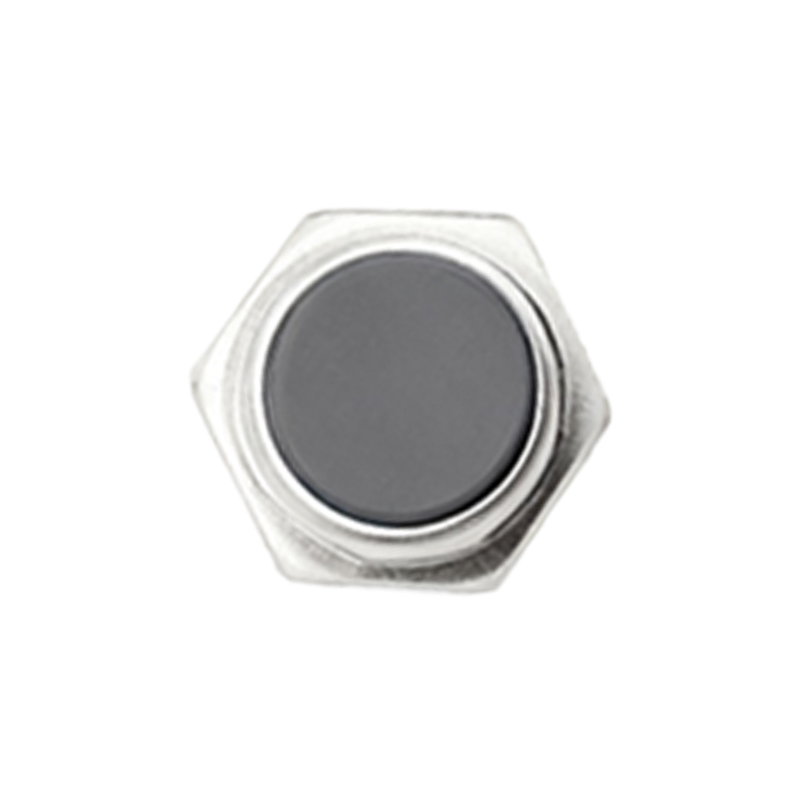
High-frequency proximity sensors, often categorized as inductive sensors, function by generating a high-frequency electromagnetic field from an oscillator circuit within the sensing face. When a conductive metal target enters this field, eddy currents are induced on the target's surface. This action dampens the oscillation amplitude within the sensor. An integrated evaluation circuit detects this change and triggers a solid-state output switch. The "high-frequency" designation typically refers to oscillation frequencies in the range of several hundred kHz to over 1 MHz. This high frequency confers significant advantages. It allows for a faster response time, enabling the detection of very small or fast-moving parts—a common scenario in high-speed hoisting operations. Furthermore, it permits a more compact sensor design with a smaller sensing face, facilitating installation in the spatially constrained housings of hoist machinery.
Key Selection Criteria for Hoist Applications
Selecting the appropriate high-frequency proximity sensor for a hoist system requires careful consideration of several technical parameters. First, the sensing distance, or nominal range, must be specified. For hoist limit switching or position verification, a precise and consistent sensing range is critical to prevent over-travel. The sensor's housing material is another vital factor; stainless steel or nickel-plated brass housings offer superior resistance to physical impact, abrasion, and corrosive chemicals often present in industrial settings. The output type—typically NPN (sinking) or PNP (sourcing)—must be compatible with the hoist's programmable logic controller (PLC). Additionally, protection ratings such as IP67 or IP69K are essential to ensure reliable operation despite exposure to dust, moisture, and high-pressure washdowns common in maintenance procedures.
Implementation for Safety and Limit Control
One of the most critical applications of high-frequency proximity sensors in hoists is for upper and lower limit control. By strategically mounting these sensors along the hoist's travel path and attaching a metal flag or target to the moving hook block or trolley, the system can achieve precise end-of-travel positioning. The sensor's non-contact nature eliminates the wear and mechanical failure associated with traditional mechanical limit switches. When the target approaches the sensor, the triggered signal is sent to the control system to safely decelerate and stop the hoist movement, preventing dangerous over-hoisting or collisions. This setup is fundamental for both operational safety and the protection of expensive equipment and lifted loads.
Enhancing Precision in Positioning and Synchronization
Beyond basic limit switching, high-frequency sensors enable advanced automation in hoist systems. They are instrumental in creating multiple positioning points for automated storage and retrieval systems (AS/RS) or complex assembly lines. By installing an array of sensors at various heights or along a runway, the hoist can be programmed to stop at exact, repeatable positions for loading, unloading, or process tasks. Their fast response and high switching frequency also make them ideal for synchronization tasks, such as ensuring two or more hoists lift a spreader beam or a large load in unison, thereby maintaining balance and structural integrity.
Addressing Environmental and Interference Challenges
Industrial environments pose significant challenges, including electromagnetic interference (EMI) from motor drives, welding equipment, and power lines. High-frequency proximity sensors are designed with robust shielding and advanced circuitry to minimize the effects of such interference, ensuring stable switching behavior. Furthermore, their immunity to ambient light, dust (provided the housing rating is adequate), and non-metallic objects means they will not give false triggers from debris, oil mist, or plastic components nearby. This inherent robustness translates directly into reduced downtime and maintenance costs for the hoist system.
Installation Best Practices and Maintenance Insights
Proper installation is crucial for optimal sensor performance. Sensors must be mounted securely to prevent vibration-induced misalignment. It is critical to maintain the specified gap between the sensor face and the target; this gap must account for any mechanical tolerances or sway in the load.