Introduction to 400mm Sensing Range
In the realm of industrial automation, photoelectric sensors with a 400mm sensing range represent a critical category for medium-distance detection tasks. These sensors operate by emitting a beam of light—typically infrared, visible red, or laser—and detecting changes in the received light signal caused by the presence or absence of a target object. The 400mm specification refers to the optimal operating distance at which the sensor can reliably detect objects under standard conditions. This range is particularly well-suited for applications where objects need to be detected from a moderate distance, such as in packaging machinery, material handling systems, and assembly line verification. The choice of a 400mm sensor often strikes a balance between the compact size of short-range sensors and the extended reach of long-range variants, offering versatility without compromising on response speed or form factor.
Key Operating Principles and Technologies
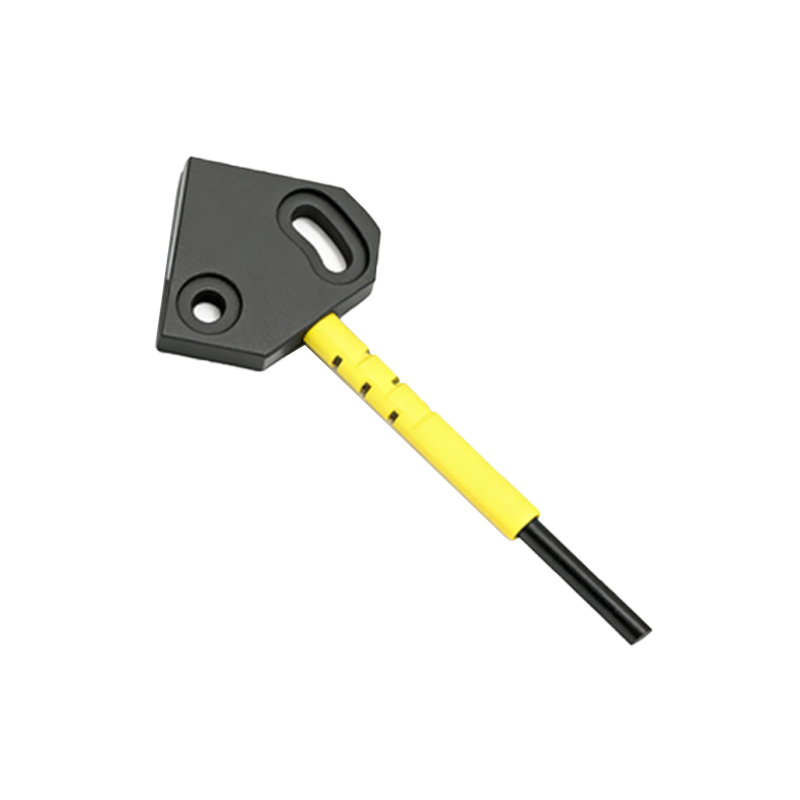
Photoelectric sensors at this range primarily utilize three main sensing modes: through-beam, retro-reflective, and diffuse (proximity) sensing. Through-beam sensors, consisting of separate emitter and receiver units, offer the longest effective range and highest reliability for the 400mm class, as the beam is only interrupted by the target. Retro-reflective models use a single housing with both emitter and receiver, relying on a reflector to bounce the light back; the 400mm range here indicates the distance to the reflector. Diffuse sensors detect light reflected directly off the target object itself. For precise 400mm diffuse sensing, background suppression technology or focused optics are often employed to ensure the sensor only reacts to objects within the specified range, ignoring more distant surfaces. Advanced models may incorporate time-of-flight (ToF) or triangulation principles for exact distance measurement, not just presence detection.
Critical Specifications and Selection Criteria
Selecting the appropriate 400mm photoelectric sensor requires careful analysis of several parameters beyond just the sensing range. Light source type is paramount: modulated infrared LEDs provide immunity to ambient light, red LEDs offer visible beam alignment aids, and laser diodes enable precise detection of small objects. The response time, typically in the microsecond to millisecond range, must be faster than the speed of the application. Output configuration (NPN/PNP, NO/NC) must match the control system's PLC or controller. Environmental ratings are crucial; an IP67 or IP69K enclosure is standard for resistance to dust and water jets in washdown environments. Additionally, factors like housing material (e.g., stainless steel for corrosive settings), temperature tolerance, and connection type (pre-wired cable or quick-disconnect) must align with the operational demands.
Typical Industrial Applications and Use Cases
The 400mm sensing distance finds extensive use across diverse sectors. In automotive manufacturing, these sensors verify the presence of components on sub-assemblies moving along conveyors. In packaging, they count bottles or boxes on production lines and control filling levels. Within palletizing systems, 400mm sensors detect the height of stacked layers or the presence of a pallet at a loading station. They are also instrumental in automated guided vehicle (AGV) systems for obstacle detection at a safe braking distance. Another key application is in robotic cell safeguarding, where they form part of a perimeter monitoring system to detect personnel entry. The robust nature of industrial-grade 400mm sensors makes them ideal for these demanding, continuous-operation environments.
Installation, Alignment, and Calibration Best Practices
Proper installation is vital for reliable operation. For through-beam sensors, precise alignment of the emitter and receiver is necessary, often facilitated by alignment indicators or audible signals. Retro-reflective sensors require correct positioning relative to the reflector, ensuring the beam is perpendicular. Diffuse sensors must be angled to avoid false triggers from shiny backgrounds. Mounting should be secure to prevent vibration-induced misalignment. Many modern 400mm sensors feature built-in sensitivity potentiometers or push-button teach-in functions, allowing engineers to calibrate the sensor on-site for the specific target and background conditions. Regular maintenance includes cleaning the lens from dust, oil, or debris and periodically verifying the sensing stability, especially in environments with significant temperature fluctuations.
Advantages Over Alternative Sensing Technologies
Compared to inductive or capacitive proximity sensors, 400mm photoelectric sensors offer the distinct advantage of non-contact detection of virtually any material—metal, plastic, glass, wood, or liquid—regardless of color or conductivity. Versus ultrasonic sensors, photoelectric sensors provide much faster response times and are less affected by temperature gradients or air turbulence, though they can be challenged by transparent objects or dusty environments. The 400mm range specifically fills a niche where inductive sensors fall short on distance, and longer-range photoelectrics would be over-engineered and potentially less cost-effective. Their ability to provide a precise, repeatable switching point at this medium distance is a key benefit for process control and automation sequencing.
Future Trends and Technological Integration
The evolution of 400mm photoelectric sensors is closely tied to Industry 4.0 and smart factory trends. Future iterations will increasingly feature IO-Link communication, enabling digital parameter setting, remote diagnostics, and predictive maintenance data transmission to higher-level control systems. Integration of condition monitoring functions, such as reporting lens contamination or LED aging, will enhance operational reliability. There is also a trend toward miniaturization without sacrificing performance, allowing for installation in tighter spaces. Furthermore, the convergence of sensing and measurement is growing; some 400mm-class sensors are beginning to incorporate analog outputs or switching windows to provide simple distance measurement feedback, blurring the line between a simple presence detector and a compact measurement device.