Understanding Capacitive Proximity Sensing Technology
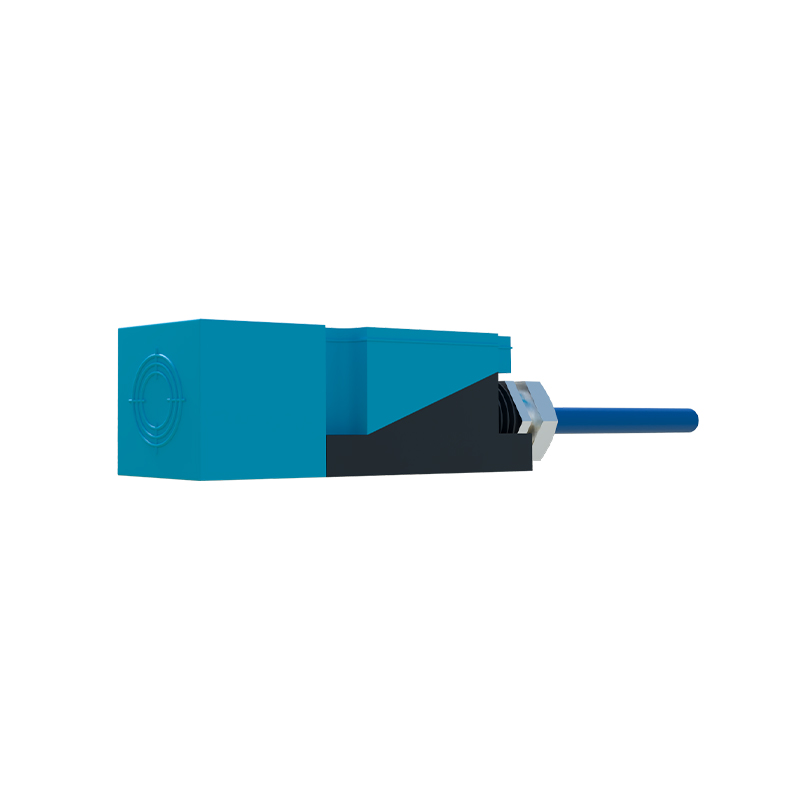
Capacitive proximity sensors operate on a fundamental principle of physics: the ability to detect changes in capacitance. Unlike their inductive counterparts that sense metals, capacitive sensors can detect the presence of almost any object, including liquids, powders, plastics, and the human body. The sensor generates an electrostatic field. When a target object enters this field, it causes a measurable change in the sensor's capacitance. This change triggers the sensor's output switch. For anti-theft applications, this technology is exceptionally versatile because it can sense a person approaching or touching a protected asset through non-metallic barriers like glass, wood, or thin walls, making it ideal for discreet installation.
Key Advantages in Anti-Theft Applications
The deployment of capacitive sensors for security offers several distinct benefits. Their primary advantage is material-independent detection. Whether a thief uses a gloved hand or a non-conductive tool, the sensor will react to the presence of a mass disrupting its field. They are highly sensitive and can be finely tuned to ignore environmental background noise while responding decisively to a deliberate intrusion. Furthermore, these sensors are unaffected by color, transparency, or surface texture, providing reliable performance in diverse lighting conditions where optical systems might fail. Their robust construction ensures long-term stability with minimal maintenance, a critical factor for permanent security installations.
Strategic Implementation for Asset Protection
Effective anti-theft systems using capacitive sensors rely on strategic placement and configuration. A common application is embedding sensors within display cases for high-value retail items, such as jewelry or electronics. The sensor is mounted inside the case, tuned to monitor the internal volume. Any unauthorized reach inside triggers an immediate alarm. Similarly, sensors can be installed behind paintings or within museum exhibit pedestals to create an invisible protective field around artifacts. For larger assets, sensors can be configured to create a protective plane or curtain across a doorway or a specific zone, detecting anyone crossing the boundary without requiring a physical beam of light.
Integration with Broader Security Ecosystems
A capacitive sensor is rarely a standalone solution; its power is magnified through integration. The digital output of the sensor seamlessly connects to Programmable Logic Controllers (PLCs), security alarm panels, or building management systems. Upon detection, it can trigger a cascade of actions: activating audible and visual alarms, locking down electronic doors, triggering CCTV cameras to record and focus on the zone, and sending instant notifications to security personnel via a centralized monitoring station. This integration creates a layered, intelligent security response that not only deters theft but also provides documented evidence and real-time situational awareness.
Tuning and Calibration for Optimal Performance
Proper calibration is paramount to prevent false alarms and ensure reliable detection. Modern capacitive sensors feature sensitivity adjustment potentiometers or teach-in functions. The installer sets the baseline capacitance of the protected environment—for example, an empty display case with the item present. The sensitivity is then adjusted so that the removal of the item or the insertion of a hand creates a sufficient change to trigger the output. Advanced models include compensation algorithms for gradual environmental changes like temperature and humidity drift. Regular functional checks are recommended to ensure the calibration remains optimal over time.
Overcoming Environmental Challenges
While highly robust, capacitive sensors require consideration of their operating environment. Significant and rapid changes in air humidity or temperature can affect dielectric constants and require sensors with good environmental compensation. Conductive contaminants like dust or moisture buildup on the sensor face must be prevented, as they can mask the sensing field. Careful placement is also needed to avoid interference from moving metal objects or high-power electrical lines in the vicinity, which could cause electromagnetic interference. Enclosures with appropriate Ingress Protection (IP) ratings are selected based on whether the installation is indoors or outdoors.
Future Trends and Smart Enhancements
The future of capacitive sensing in security is leaning towards smarter, networked solutions. The integration of Internet of Things (IoT) capabilities allows sensors to communicate their status, health, and event logs over wireless networks. Predictive analytics can be applied to sensor data to identify unusual patterns that precede a security event. Furthermore, developments in sensor fusion, where capacitive data is combined with input from other sensors like accelerometers (for vibration) or acoustic sensors, are creating ultra-reliable, multi-factor intrusion detection systems. These intelligent systems significantly reduce false positives while increasing the difficulty of circumvention.