Introduction to Photoelectric Sensing for Spherical Objects
The detection of spherical objects presents a unique set of challenges in industrial automation. Unlike flat or uniformly shaped items, spheres have a curved surface that can reflect light unpredictably. Photoelectric sensors, leveraging light beams to detect the presence, absence, or distance of an object, are exceptionally well-suited for this task. Their non-contact operation, high speed, and reliability make them indispensable in packaging, material handling, and assembly lines where balls, bearings, or spherical containers are processed. The core principle involves emitting a beam of light—visible red, infrared, or laser—and analyzing the received signal. For a sphere, the detection logic hinges on how the curved surface interacts with this beam, either by reflecting it back to the sensor (retro-reflective or diffuse modes) or by interrupting a beam sent to a separate receiver (through-beam mode).
Key Detection Modes and Their Suitability
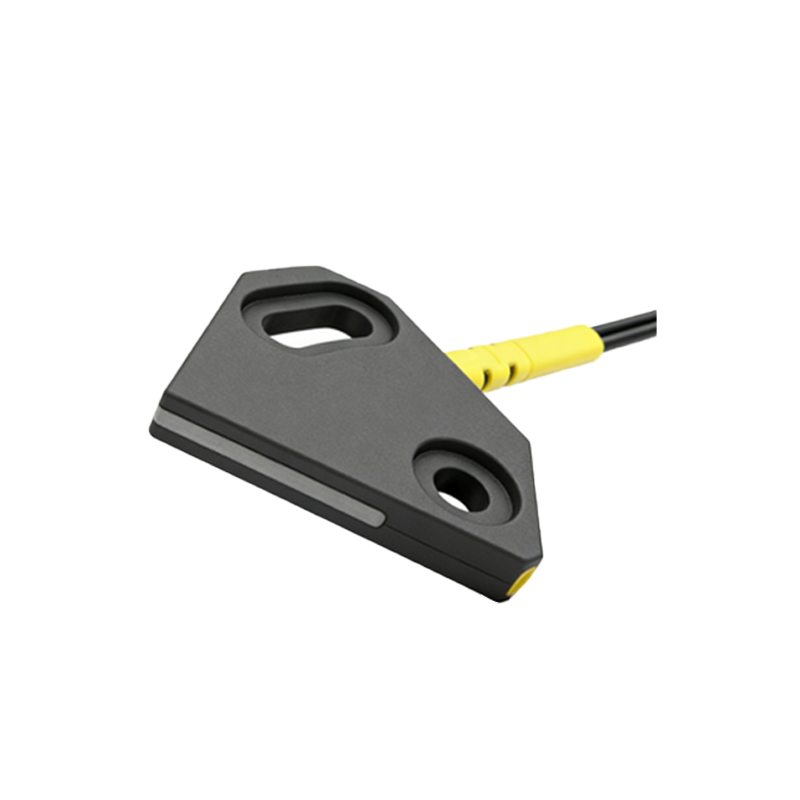
Three primary photoelectric sensing modes are employed for sphere detection, each with distinct advantages. Through-beam sensors, consisting of separate emitter and receiver units, offer the highest reliability and longest sensing range. They detect the sphere when it interrupts the light beam. This mode is highly effective regardless of the sphere's color, surface finish, or material, as it depends on beam blockage rather than reflection. Diffuse reflective sensors house both emitter and receiver in a single unit. They detect the sphere by measuring the light reflected off its surface. This mode is compact and easier to install but is more sensitive to the sphere's color and surface properties; a shiny metal sphere reflects light strongly, while a matte black sphere may be difficult to detect. Retro-reflective sensors use a reflector to bounce the beam back to the receiver. A sphere is detected when it breaks this return beam. This mode provides a good balance of range and simplicity but requires a clear path to the reflector.
Overcoming Challenges: Surface Finish and Color
The surface characteristics of a sphere are the most significant factors affecting photoelectric sensor performance. A highly polished, metallic sphere can act like a mirror, causing specular reflection that may deflect the light beam away from the receiver in a diffuse sensor, leading to a false "no detection" signal. Conversely, a dark, matte, or absorbent sphere may not reflect sufficient light. To overcome these issues, sensor selection is critical. For challenging surfaces, polarized diffuse sensors can filter out mirror-like reflections, while sensors with background suppression technology can precisely measure distance, ignoring the reflectivity of the object. Laser-based sensors, with their highly focused beam, provide excellent precision for small spheres and are less affected by ambient light or color variations compared to standard LED-based sensors.
Application-Specific Considerations and Setups
In practical applications, the context of detection dictates the sensor choice and configuration. On a high-speed ball bearing sorting line, through-beam sensors are preferred for their unwavering accuracy in counting and verifying presence, even with fast-moving, shiny bearings. In robotic bin-picking applications where a gripper must locate and pick spheres from a jumbled pile, a diffuse sensor with background suppression is crucial. It can accurately detect the topmost sphere's position by ignoring the reflective clutter of other spheres in the background. For detecting the fill level of spherical capsules in a pharmaceutical vial, a small, precise retro-reflective sensor might be mounted to look through the glass, detecting the presence of capsules by the interruption of the beam. Mounting angle, sensing distance, and environmental factors like dust or vibration must be meticulously planned during installation.
Optimization and Troubleshooting Techniques
Achieving consistent detection requires careful optimization. First, precise alignment is paramount, especially for through-beam and retro-reflective types. The sensor should be positioned where the sphere reliably breaks or reflects the beam at its most repeatable point in the travel path. Sensitivity adjustments on the sensor allow fine-tuning to the specific sphere's reflectivity, ensuring detection without false triggers from environmental noise. Regular maintenance, such as cleaning lenses to prevent dust buildup, is essential. Common issues include intermittent detection, often caused by vibration misalignment or fluctuating power supply, and failure to detect, which may stem from incorrect sensing mode selection for the sphere's surface. Using a sensor with an adjustable sensing window or teach-in function can simplify setup for variable sphere sizes or colors.
Future Trends and Advanced Solutions
The evolution of photoelectric sensing continues to enhance sphere detection capabilities. Advanced sensors now integrate IO-Link communication, providing digital data on sensor health, operating hours, and even the intensity of the received light signal, enabling predictive maintenance and finer process control. The emergence of photoelectric array sensors and vision-based systems allows for not just detection but also profiling and diameter measurement of spheres in flight or on a conveyor. Furthermore, sensors with enhanced environmental ratings (IP69K) are becoming standard for washdown applications in food and beverage, where spherical fruits or products need detection. The integration of artificial intelligence for pattern recognition promises even smarter sensors capable of distinguishing between different types of spheres based on subtle reflective signatures.