Introduction to Proximity Sensing Technology
Proximity and eddy current sensors represent a cornerstone of modern industrial automation and condition monitoring. These non-contact devices detect the presence, absence, or position of metallic objects without physical interaction. Operating on electromagnetic principles, they offer unparalleled reliability in harsh environments where dirt, oil, and vibration would compromise mechanical switches or optical sensors. Their fundamental operation involves generating an oscillating electromagnetic field from a coil within the sensor head. When a conductive target enters this field, it induces circulating currents, known as eddy currents, within the target material. These eddy currents, in turn, create their own opposing magnetic field, which interacts with the sensor's field, altering the oscillation amplitude or frequency. This change is precisely measured and converted into a usable output signal, typically a switch point or an analog value proportional to distance.
Core Operational Characteristics
The defining features of these sensors stem from their non-contact nature. First and foremost, they exhibit exceptional longevity and wear resistance because there is no mechanical contact with the target. This leads to minimal maintenance and high mean time between failures (MTBF). They are capable of high-speed response, often in the microsecond range, making them ideal for counting, sorting, and high-velocity position detection on production lines. Another critical characteristic is their ability to function effectively through non-conductive barriers. A sensor can be mounted behind a glass, plastic, or ceramic window to monitor a process in a vacuum chamber or a sterile environment, protecting the sensor from extreme temperatures or corrosive media. Furthermore, they are largely immune to environmental contaminants like dust, chips, and fluids, provided these substances are non-metallic and do not interfere with the magnetic field.

Material Sensitivity and Target Considerations
A pivotal feature of eddy current sensors is their sensitivity to the electrical conductivity and magnetic permeability of the target material. They perform optimally with ferromagnetic materials like iron and steel, which have high permeability, resulting in a longer sensing range. For non-ferrous metals such as aluminum, copper, or brass, the sensing range is reduced. The sensor's performance is also influenced by target size, shape, and thickness. A general rule is that the target should be at least as large as the sensor's sensing face and have a thickness sufficient to support the eddy currents, typically three times the skin depth of the material. For precise measurement applications, target material changes can introduce error, necessitating calibration for a specific alloy. Advanced sensors incorporate temperature compensation circuits to mitigate drift caused by ambient temperature fluctuations, ensuring stable output.
Output Types and Electrical Configuration
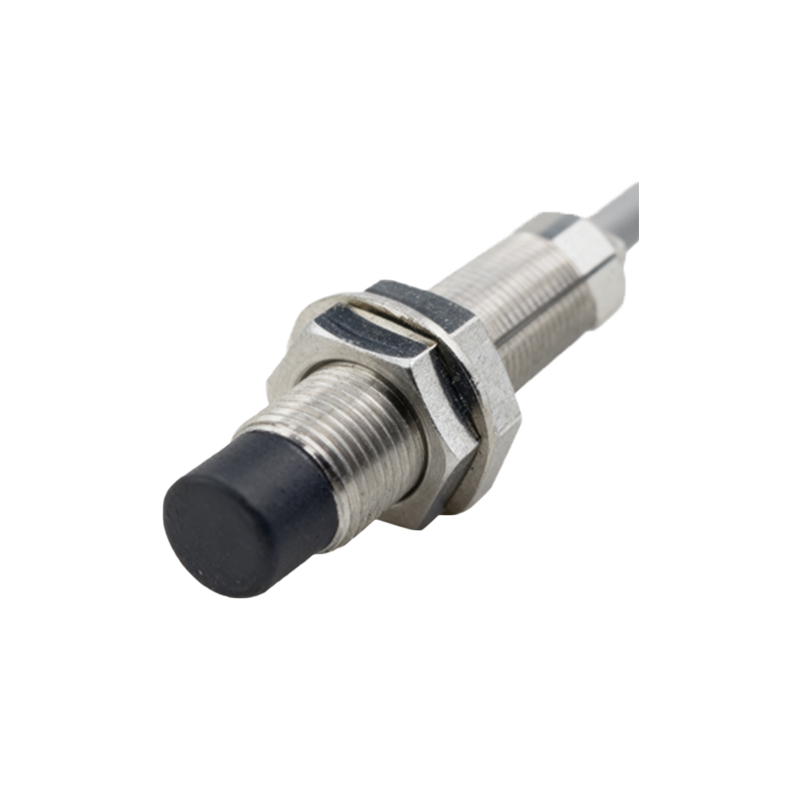
Proximity sensors are available with various output configurations to interface with control systems. The two primary categories are analog and switching outputs. Analog output sensors provide a continuous signal, such as 0-10V DC or 4-20mA, that is linearly proportional to the distance between the sensor and the target. This is essential for precision gap, thickness, or runout measurement in applications like vibration analysis or spindle monitoring. Switching output sensors, including NPN (sinking), PNP (sourcing), and Namur (intrinsically safe) types, provide a discrete ON/OFF signal when a target enters the preset sensing range. They are the workhorses for simple object detection, end-position sensing, and limit switching. Most industrial models feature built-in protection against short-circuit, reverse polarity, and overvoltage conditions, enhancing system robustness.
Application Spectrum in Industry
The unique features of proximity and eddy current sensors make them indispensable across diverse sectors. In metalworking and machining, they are used for tool wear monitoring, broken tool detection, and part presence verification on CNC lathes and milling centers. The automotive industry relies on them for robotic weld gun positioning, crankshaft/camshaft speed and timing, and checking for the presence of engine components on assembly lines. In the power generation sector, particularly in turbines and generators, they are critical for measuring shaft displacement, eccentricity, and vibration to prevent catastrophic failures. Other common applications include monitoring valve positions, controlling tension in web processes, and performing non-destructive testing for material flaws or coating thickness. Their resilience allows deployment in extreme conditions, from cold mills in steel plants to the high-temperature environs near turbine casings.
Selection and Installation Best Practices
Selecting the correct sensor requires careful analysis of the application parameters. Key factors include the required sensing distance, target material and size, environmental conditions (temperature, pressure, chemicals), required output type, and electrical supply. It is crucial to derate the nominal sensing distance listed in datasheets, typically by 10-20%, to account for manufacturing tolerances and temperature effects. Installation is equally important;