In the realm of precision measurement, laser distance sensors have become indispensable tools across a vast spectrum of industries. From manufacturing and construction to logistics and robotics, the ability to accurately gauge distance without physical contact drives efficiency, safety, and quality. However, navigating the diverse landscape of available models can be a complex task. This guide provides a detailed overview of key laser distance sensor models, their operating principles, and critical selection criteria to help you identify the optimal solution for your specific needs.
The fundamental technology behind most laser distance sensors is either time-of-flight (ToF) or triangulation. Time-of-flight models emit a laser pulse and measure the time it takes for the reflection to return. This method is excellent for long-range measurements, often spanning from several meters to hundreds of meters, with typical accuracies in the millimeter to centimeter range. Common applications include construction site surveying, warehouse inventory management (measuring stockpile volumes), and crane positioning. Models like the Leica DISTO series are iconic in this category, known for their robustness and ease of use in field conditions.
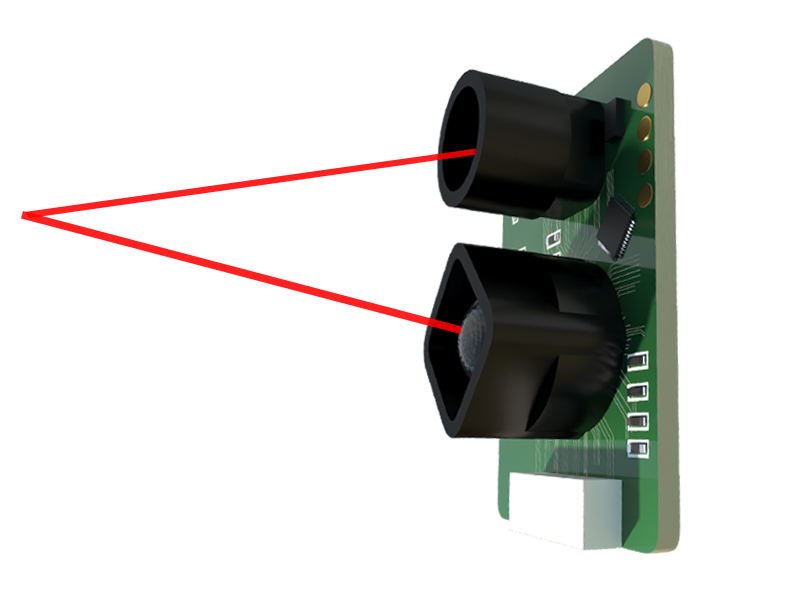
For applications demanding ultra-high precision at shorter ranges, triangulation-based sensors are the preferred choice. These devices project a laser spot onto a target, and a receiver lens at a known angle captures the reflected light. The position of the spot on the receiver's sensor changes with distance, allowing for extremely accurate calculations. These models excel in measurements from a few millimeters up to several meters, achieving micron-level resolutions. They are ubiquitous in automated production lines for tasks such as checking part dimensions, controlling assembly robot positions, monitoring wafer thickness in semiconductor fabrication, and verifying fill levels in packaging. Brands like Keyence (with their IL series) and Micro-Epsilon (with their optoNCDT series) offer highly sophisticated triangulation sensors for industrial automation.
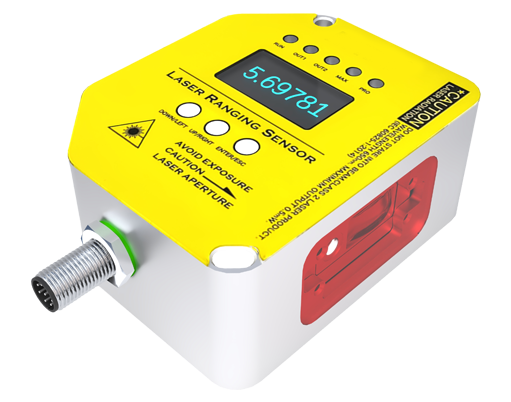
Beyond these core types, phase-shift measurement models offer a blend of good accuracy and medium range. They modulate the amplitude of the laser beam and measure the phase difference between the emitted and reflected signals. This technology often provides a better balance of performance for mid-range applications compared to basic ToF.
When selecting a laser distance sensor model, several technical parameters are paramount:
* Measuring Range: The minimum and maximum distances the sensor can reliably measure. Always consider a margin beyond your nominal requirement.
* Accuracy and Resolution: Accuracy is the closeness to the true value, while resolution is the smallest detectable change. High-precision manufacturing requires superior specs in both.
* Laser Class and Safety: Most industrial sensors are Class 2 (visible red laser, safe with blink reflex) or Class 1 (inherently safe). The choice depends on the installation environment and potential for human exposure.
* Response Time/Measurement Rate: Critical for dynamic or high-speed applications, such as measuring objects on a fast conveyor belt. Rates can vary from a few Hz to tens of thousands of Hz.
* Environmental Robustness: Consider IP ratings for dust and water resistance, operating temperature range, and resistance to vibrations, especially in harsh industrial settings.
* Output Interface: Common interfaces include analog voltage/current (4-20 mA), digital protocols (RS-232, RS-485), Ethernet (EtherCAT, PROFINET), and discrete I/O for easy integration into PLCs and control systems.
* Target Surface Properties: The sensor's performance can be affected by the target's color, reflectivity, transparency, or surface texture. Some advanced models feature automatic gain control or special modes to handle challenging surfaces like black rubber or shiny metal.
Modern laser sensor models are increasingly intelligent. Features like integrated programmable logic, data logging, multi-point measurement, and advanced communication via Industrial IoT protocols are becoming standard. For instance, sensors used in autonomous mobile robots (AMRs) for navigation and obstacle avoidance often incorporate these smart features.
In conclusion, there is no single "best" laser distance sensor model. The optimal choice is a careful balance of technical specifications, environmental factors, and integration requirements. For long-range outdoor tasks, a rugged ToF sensor is ideal. For micron-level precision in a controlled factory setting, a triangulation sensor is unmatched. By thoroughly understanding the capabilities of different models and clearly defining your application's needs, you can leverage this powerful technology to enhance accuracy, automate processes, and drive innovation in your operations.