Capacitive proximity sensors are versatile electronic devices widely used in industrial automation, consumer electronics, and safety systems. Unlike inductive sensors that detect only metallic objects, capacitive sensors can sense a variety of materials, including liquids, plastics, wood, and granular substances. This capability makes them indispensable in many applications where non-metallic detection is required.
A typical capacitive proximity sensor consists of an oscillator circuit, a sensing electrode, and a signal conditioning unit. The electrode forms one plate of a capacitor, with the target object acting as the other plate. When an object enters the sensor's detection field, it alters the capacitance, causing changes in the oscillator's amplitude or frequency. This change is processed to trigger an output signal.
Images of capacitive proximity sensors often reveal their compact, cylindrical, or rectangular housings, usually made of robust materials like PBT or stainless steel. Many models feature LED indicators for status monitoring. The sensing face is typically flat and may be shielded or unshielded. Shielded versions have a grounded metal ring around the active surface, limiting the detection field to the front, which is ideal for flush mounting. Unshielded types offer a larger, more extended field, suitable for level detection in tanks or bins.
In industrial settings, these sensors monitor fill levels of non-conductive containers, detect presence of materials on conveyor belts, or ensure proper positioning of objects. In consumer devices, they enable touch-sensitive controls in appliances or proximity detection in smartphones. Safety applications include presence detection in hazardous areas to prevent machinery operation when an object or person is too close.
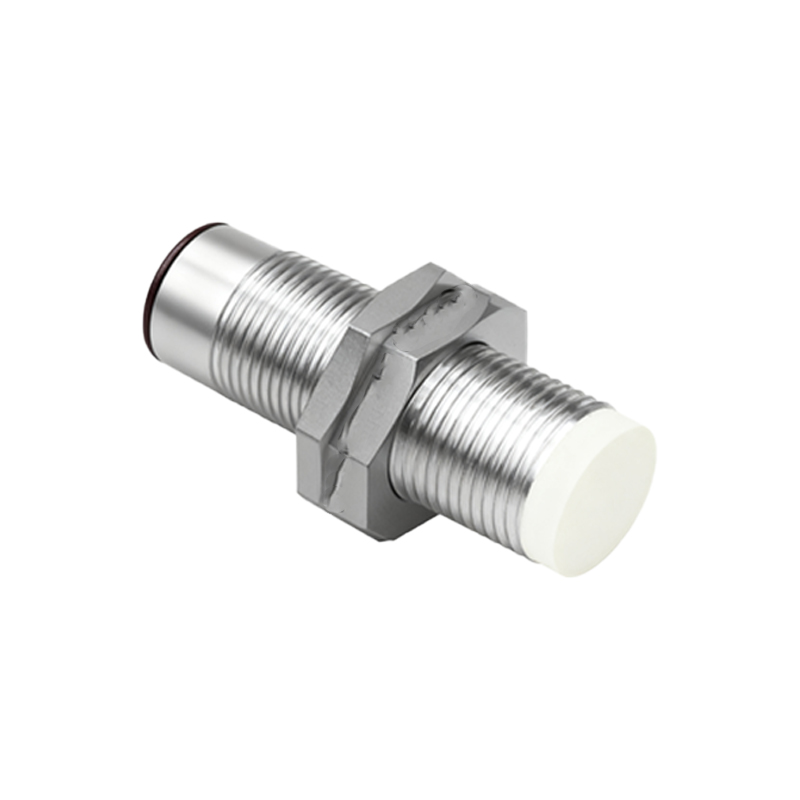
When selecting a capacitive sensor, key parameters include sensing range, response time, output type (e.g., NPN/PNP, analog), and environmental ratings like IP67 for dust and water resistance. Proper installation is crucial: factors such as mounting, surrounding materials, and temperature can affect performance. For instance, sensors should be kept away from metal surfaces unless using shielded models to avoid false triggers.
Maintenance is generally minimal, but periodic checks ensure reliability. Cleaning the sensing face from contaminants like dust or moisture buildup helps maintain accuracy. Troubleshooting often involves verifying power supply, output connections, and checking for environmental interference.
Overall, capacitive proximity sensors offer reliable, non-contact detection for diverse materials. Their adaptability and durability make them a cornerstone in modern automation, enhancing efficiency and safety across numerous industries.