Introduction to Miniature Photoelectric Sensing
The relentless drive towards miniaturization and increased reliability in industrial automation has propelled the development of long-life miniature photoelectric sensors. These compact devices are engineered to deliver precise object detection, positioning, and counting in space-constrained applications where durability is non-negotiable. Unlike their larger counterparts, miniature sensors integrate advanced optical systems, efficient LED light sources, and robust signal processing electronics into a footprint often less than a few cubic centimeters. Their design philosophy centers on achieving a critical balance: maintaining high performance and extended operational life while minimizing physical size. This makes them indispensable in modern manufacturing lines, packaging machinery, semiconductor handling, and intricate robotic systems where every millimeter and maintenance cycle counts.
Core Technologies Enabling Extended Lifespan
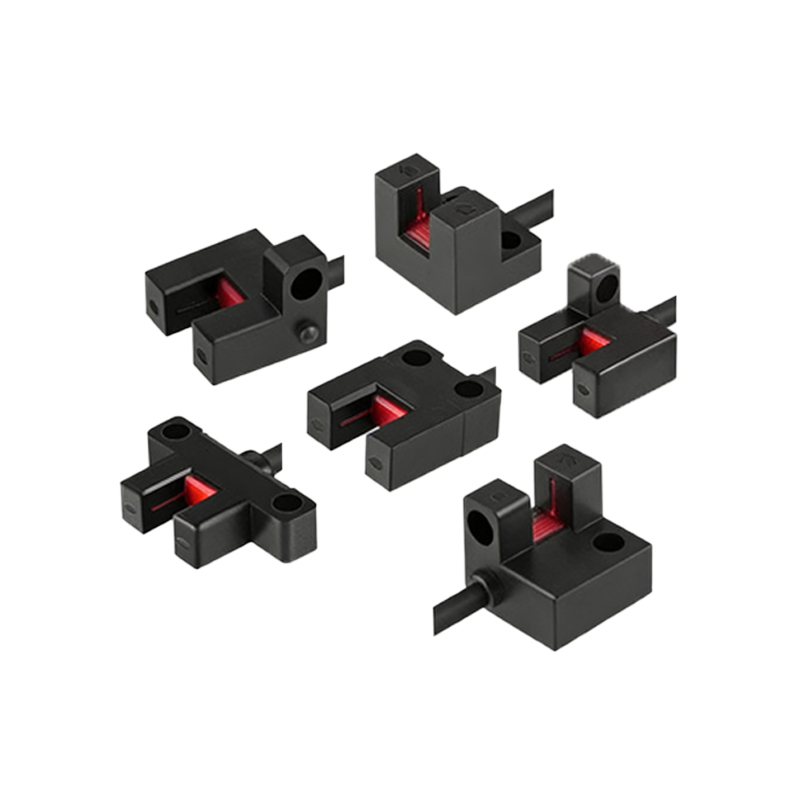
The exceptional longevity of modern miniature photoelectric sensors is not accidental but the result of deliberate engineering choices. Key among these is the use of high-efficiency, solid-state light sources, primarily LEDs, which boast lifespans exceeding 100,000 hours. These LEDs generate minimal heat, reducing thermal stress on internal components. Furthermore, advanced IC (Integrated Circuit) design incorporates power regulation and surge protection, shielding sensitive electronics from voltage fluctuations and electrical noise common in industrial environments. The housing is typically constructed from engineering-grade plastics or stainless steel, offering superior resistance to vibration, mechanical shock, and harsh chemicals. Sealing technologies, often achieving IP67 or IP69K ratings, prevent the ingress of dust, oils, and water, ensuring the internal optics and electronics remain uncontaminated and functional for years.
Key Performance Metrics and Selection Criteria
Selecting the right long-life miniature sensor requires careful analysis of application-specific parameters. Sensing range, while typically shorter than larger sensors, must be precisely matched to the task. Beam type is crucial: through-beam models offer the longest range and highest reliability for detection, while diffuse-reflective and retro-reflective types provide easier installation. Response time, often in the microsecond range, determines the sensor's capability in high-speed applications. A critical, often overlooked, metric is the Mean Time Between Failures (MTBF), a statistical projection of reliability. Engineers should prioritize sensors with high MTBF values, backed by robust design and quality manufacturing. Additionally, factors like light source color (red, green, blue, infrared) for material differentiation, and the availability of built-in diagnostics like stability indicators or IO-Link communication for predictive maintenance, significantly contribute to long-term system uptime.
Overcoming Environmental and Application Challenges
The promise of a long operational life is rigorously tested by real-world industrial conditions. Miniature sensors are frequently exposed to challenges such as airborne contaminants, temperature extremes, and continuous vibration. To combat contamination on lenses, models with built-in air knives or special hydrophobic coatings are available. For applications involving highly reflective or transparent targets, such as glass or polished metal, sensors with polarized filters or background suppression technology are essential to prevent false triggers. In washdown environments found in food and pharmaceutical processing, the combination of stainless steel housings and high-pressure, high-temperature (HPHT) seals is mandatory. Engineers must also consider electrical compatibility, ensuring the sensor's output type (PNP/NPN, analog, IO-Link) and voltage range seamlessly integrate with the existing control system to avoid electrical stress.
Future Trends and Integration in Smart Systems
The evolution of long-life miniature photoelectric sensors is closely tied to the rise of Industry 4.0 and the Industrial Internet of Things (IIoT). The next generation of these devices is becoming smarter and more connected. The integration of IO-Link communication transforms a simple sensor into an intelligent data point, capable of transmitting not just a switch signal but also parameters like internal temperature, lens contamination level, and operating hour count. This enables condition-based monitoring and predictive maintenance, allowing for replacement before failure and maximizing plant efficiency. Furthermore, advancements in laser diode technology and CMOS imaging chips are paving the way for even smaller sensors with higher precision and the ability to perform simple measurement tasks, blurring the line between a sensor and a micro-vision system.
Conclusion and Best Practices for Implementation
Achieving the full potential of a long-life miniature photoelectric sensor requires more than just selecting a high-quality product. Proper implementation is paramount. This includes meticulous mechanical mounting to avoid strain, precise optical alignment, and ensuring a stable, clean power supply with adequate protection against load surges and electrical noise. Regular, simple maintenance, such as cleaning the lens with appropriate materials, can prevent premature performance degradation. By understanding the underlying technologies, carefully matching sensor specifications to the application's demands, and following sound installation practices, engineers can leverage these powerful miniature components to build more reliable, efficient, and compact automated systems that deliver uninterrupted performance over many years of service.