Introduction to Multi-Point Photoelectric Sensors
Multi-point photoelectric sensors represent a significant advancement in industrial sensing technology, offering enhanced capabilities for detection, measurement, and control in automated systems. Unlike traditional single-point sensors, these devices incorporate multiple sensing elements within a single unit, allowing for simultaneous monitoring across several positions or along a continuous path. They operate on the fundamental principle of photoelectricity, where light emitted from a source—typically an LED or laser—is directed toward a target. The sensor then detects changes in the light beam, such as interruption, reflection, or modulation, to determine the presence, absence, or characteristics of an object. This technology is widely applied in manufacturing, packaging, material handling, and robotics, where precision and reliability are paramount. By integrating multiple points, these sensors reduce the need for numerous individual units, simplifying system design, lowering installation costs, and improving overall efficiency. Their versatility makes them suitable for diverse environments, from clean rooms to harsh industrial settings, provided they are selected based on factors like sensing range, response time, and environmental resistance.
Key Operating Principles and Technologies
The core functionality of multi-point photoelectric sensors hinges on advanced optical and electronic components. Common types include through-beam, retro-reflective, and diffuse reflective sensors, each adapted for multi-point configurations. In through-beam setups, an emitter and receiver are placed opposite each other, with multiple beams arrayed to cover a wider area; objects breaking any beam trigger a response. Retro-reflective models use a reflector to bounce light back to the receiver, enabling detection across multiple points without separate receivers. Diffuse reflective sensors rely on light reflecting directly off the target, making them ideal for close-range, multi-point applications where space is limited. Technologies such as time-of-flight (ToF) and triangulation are often employed to enhance accuracy, allowing for distance measurement and object profiling. Additionally, modern sensors incorporate digital signal processing and microcontrollers to filter noise, compensate for ambient light, and provide configurable outputs. This integration supports real-time data acquisition, enabling seamless communication with PLCs (Programmable Logic Controllers) and industrial networks like IO-Link or Ethernet/IP, thus facilitating smart automation and Industry 4.0 initiatives.
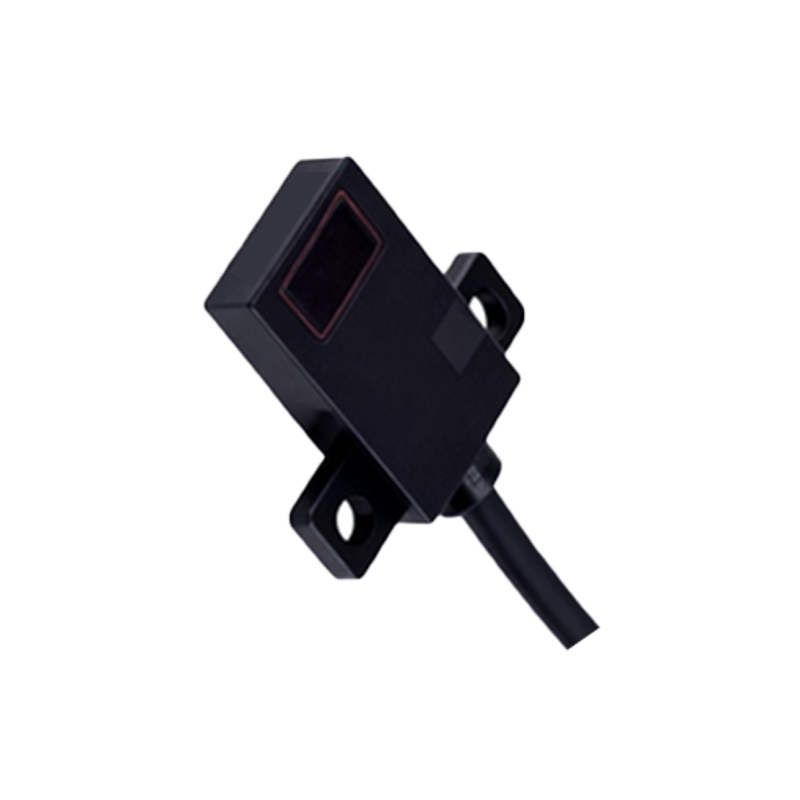
Applications in Industrial Automation
Multi-point photoelectric sensors are indispensable in various industrial sectors due to their ability to perform complex detection tasks. In conveyor systems, they monitor multiple zones to track product flow, detect jams, or verify item orientation, ensuring smooth operations and reducing downtime. Packaging lines utilize these sensors to inspect labels, count items, or check fill levels across several points simultaneously, enhancing quality control. In automotive assembly, they enable precise positioning of components, such as verifying the placement of screws or panels at multiple locations, thereby improving safety and consistency. Robotics applications benefit from their use in guidance and collision avoidance, where sensors arrayed on robotic arms or workcells provide spatial awareness. Furthermore, in logistics and warehousing, they facilitate inventory management by scanning barcodes or detecting pallet positions. The adaptability of multi-point sensors allows for customization based on specific needs, such as high-speed detection for fast-moving objects or rugged designs for extreme temperatures and vibrations. This versatility drives their adoption in industries seeking to optimize productivity and minimize errors.
Advantages Over Single-Point Sensors
The transition from single-point to multi-point photoelectric sensors offers numerous benefits that align with modern industrial demands. Firstly, they provide comprehensive coverage with fewer devices, reducing hardware costs, wiring complexity, and maintenance requirements. This consolidation leads to a cleaner installation, saving space in crowded control panels or machinery. Secondly, multi-point sensors enhance reliability by minimizing blind spots; with multiple beams or points, they can detect smaller or irregularly shaped objects that might be missed by single-point units. They also offer improved flexibility, as many models allow users to configure individual points or zones via software, adapting to changing production needs without physical adjustments. Energy efficiency is another advantage, as integrated designs often consume less power than multiple standalone sensors. Moreover, these sensors support advanced diagnostics, providing feedback on beam alignment, contamination, or wear, which aids in predictive maintenance. By streamlining operations and boosting accuracy, multi-point photoelectric sensors contribute to higher throughput and reduced waste, making them a cost-effective solution for long-term automation projects.
Selection Criteria and Installation Best Practices
Choosing the right multi-point photoelectric sensor requires careful consideration of application-specific parameters. Key factors include sensing distance, which must match the operational range to avoid false triggers or missed detections. Resolution and response time are critical for high-speed processes; sensors with fast switching capabilities ensure timely data capture. Environmental conditions, such as dust, moisture, or chemical exposure, dictate the need for enclosures with appropriate IP (Ingress Protection) ratings, like IP67 for waterproofing. The type of output—digital (e.g., NPN/PNP) or analog—should align with control system requirements. Additionally, compatibility with communication protocols enables integration into networked environments. During installation, proper alignment is essential to maintain beam accuracy; using mounting brackets and adjusters can simplify this process. Regular calibration and testing, especially in multi-point arrays, help sustain performance. It is also advisable to implement shielding or filtering to mitigate interference from ambient light or electrical noise. By following these guidelines, engineers can maximize sensor lifespan and ensure optimal functionality, ultimately supporting robust and efficient automation systems.
Future Trends and Innovations
The evolution of multi-point photoelectric sensors is closely tied to advancements in industrial IoT and smart manufacturing. Emerging trends include the integration of AI and machine learning algorithms, enabling sensors to analyze patterns and predict failures autonomously. Miniaturization efforts are producing compact, high-density arrays that offer greater precision without occupying excessive space. Enhanced connectivity options, such as 5G and wireless protocols, will facilitate real-time data transmission from sensors to cloud platforms, supporting remote monitoring and analytics. Furthermore, developments in materials science may lead to more durable components resistant to extreme conditions, expanding applications in sectors like aerospace or heavy machinery. Energy-harvesting technologies could allow sensors to operate battery-free, reducing maintenance needs. As industries prioritize sustainability, sensors with eco-friendly designs and lower power consumption will gain prominence. Overall, the future of multi-point photoelectric sensors lies in their ability to become smarter, more adaptive, and seamlessly integrated into digital ecosystems, driving the next wave of industrial innovation and efficiency.