Introduction to Guangning General Photoelectric Sensors
Guangning General Photoelectric Sensors represent a critical advancement in industrial automation, offering reliable detection capabilities across diverse environments. These sensors utilize light beams to detect the presence, absence, or distance of objects, making them indispensable in manufacturing, packaging, and material handling sectors. Their design focuses on durability and precision, ensuring consistent performance even in challenging conditions such as dust, vibration, or varying light levels. By converting light signals into electrical outputs, they enable seamless integration with control systems, enhancing operational efficiency and safety. The versatility of Guangning sensors allows for customization to meet specific application needs, from simple object counting to complex positioning tasks.
Core Technologies and Working Principles
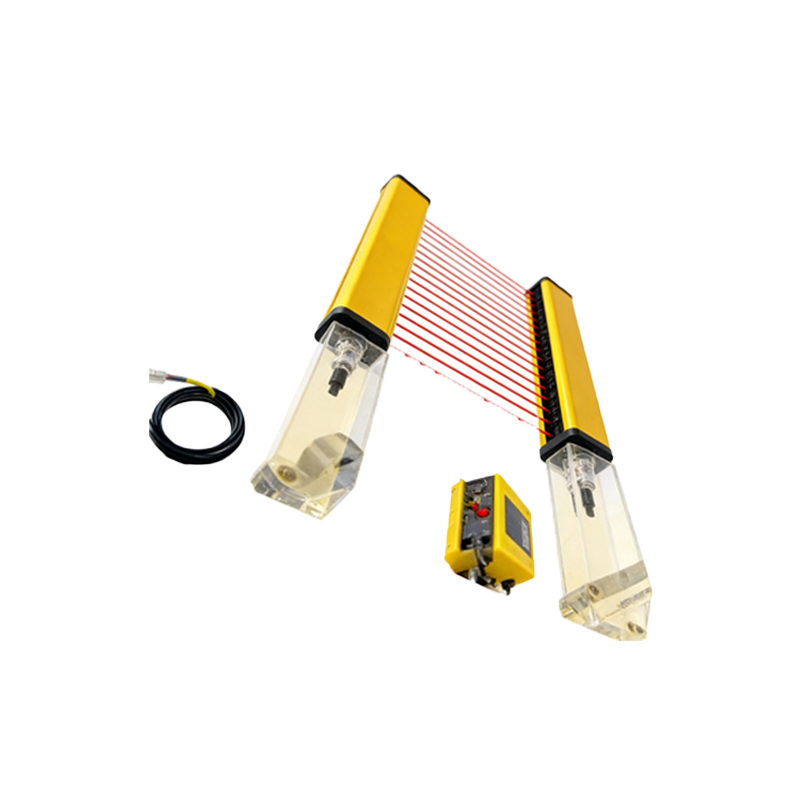
At the heart of Guangning General Photoelectric Sensors lies advanced optoelectronic technology, which operates based on the modulation and reception of light. These sensors typically employ infrared, visible, or laser light sources, with receivers that detect changes in light intensity or reflection. There are three primary types: through-beam sensors, where a transmitter and receiver are separate units for long-range detection; retro-reflective sensors, which use a reflector to bounce light back to the receiver; and diffuse reflective sensors, where the object itself reflects light to the sensor. Guangning models incorporate features like background suppression and polarized filters to minimize false triggers, ensuring accurate readings. Their working principle involves emitting a light beam that, when interrupted or reflected by an object, triggers an output signal to control machinery or alert systems.
Key Features and Performance Specifications
Guangning General Photoelectric Sensors are engineered with robust features that set them apart in the competitive market. They offer high sensing ranges, often exceeding 10 meters for through-beam types, with fast response times measured in milliseconds to support high-speed automation. Many models include adjustable sensitivity settings, allowing users to fine-tune detection thresholds for different materials or colors. Built with IP67 or higher ingress protection ratings, they resist water, oil, and dust, making them suitable for harsh industrial environments. Additional functionalities may include teach-in modes for easy setup, LED indicators for status monitoring, and compatibility with various voltage inputs (e.g., 10-30V DC). These specifications ensure reliable operation in applications ranging from conveyor belt monitoring to robotic assembly lines.
Applications in Modern Industries
The application scope of Guangning General Photoelectric Sensors spans numerous industries, driving automation and quality control. In manufacturing, they are used for part detection on assembly lines, ensuring components are correctly positioned before processing. In logistics and packaging, sensors facilitate object counting, fill-level monitoring, and label verification, reducing waste and improving throughput. Automotive plants rely on them for safety interlocks and precision welding guidance, while food and beverage sectors employ them for bottle cap inspection and container sorting. Their ability to detect transparent or shiny objects, thanks to specialized lens designs, expands their utility in pharmaceutical and electronics production. By enabling non-contact detection, Guangning sensors minimize wear and maintenance, contributing to lower operational costs.
Installation and Maintenance Best Practices
Proper installation and maintenance are crucial for maximizing the lifespan and accuracy of Guangning General Photoelectric Sensors. During setup, it is essential to align the transmitter and receiver precisely, avoiding obstructions that could interfere with the light beam. Environmental factors such as ambient light, temperature extremes, and reflective surfaces should be considered; using protective housings or filters can mitigate these issues. Regular cleaning of lenses with soft, lint-free cloths prevents dust buildup that might impair sensitivity. Periodic calibration checks, following manufacturer guidelines, help maintain optimal performance. Troubleshooting common problems—like false signals or reduced range—often involves verifying power connections, adjusting sensitivity, or inspecting for physical damage. Adhering to these practices ensures continuous, reliable sensor operation.
Future Trends and Innovations
The future of Guangning General Photoelectric Sensors is shaped by ongoing innovations aimed at enhancing intelligence and connectivity. Emerging trends include the integration of IoT capabilities, allowing sensors to transmit real-time data to cloud platforms for predictive maintenance and analytics. Advances in miniaturization are leading to more compact designs without sacrificing range or durability, enabling installation in tight spaces. Smart sensors with embedded diagnostics can self-monitor for issues like lens contamination or alignment drift, alerting operators proactively. Additionally, developments in light source technology, such as energy-efficient LEDs and laser diodes, promise longer lifespans and reduced power consumption. As industries embrace Industry 4.0, Guangning sensors are evolving to support networked automation systems, fostering greater efficiency and adaptability in dynamic production environments.