Understanding Photoelectric Sensors in Industrial Applications
Photoelectric sensors are indispensable components in modern industrial automation, serving as the "eyes" of a system. These devices operate by emitting a beam of light, typically from an LED, and detecting changes in the received light intensity. The core principle involves the interruption or reflection of this light beam by a target object, which triggers an electrical output signal. This simple yet robust mechanism allows for non-contact detection, making them ideal for counting, positioning, inspecting, and monitoring objects on production lines. Unlike mechanical limit switches, photoelectric sensors offer high-speed response, long sensing ranges, and exceptional reliability without physical wear from contact. Their versatility spans across packaging, material handling, automotive assembly, and food & beverage processing, where they ensure precision, efficiency, and safety in countless automated processes.
The Critical Role of Physical Retail Stores in the Sensor Ecosystem
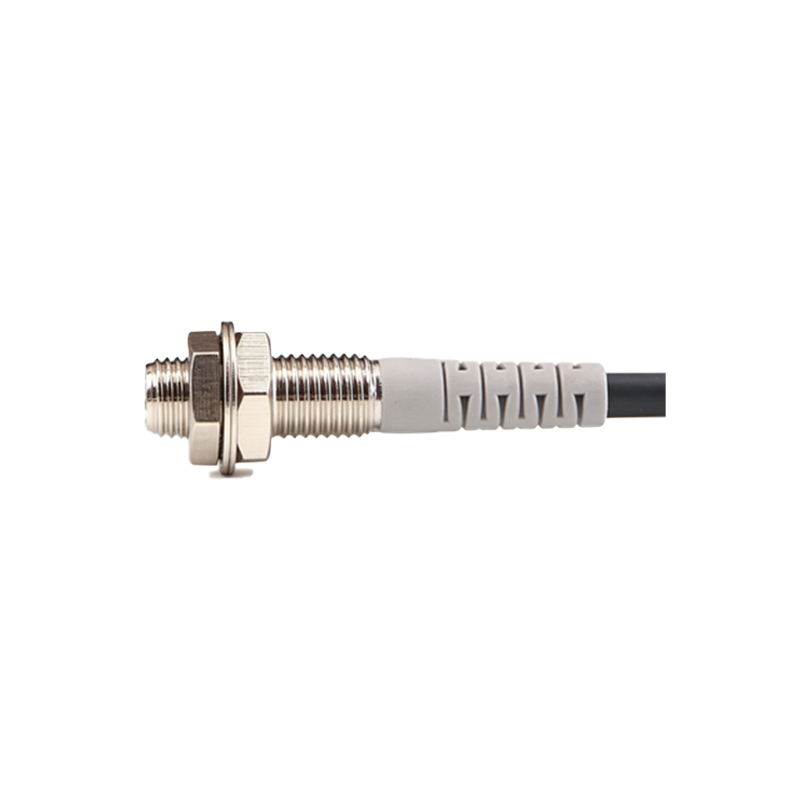
In an era dominated by e-commerce, specialized photoelectric sensor retail stores maintain a vital and irreplaceable position within the industrial supply chain. These brick-and-mortar establishments provide immediate access to critical components, a service paramount during unexpected machine downtime where every minute of halted production equates to significant financial loss. Beyond mere inventory, these stores function as technical hubs. They offer hands-on product demonstrations, allowing engineers to evaluate sensor performance, beam patterns, and housing suitability for specific environmental challenges like dust, moisture, or extreme temperatures. The in-store expertise is invaluable; seasoned staff can provide on-the-spot consultation for application troubleshooting, compatibility checks, and recommending alternatives when a specific model is unavailable, a level of personalized service difficult to replicate online.
Key Services Offered by Specialized Sensor Retailers
A premier photoelectric sensor retailer distinguishes itself through a suite of value-added services. Technical support is paramount, with certified engineers available to assist with wiring diagrams, configuration settings for sensitivity and response time, and integration advice for various PLC (Programmable Logic Controller) systems. Many stores offer sensor customization, such as modifying cable lengths, adding specific connectors, or providing protective mounting brackets. Demonstration areas allow customers to test sensors under simulated real-world conditions. Furthermore, these retailers often manage comprehensive inventory for major brands like Omron, Sick, Keyence, and Banner Engineering, ensuring availability of diffuse, retro-reflective, through-beam, and background suppression models. They also provide essential accessories—mounting hardware, alignment tools, protective guards, and fiber optic cables—creating a true one-stop-shop experience for maintenance technicians and project engineers.
Selecting the Right Photoelectric Sensor for Your Application
Choosing the correct sensor is a systematic process best navigated with expert guidance, readily available at a physical store. The first consideration is the sensing mode: through-beam sensors offer the longest range and highest reliability for clear object detection; retro-reflective types use a reflector for cost-effective medium-range tasks; diffuse sensors detect objects by reflecting light directly off the target, ideal for proximity sensing. Engineers must then evaluate critical specifications: sensing distance, light source (red, green, laser, or infrared for specific material detection), response frequency, output type (PNP/NPN, analog, IO-Link), and environmental ratings (IP67, IP69K for washdown areas). A retail specialist can help match these parameters to the application's demands, whether it's detecting transparent glass bottles, small components on high-speed conveyors, or objects in harsh, dirty environments.
The Future of Sensor Retail: Integration of Physical and Digital
The future of photoelectric sensor retail lies in a seamless omnichannel approach. While the physical store remains the cornerstone for urgent needs and complex consultations, it is increasingly supported by robust digital tools. Forward-thinking retailers offer detailed online catalogs with parametric search filters, real-time stock-level checks for in-store inventory, and the ability to reserve items for immediate pickup. Some provide augmented reality (AR) apps to visualize sensor mounting or QR codes linking to setup videos and datasheets directly on the product shelf. This hybrid model empowers customers to research online but finalize their purchase and receive technical validation in person. Furthermore, as Industry 4.0 advances, retailers are evolving into advisors for smart sensor technologies, offering products with integrated IO-Link for diagnostics and data collection, bridging the gap between simple detection and predictive maintenance strategies.