Introduction and Working Principle
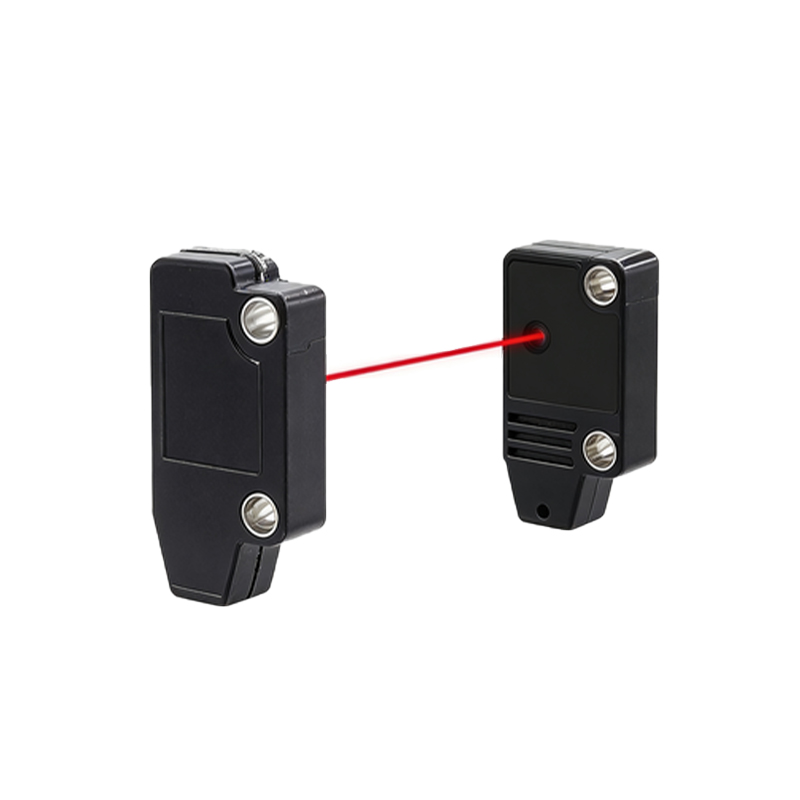
This report details the design, implementation, and experimental validation of a slot-type photoelectric sensor. Slot-type photoelectric sensors, also known as through-beam sensors, operate on a fundamental principle involving an integrated transmitter and receiver unit positioned opposite each other within a U-shaped channel or "slot." The transmitter emits a continuous or modulated beam of light, typically from an infrared LED. The receiver, a phototransistor or photodiode, detects this light beam. An object passing through the slot interrupts this light path, causing a detectable change in the receiver's output state. This simple yet robust principle makes them ideal for non-contact object detection, counting, and position sensing in various industrial automation applications, offering high reliability and fast response times.
Circuit Design and Component Selection
The core circuit design focuses on stability, noise immunity, and clear output signaling. The transmitter circuit utilizes a constant current source to drive a high-intensity infrared LED (e.g., 940nm wavelength), ensuring consistent light output independent of minor voltage fluctuations. Modulation of the LED at a specific frequency (e.g., 5-10kHz) is often employed to enhance immunity to ambient light interference. The receiver circuit is more complex. It begins with the phototransistor, which is biased to operate in its linear region for the modulated signal. The signal then passes through a band-pass filter tuned to the transmitter's modulation frequency, effectively rejecting DC ambient light and other frequency noise. This is followed by amplification stages using operational amplifiers to boost the weak signal. Finally, a comparator circuit with adjustable hysteresis (Schmitt trigger) converts the analog signal into a clean, digital output (e.g., 0V for beam blocked, 5V for beam present). Key component selections include the LED's forward current and viewing angle, the phototransistor's sensitivity and response time, and op-amps with sufficient gain-bandwidth product.
Mechanical and Optical Design Considerations
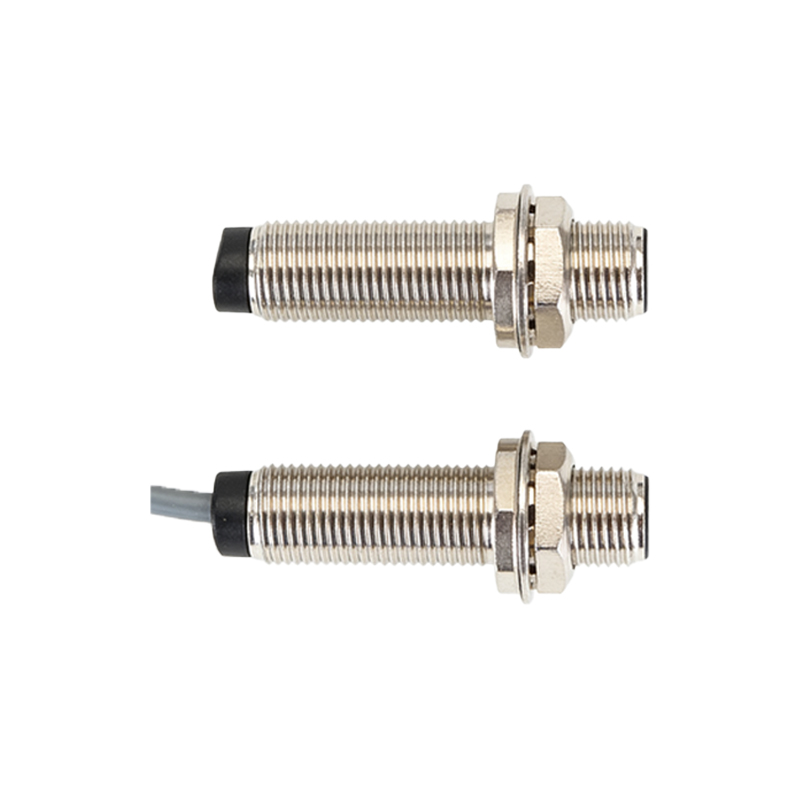
The mechanical housing is critical for performance. The slot width and depth are determined by the target object size and required sensing distance. The housing material, often ABS or polycarbonate, must provide structural rigidity and protect the internal components from dust, debris, and mechanical impact. Optical design involves precisely aligning the transmitter and receiver lenses across the slot. Lenses are used to collimate the emitted light into a narrow, focused beam, increasing sensing precision and range. Conversely, the receiver lens collects the incoming light efficiently. Baffles or internal ridges within the slot can be designed to minimize internal reflections and crosstalk. The slot's interior is often matte black to absorb stray light. For harsh environments, the design may include IP67-rated sealing to protect against water and oil ingress.
Prototype Assembly and Calibration
A prototype was assembled on a printed circuit board (PCB) with separate sections for the transmitter and receiver circuits to minimize interference. Surface-mount devices (SMDs) were used for compactness. After soldering, the PCB was securely mounted inside the custom-designed 3D-printed housing. Initial power-up tests verified the LED emission and basic phototransistor response. Calibration involved two main steps. First, the comparator's reference voltage was adjusted using a potentiometer to set the precise trip point when the beam was unobstructed, ensuring a stable HIGH output. Second, the hysteresis width of the comparator was tuned. A wider hysteresis prevents output chatter when an object partially blocks the beam or in the presence of minor signal fluctuations, enhancing noise immunity and reliability in real-world conditions.
Experimental Testing Methodology
A comprehensive test bench was established to evaluate the sensor's performance against key specifications. Tests included: 1) Response Time: Measured using an oscilloscope by passing a fast-moving opaque flag through the slot and monitoring the output signal's rise/fall time. 2) Sensing Repeatability: An automated actuator repeatedly passed a standard test object through the slot at a fixed speed for hundreds of cycles while logging the output consistency. 3) Ambient Light Immunity: The sensor was subjected to strong, direct illumination from an incandescent lamp and fluorescent light while checking for false triggering. 4) Maximum Sensing Distance/Slot Depth: The maximum reliable gap between the emitter and receiver was determined by gradually increasing the distance until the output failed to register a clear state change. 5) Material Dependency: Objects of different materials (metal, plastic, glass, cardboard) and colors (black, white, reflective) were tested to assess detection capability variations.
Experimental Results and Data Analysis
The experimental data confirmed the design's efficacy. The sensor demonstrated a rapid response time of less than 1 millisecond, suitable for high-speed counting applications. Repeatability tests showed a 100% detection rate over 5000 cycles with no missed counts or false triggers, indicating high reliability. The modulated light system proved highly resistant to ambient light; no false outputs were recorded even under direct 1000-lux lighting. The effective sensing range (slot depth) achieved was 15mm, aligning with the design target for this prototype. As expected, material testing revealed variations. Opaque objects like metal and black plastic were detected flawlessly. Translucent materials caused a partial signal drop, which could still trigger the comparator depending on the hysteresis setting. Highly reflective surfaces sometimes caused erratic behavior due to internal reflections, a known challenge for this sensor type.
Discussion of Challenges and Optimization
Several challenges were encountered and addressed. Initial prototypes suffered from instability due to power supply noise, which was mitigated by adding decoupling capacitors near the ICs. The first housing design allowed external light to leak into the slot, causing false triggers; this was solved by improving the seal and adding light baffles. The detection of reflective objects remained a minor issue. Potential optimizations identified include: implementing a dual-modulation frequency for advanced noise rejection, using a lens with a narrower beam angle for increased precision over longer ranges, and integrating a microcontroller to allow for programmable sensitivity and output modes (e.g., NPN/PNP, analog output proportional to light intensity). These features would enhance versatility for different application scenarios.
Conclusion and Application Outlook
In conclusion, the designed slot-type photoelectric sensor successfully met the core requirements of fast, reliable, and noise-immune object detection. The integration of modulated infrared light, careful optical alignment, and a comparator with adjustable hysteresis resulted in a robust industrial-grade sensor. The experimental data validates its performance in controlled conditions. The primary applications for such a sensor are vast, including paper detection in printers, bottle cap counting on production lines, limit switching in automated machinery, and rotary encoder disk interruption. Future work will focus on miniaturizing the design, extending the sensing range, and developing a family of sensors with different slot sizes and output configurations to cater to a broader spectrum of industrial automation challenges.