Introduction to Proximity Sensing in Conveyor Systems
In the automated world of material handling, conveyor belts are the arteries of production and logistics. Ensuring their smooth, efficient, and safe operation is paramount. This is where proximity switch sensors, often simply called proximity sensors, play a critical role. These non-contact electronic devices are the silent sentinels of the conveyor line, detecting the presence or absence of objects without any physical touch. They provide essential feedback to the Programmable Logic Controller (PLC) or control system, enabling precise automation, sequencing, and safety interlocks. From detecting jams and counting packages to positioning items for robotic pick-and-place, proximity sensors are indispensable for modern, high-speed conveyor applications.
Core Operating Principle: Inductive and Capacitive Technologies
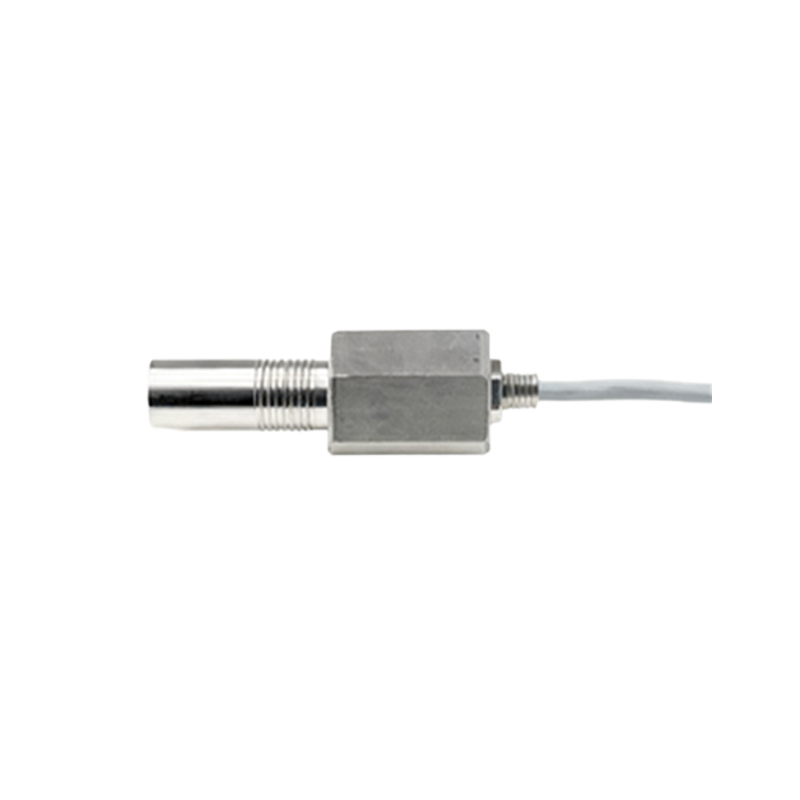
The term "proximity switch sensor" encompasses several technologies, but the two most prevalent in conveyor applications are inductive and capacitive sensors. An inductive proximity sensor generates an oscillating electromagnetic field from its sensing face. When a metallic object (the target) enters this field, it induces eddy currents on the metal's surface. These currents absorb energy from the oscillator, causing its amplitude to decrease. This change is detected by the sensor's circuitry, which then triggers a solid-state switch to change state (e.g., from OFF to ON), sending a signal to the controller. This makes inductive sensors ideal for detecting metal parts, machine components, or metal flags on conveyor chains.
Capacitive proximity sensors, on the other hand, can detect both metallic and non-metallic materials like plastic, wood, glass, or liquids. They operate by generating an electrostatic field. Any object that enters this field alters the capacitance of the sensor's circuit. The sensor monitors this capacitance change, and once it exceeds a preset threshold, the output switch is activated. On conveyors, capacitive sensors are perfect for detecting filled boxes, bottles, or bulk materials where the target is non-metallic.
Key Components and Internal Circuitry
Internally, a typical proximity sensor consists of several key components. The core is the oscillator circuit that generates the high-frequency field. The detection circuit monitors the oscillator's condition (amplitude for inductive, frequency/capacitance for capacitive). A trigger circuit determines the exact point at which the detected change is significant enough to be considered a valid target detection. Finally, an output amplifier drives the solid-state switch, which is usually an NPN or PNP transistor providing a digital signal. The entire assembly is housed in a rugged, often cylindrical metal or polymer body designed to withstand industrial environments, including vibration, moisture, and temperature variations common around conveyor systems.
Application on Conveyor Belts: Positioning and Control
On a conveyor belt, proximity sensors are strategically mounted along the frame. A common application is for position verification. For instance, a sensor can be placed at the end of a conveyor section to confirm a package has been transferred to the next section. Another sensor might be used to detect when a product reaches a specific point for a downstream operation, like labeling or sorting. By providing this precise positional data, the control system can accurately sequence operations, prevent collisions, and ensure smooth material flow. They are also used for zero-speed detection by monitoring a rotating shaft or a gear attached to the conveyor roller; if the rotation stops, the sensor fails to detect the passing teeth, signaling a potential belt slip or stall.
Application on Conveyor Belts: Safety and Counting
Safety is another crucial function. Sensors can be used as interlock devices. For example, a sensor might monitor a guard door; if the door is opened while the conveyor is running, the sensor's signal change can command an immediate stop. They are also employed in anti-jamming systems. Sensors placed at critical points can detect a pile-up of items, triggering an alarm or stopping the conveyor to prevent damage. Furthermore, proximity sensors are excellent for simple counting tasks. Each time a product passes the sensor, it generates a pulse. The PLC can count these pulses to track production volume, manage inventory, or control batch sizes.
Installation Considerations and Best Practices
Proper installation is critical for reliable operation. The sensing distance, specified by the manufacturer, must be respected. Factors like target material, size, and shape affect the actual usable range. For inductive sensors, the sensing distance is reduced for non-ferrous metals like aluminum compared to steel. Mounting stability is vital to prevent false triggers from vibration. Sensors should also be positioned to avoid sensing the conveyor belt itself unless it is the intended target. Environmental factors like dust, chips, or coolant mist can affect performance, necessitating sensors with appropriate ingress protection (IP) ratings. Regular maintenance