Introduction to 4-Wire Proximity Sensors
In the realm of industrial automation, proximity sensors are indispensable for non-contact object detection. Among the various configurations, the 4-wire proximity sensor stands out for its versatility and straightforward integration. Unlike their 2-wire or 3-wire counterparts, 4-wire sensors provide distinct, isolated connections for power supply and load switching. This design offers significant advantages in terms of wiring clarity, output configuration flexibility, and compatibility with a wider range of control systems. Typically, these sensors are available in two primary output types: NPN (sinking) and PNP (sourcing), and can feature either Normally Open (NO) or Normally Closed (NC) switching logic. Understanding their wiring and operational principles is crucial for engineers and technicians to ensure reliable system performance.
Wiring Configuration and Color Codes
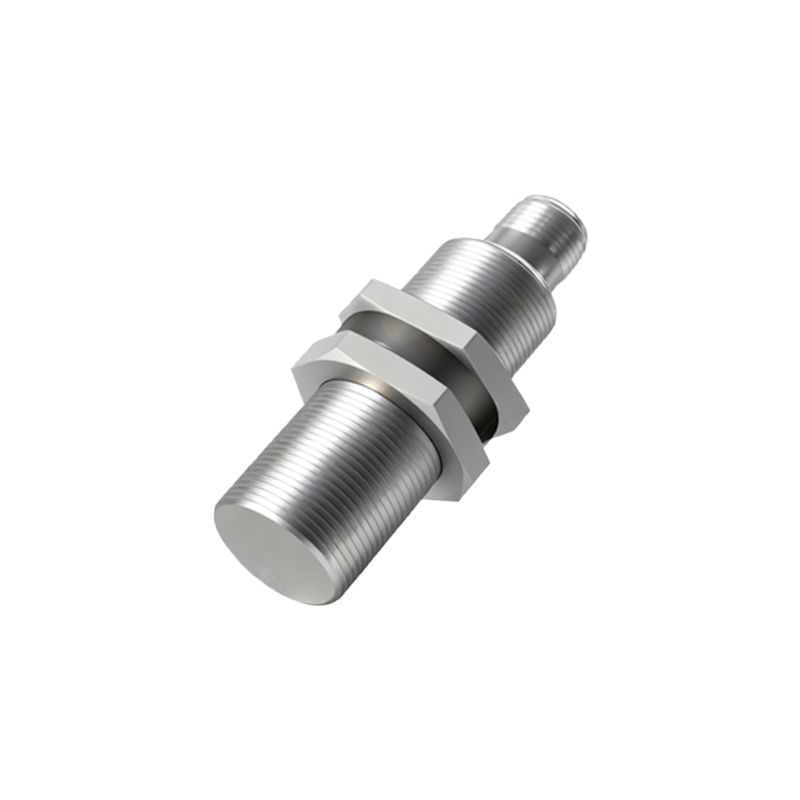
The four wires of these sensors are color-coded according to international standards to facilitate correct installation. While colors can vary slightly by manufacturer, the most common convention is: Brown wire for the positive DC supply voltage (typically +10 to +30 VDC), Blue wire for the common negative or 0V DC supply, Black wire for the switched output signal (load connection), and White wire, which often serves as a complementary output or a second switched channel. In a standard setup, the brown and blue wires are connected directly to the power source. The black wire carries the output signal to the load (such as a PLC input, relay, or indicator), which is then connected back to the power supply's positive or negative rail, depending on whether it is a PNP or NPN sensor. The white wire's function must be verified in the datasheet, as it can be an independent output, an inverted output, or a diagnostic signal.
PNP vs. NPN Output Types
A fundamental aspect of 4-wire sensors is the choice between PNP and NPN output transistors. This distinction determines how the sensor interfaces with the controller. A PNP (sourcing) sensor switches the positive voltage to the load. When an object is detected, the internal transistor connects the black output wire to the positive supply (brown wire), sourcing current to the load. Conversely, an NPN (sinking) sensor switches the negative or ground path. Upon detection, it connects the black output wire to the common negative (blue wire), sinking current from the load. The selection between PNP and NPN is critical and depends on the input circuitry of the programmable logic controller (PLC) or other receiving device. Many modern systems can accept both, but traditional sourcing PLC inputs require PNP sensors, while sinking inputs require NPN sensors.
Normally Open and Normally Closed Operation
Beyond the output transistor type, 4-wire proximity sensors offer a choice of switching logic: Normally Open (NO) or Normally Closed (NC). A Normally Open sensor does not conduct in its idle state (no target present). When a metal object enters its sensing range, the circuit closes, allowing current to flow through the output. A Normally Closed sensor operates inversely; it conducts in the idle state and opens the circuit upon detection. The NC configuration is often used in safety-critical applications where a wire break or power loss should trigger an alarm state. Some advanced 4-wire sensors feature a selectable NO/NC function via a built-in switch or by utilizing both the black and white wires, providing exceptional flexibility for different application requirements without changing the physical sensor.
Key Advantages and Benefits
The 4-wire design offers several compelling benefits. Firstly, the separation of power and output circuits eliminates leakage current issues common in 2-wire AC/DC sensors, ensuring a crisp, clean switching signal with minimal voltage drop. This leads to higher reliability and longer operational life. Secondly, the availability of a complementary output (often on the white wire) allows for more complex control logic, such as dual-channel safety circuits or simple on/off indications from a single sensor. Furthermore, these sensors generally have a wider operating voltage range and better protection against reverse polarity and short circuits. Their standardized wiring simplifies troubleshooting and maintenance, reducing downtime in industrial settings.
Common Industrial Applications
Four-wire proximity sensors find extensive use across diverse industries due to their robustness and precision. In automotive manufacturing, they are employed for part presence verification on assembly lines, robotic arm positioning, and end-of-travel detection. In packaging machinery, they detect product position on conveyors, count items, and control fill levels. Material handling systems utilize them for pallet positioning, stack height control, and door status monitoring. Their ability to interface seamlessly with PLCs and PACs makes them ideal for