Introduction to Photoelectric Sensor Advancements
The photoelectric sensor industry is undergoing a transformative phase, driven by rapid technological innovations and increasing demand for automation across various sectors. These sensors, which detect the presence, absence, or distance of objects using light beams, have become indispensable in manufacturing, logistics, and robotics. Recent developments focus on enhancing accuracy, reliability, and integration capabilities, enabling smarter and more efficient systems. As industries embrace Industry 4.0 and the Internet of Things (IoT), photoelectric sensors are evolving to meet the challenges of complex environments, offering solutions that reduce downtime and improve operational efficiency. This article explores the latest trends and breakthroughs in photoelectric sensor technology, highlighting key applications and future prospects.
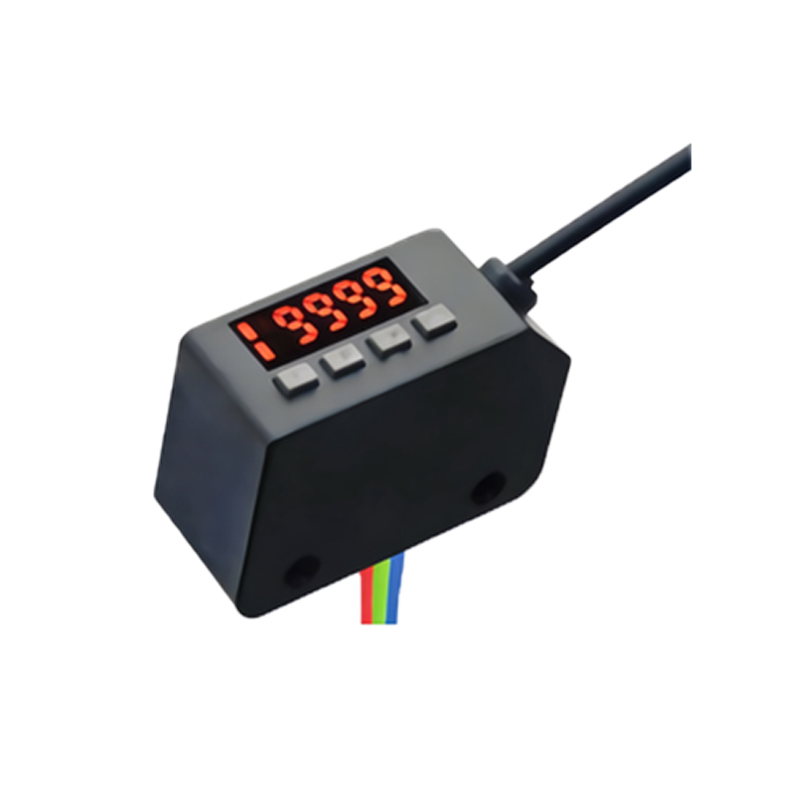
Enhanced Sensing Range and Precision
One of the most significant advancements in photoelectric sensors is the improvement in sensing range and precision. Modern sensors now feature extended detection distances, with some models capable of sensing objects up to several meters away with millimeter-level accuracy. This is achieved through innovations in laser diode technology and advanced optics, which provide sharper and more focused light beams. For instance, time-of-flight (ToF) sensors have gained popularity for their ability to measure distance by calculating the time it takes for light to reflect off an object. These sensors are particularly useful in applications requiring high precision, such as automated guided vehicles (AGVs) and quality control systems. Additionally, background suppression technology allows sensors to ignore irrelevant objects, reducing false triggers and enhancing reliability in dynamic settings.
Integration with IoT and Smart Systems
The integration of photoelectric sensors with IoT platforms is revolutionizing industrial automation. Today's sensors are equipped with communication protocols like IO-Link, Ethernet/IP, and PROFINET, enabling seamless data exchange with central control systems. This connectivity allows for real-time monitoring and predictive maintenance, where sensors can alert operators to potential issues before they cause failures. For example, in smart factories, photoelectric sensors collect data on production line performance, which is analyzed to optimize processes and reduce waste. Moreover, the adoption of wireless sensor networks eliminates the need for complex wiring, simplifying installation and reducing costs. As a result, businesses can achieve greater flexibility and scalability in their operations, adapting quickly to changing demands.
Miniaturization and Robust Design
Miniaturization is another key trend in photoelectric sensor development. Compact sensors with robust designs are now available, making them suitable for space-constrained applications without compromising performance. These smaller sensors often incorporate durable materials and IP-rated enclosures, ensuring resistance to harsh conditions like dust, moisture, and extreme temperatures. In industries such as food processing or pharmaceuticals, where hygiene is critical, sensors with stainless steel housings and washdown capabilities are becoming standard. Furthermore, advancements in energy-efficient components have led to lower power consumption, extending battery life in wireless models. This combination of size reduction and durability enables photoelectric sensors to thrive in demanding environments, from outdoor logistics to cleanroom settings.
Advanced Features for Complex Applications
Photoelectric sensors are now equipped with advanced features to handle complex tasks. For instance, color recognition sensors can differentiate between objects based on color, which is valuable in sorting and packaging operations. Similarly, contrast sensors detect subtle differences in surface textures, aiding in material identification. Another innovation is the use of multi-functional sensors that combine photoelectric sensing with other technologies, such as ultrasonic or inductive sensing, to provide comprehensive detection solutions. These hybrid sensors are ideal for applications where multiple parameters need to be monitored simultaneously. Additionally, programmable sensors allow users to customize settings via software, adapting to specific requirements without hardware changes. This versatility makes photoelectric sensors more adaptable to diverse industrial challenges.
Future Outlook and Industry Impact
Looking ahead, the future of photoelectric sensors appears promising, with ongoing research focused on artificial intelligence (AI) and machine learning integration. AI-powered sensors could learn from environmental patterns, improving detection accuracy over time and enabling autonomous decision-making. Another area of exploration is the use of quantum dot technology to enhance light sensitivity and spectral range. As sustainability becomes a priority, eco-friendly sensor designs with recyclable materials are also emerging. The global market for photoelectric sensors is projected to grow significantly, driven by increased automation in emerging economies and the expansion of smart city initiatives. By staying at the forefront of innovation, these sensors will continue to play a crucial role in shaping efficient and intelligent industrial ecosystems.