Introduction to Photoelectric Sensors in Material Handling
In modern industrial automation, particularly within material handling systems, photoelectric sensors play a pivotal role in detecting the presence or absence of objects on a conveyor line. These sensors operate on the principle of emitting a light beam—often infrared, visible red, or laser—and detecting changes in the received light signal. When an object interrupts or reflects this beam, the sensor sends an electrical signal to a control system. This fundamental function is critical for tasks such as counting, positioning, and ensuring the smooth flow of materials in processes like sorting, packaging, and assembly. Their non-contact nature, high speed, and reliability make them superior to mechanical limit switches in many applications, especially when dealing with fragile items or demanding cycle rates.
Core Principles and Types of Photoelectric Sensors
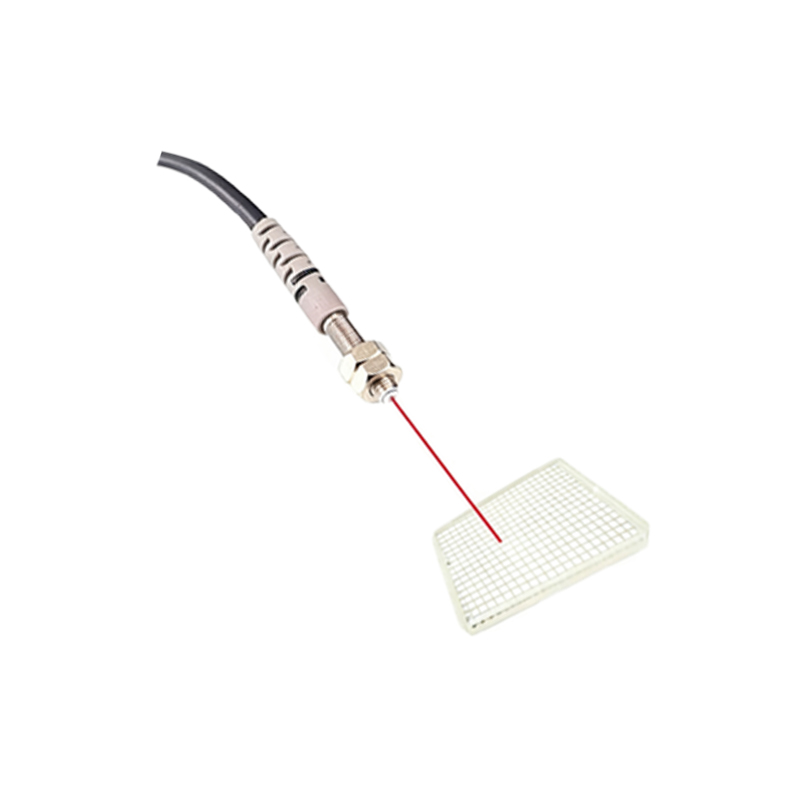
Understanding the operational modes is key to selecting the right sensor. The three primary types are through-beam, retro-reflective, and diffuse reflective. Through-beam sensors consist of separate emitter and receiver units; an object is detected when it breaks the beam between them, offering the longest sensing range and highest reliability. Retro-reflective sensors house both emitter and receiver in one unit, using a reflector to bounce the beam back; detection occurs when the beam is broken. Diffuse reflective sensors also have a single housing but detect light reflected directly off the target object, making them ideal for sensing at shorter ranges without a separate reflector. Each type has its specific advantages depending on factors like sensing distance, target material, color, and environmental conditions.
The Role of the Programmable Logic Controller (PLC)
The photoelectric sensor is the "eye" of the operation, but the Programmable Logic Controller (PLC) is the "brain." A PLC is an industrial digital computer designed for the control of manufacturing processes. It receives input signals from various sensors, including photoelectric devices, processes this data based on a user-written logic program, and then executes output commands to actuators like motors, valves, or alarms. In the context of material handling, a PLC might receive a signal from a photoelectric sensor indicating a part has reached a specific point on a conveyor. The PLC's logic program will then decide the next action—perhaps triggering a pneumatic pusher to divert the item, starting a timer for a machining operation, or incrementing a counter.
Integration and Wiring Considerations
Successful integration of photoelectric sensors with a PLC involves both hardware wiring and software configuration. Typically, sensors have three or four wires: for power supply (e.g., 24V DC), ground, and a switched output signal. This output, often a transistor (NPN or PNP), connects to a discrete input card on the PLC. The choice between NPN (sinking) and PNP (sourcing) outputs must match the PLC input module's specifications. Environmental factors such as ambient light, dust, vibration, and electrical noise must be considered during installation. Proper shielding, alignment, and choosing sensors with suitable ingress protection (IP) ratings are essential for reliable operation in harsh industrial environments.
Programming Logic for Material Handling Control
Within the PLC programming software (using languages like Ladder Logic, Function Block Diagram, or Structured Text), the input from the photoelectric sensor is treated as a discrete (on/off) condition. A simple ladder logic rung might use this input to latch a memory bit, start a timer, or trigger an output coil. For example, a program for a sorting system could use a through-beam sensor's signal to initiate a high-speed counter. When the count reaches a preset value, the PLC energizes a solenoid to divert every tenth box. More advanced applications might involve using the sensor's signal in conjunction with encoder feedback for precise positional control, creating a coordinated and efficient automated system.
Advanced Applications and System Diagnostics
Beyond basic detection, modern photoelectric sensors offer advanced features that enhance system capabilities. Background suppression sensors can accurately detect objects regardless of color or reflectivity by measuring the angle of the reflected light. Color sensors can differentiate between items based on hue. Fiber optic sensors allow detection in extremely tight spaces or high-temperature zones. From the PLC perspective, these sensors provide critical data for complex control algorithms. Furthermore, many contemporary sensors and PLCs support industrial network protocols like Ethernet/IP or PROFINET, enabling not just control but also rich diagnostic data. The PLC can monitor sensor health, signal strength, and operational status, facilitating predictive maintenance and reducing downtime.
Conclusion: Synergy for Efficiency and Reliability
The combination of photoelectric sensors and PLCs forms the backbone of automated material handling. The sensor provides accurate, real-time data about the physical process, while the PLC offers the flexible, programmable intelligence to make decisions and control machinery. This synergy leads to systems that are not only highly efficient and repeatable but also adaptable to changing production needs. Proper selection, integration, and programming of these components are fundamental skills for control engineers, directly impacting throughput, quality, and overall operational effectiveness in modern industrial facilities.