Introduction to Core Components in Modern Electronics
In the realm of electrical engineering and industrial automation, two fundamental components frequently encountered are microcontrollers and photoelectric sensors. While both are integral to countless electronic systems, they serve vastly different purposes and operate on distinct principles. A microcontroller is a compact integrated circuit designed to govern a specific operation in an embedded system, essentially acting as the "brain" of a device. In contrast, a photoelectric sensor is an input device that detects the presence, absence, or distance of an object using a light transmitter and receiver. Understanding their differences is crucial for engineers designing control systems, automation solutions, and smart devices.
Fundamental Operational Principles
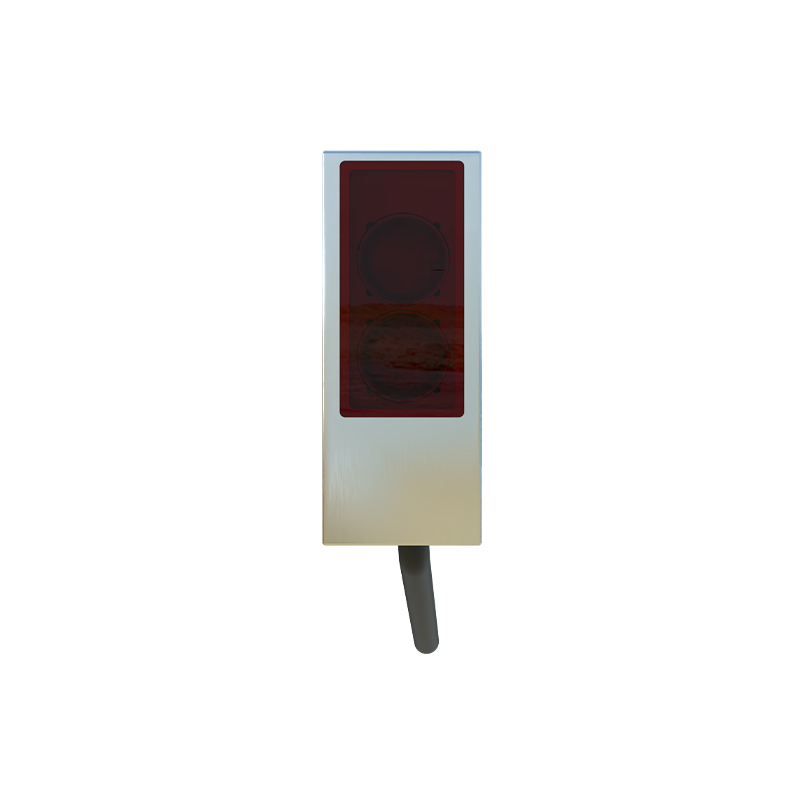
The core operational principle of a microcontroller is digital data processing and control execution. It is a programmable chip containing a processor core, memory (both volatile and non-volatile), and programmable input/output peripherals. It executes instructions from a stored program to perform arithmetic, logic, control, and input/output operations. A photoelectric sensor, however, operates on an electro-optical principle. It typically consists of an emitter (like an LED or laser diode) that projects a light beam and a receiver (a phototransistor or photodiode) that detects the light. Changes in the received light signal—such as interruption, reflection, or modulation—are converted into an electrical output signal, indicating an event.
Primary Function and Role in a System
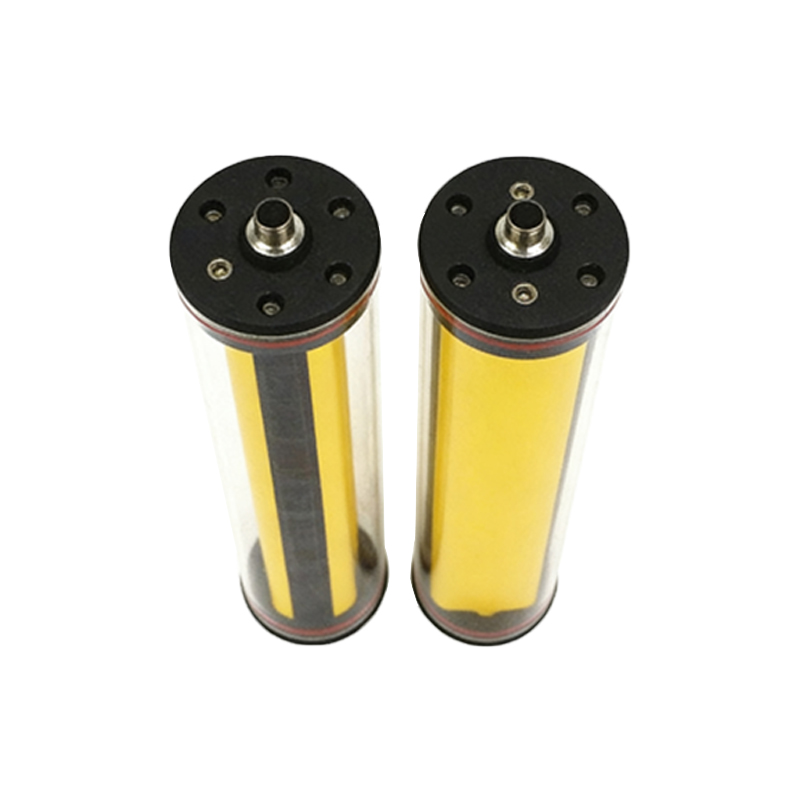
The primary function of a microcontroller is computation and decision-making. It processes input data from various sensors (including photoelectric sensors), executes logic based on its programmed firmware, and generates output signals to control actuators, displays, or other components. It is the central processing unit of an embedded system. Conversely, the sole function of a photoelectric sensor is to provide a specific type of input data: information about an object's presence, position, or characteristics based on light interaction. It is a peripheral device that feeds raw data to a controller like a microcontroller, PLC, or computer.
Internal Architecture and Complexity
Architecturally, a microcontroller is highly complex. It integrates a microprocessor (CPU), RAM for temporary data, ROM/Flash for program storage, timers, serial communication interfaces (UART, I2C, SPI), and general-purpose I/O pins on a single chip. Modern microcontrollers can run real-time operating systems and handle complex algorithms. A photoelectric sensor's architecture is comparatively simpler and application-specific. It contains optical components, a light source, a photodetector, signal conditioning circuitry (amplifiers, filters), and an output stage (often a transistor switch or analog output). Its "intelligence" is typically limited to basic signal processing for reliability.
Programming and Configuration
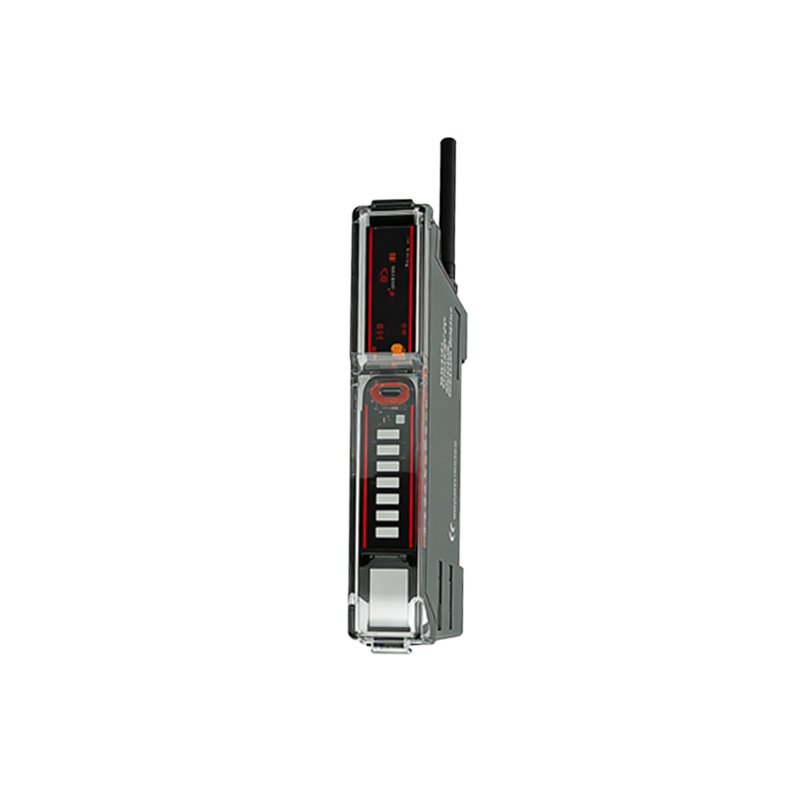
A defining characteristic of a microcontroller is that it must be programmed. Engineers write software code in languages like C, C++, or Arduino-specific sketches, compile it, and upload it to the microcontroller's memory. This program defines its behavior. Photoelectric sensors are generally not user-programmable in the same sense. They are configured or tuned via physical controls (like potentiometers for sensitivity adjustment) or digital interfaces for setting parameters like response time or output mode (light/dark on). Their core detection logic is fixed by hardware design.
Output Type and Data Format
The output from a microcontroller is diverse and programmable. It can be digital signals (high/low), Pulse-Width Modulation (PWM) waves, serial data packets, or analog voltages via DAC. It outputs commands and processed information. A photoelectric sensor typically provides a simple, discrete output. The most common is a binary digital switch signal (NPN/PNP transistor output) indicating object detected/not detected. Some advanced models provide analog outputs (0-10V, 4-20mA) proportional to distance or light intensity, but the data is a direct representation of the sensed physical quantity, not a computed result.
Typical Applications in Industry
Microcontrollers are ubiquitous, found inside devices requiring automated control: home appliances, automotive engine control units, medical devices, robotics, and consumer electronics. They manage user interfaces, motor control, sensor networks, and communication. Photoelectric sensors are applied in scenarios requiring non-contact object detection. Common applications include counting objects on a conveyor belt, detecting label presence on packaging, determining precise positioning in assembly machines, monitoring fill levels in containers, and ensuring safety in automated doors or hazard zones.
Interdependence in a Complete System
In a typical automated system, these components work in tandem. Multiple photoelectric sensors act as the "eyes," providing real-time status information about the physical environment. Their output signals are fed into the input ports of a microcontroller (or a larger PLC). The microcontroller, acting as the "brain," processes this data according to its program. It then makes decisions and sends output signals to "muscles" like motors, solenoids, or alarms to perform actions. One cannot replace the other; they are complementary technologies serving different layers of a control system hierarchy.
Key Selection Criteria for Engineers
When selecting a microcontroller, engineers consider computational power (bit-size, clock speed), memory size, number and type of I/O peripherals, power consumption, and software ecosystem. For photoelectric sensors, key criteria include sensing mode (through-beam, retro-reflective, diffuse), sensing range, light source type (visible red, laser, infrared), output type, response speed, environmental durability (IP rating), and housing style. The choice is driven by the specific sensing need and the interface requirements of the controlling unit.
Conclusion: Complementary Technologies
In summary, the microcontroller is a versatile, programmable computing device for control and data processing, while the photoelectric sensor is a dedicated, non-contact transducer for object detection via light. The microcontroller executes logic; the sensor provides a specific input. An apt analogy is the human body: the photoelectric sensor is like a sensory organ (e.g., an eye), and the microcontroller is like the brain interpreting the visual signals and coordinating a response. Both are indispensable in modern electrical engineering, each excelling in its specialized domain within the broader architecture of automated and intelligent systems.