Introduction to Infrared Photoelectric Sensing Technology
Infrared photoelectric sensor chips represent a cornerstone technology in modern industrial automation, consumer electronics, and safety systems. These sophisticated semiconductor devices operate by detecting changes in infrared light, which is invisible to the human eye. The fundamental principle involves an infrared emitter, typically an IR LED, and a photodetector, such as a phototransistor or photodiode, integrated into a single package or system. When an object interrupts or reflects the emitted IR beam, the detector registers a change in the received light intensity, which is then converted into an electrical signal. This simple yet powerful mechanism enables non-contact detection, measurement, and counting, making it indispensable for applications ranging from object presence sensing in factory assembly lines to proximity detection in smartphones. The evolution of these chips has been driven by demands for higher sensitivity, lower power consumption, and miniaturization, leading to highly integrated solutions that offer remarkable reliability and performance.
Core Components and Working Mechanism
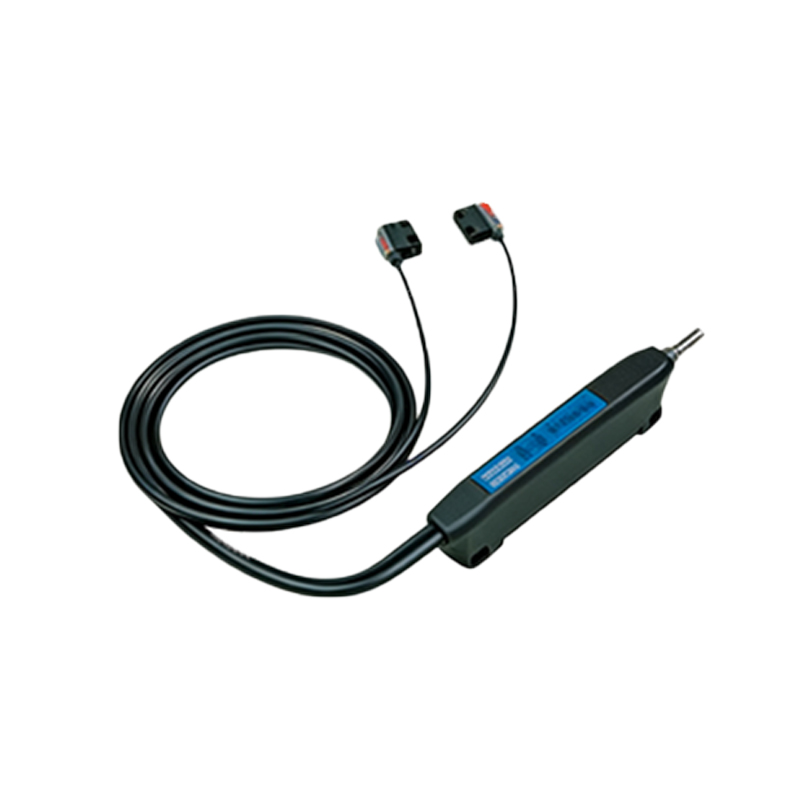
At the heart of an infrared photoelectric sensor chip lies a precise interplay between its emitter and receiver components. The emitter is a light-emitting diode (LED) that produces infrared radiation at a specific wavelength, commonly around 850nm or 940nm. This wavelength is chosen for its optimal balance between performance, cost, and minimal interference from ambient visible light. The receiver, often a silicon-based phototransistor or a PIN photodiode, is designed to be highly sensitive to this specific IR wavelength. Advanced chips incorporate optical filters to block unwanted light and lenses to focus the beam, enhancing signal integrity. The working mechanism can be configured in three primary modes: through-beam, retro-reflective, and diffuse reflective. In through-beam mode, the emitter and receiver face each other, detecting objects that break the beam. Retro-reflective mode uses a reflector to bounce the beam back to a receiver housed with the emitter. Diffuse reflective mode, the most common, relies on the object itself to reflect light back to the receiver. The chip's internal circuitry processes the analog signal from the detector, often including amplification, noise filtering, and digital output conversion.
Key Performance Parameters and Specifications
Selecting the appropriate infrared photoelectric sensor chip requires a deep understanding of its key performance parameters. Sensing distance, or range, is a critical specification, varying from a few millimeters for proximity sensing to several meters for industrial applications. This distance is influenced by the emitter's power, the receiver's sensitivity, and the target object's reflectivity. Response time, another vital parameter, determines how quickly the sensor can detect a change and update its output; high-speed applications demand response times in the microsecond range. Environmental robustness is paramount, with operating temperature ranges typically spanning from -25°C to +70°C or wider for industrial-grade chips. Factors like ambient light immunity, measured in lux, ensure reliable operation under bright sunlight or fluorescent lighting. Modern chips also feature adjustable sensitivity, often via an external potentiometer or digital interface, allowing fine-tuning for specific applications. Power consumption is increasingly important, especially for battery-powered devices, leading to designs with low quiescent current and sleep modes.
Advanced Integration and Smart Features
The trend in infrared photoelectric sensor technology is toward greater integration and intelligence. Modern System-on-Chip (SoC) solutions combine the analog front-end, digital signal processor (DSP), and communication interfaces like I2C or SPI on a single die. This integration enables advanced features such as automatic gain control (AGC), which dynamically adjusts sensitivity to compensate for lens contamination or aging. Background light suppression, a sophisticated algorithm, allows the sensor to distinguish between the modulated IR signal from its own emitter and constant or slowly changing ambient light. Some chips incorporate temperature sensors and compensation circuits to maintain stable performance across varying thermal conditions. For complex sensing tasks, time-of-flight (ToF) variants use modulated IR light to measure distance precisely by calculating the phase shift or time delay of the reflected signal. These smart sensors provide digital, calibrated outputs, simplifying system design and reducing the processing burden on the host microcontroller.
Primary Application Domains and Use Cases
The versatility of infrared photoelectric sensor chips fuels their adoption across diverse sectors. In industrial automation, they are ubiquitous for object detection on conveyor belts, part counting, jam detection, and limit switching in machinery. Their non-contact nature prevents wear and tear, ensuring long-term reliability. The consumer electronics market leverages these chips for touchless interfaces, screen proximity sensing in smartphones and tablets to disable touchscreens during calls, and paper detection in printers. Home appliances, such as automatic soap dispensers, towel dispensers, and faucets, rely on them for hygiene-conscious operation. In the automotive industry, they contribute to safety systems like rain sensors for automatic wipers and obstacle detection for parking assistance. Emerging applications include robotics for navigation and obstacle avoidance, IoT devices for occupancy sensing, and even healthcare equipment for fluid level detection. Each application imposes unique requirements, driving continuous innovation in chip design.
Design Considerations and Implementation Challenges
Successfully implementing an infrared photoelectric sensor chip in an end product requires careful design consideration. Optical design is the first hurdle; the housing must properly align the emitter and receiver lenses while preventing optical crosstalk where emitted light directly leaks into the receiver without reflecting off a target. Material selection for the lens and window is crucial, as plastics must have high transmittance at the IR wavelength used. Electrical design must account for noise immunity, often requiring shielded cables, proper grounding, and decoupling capacitors near the chip's power pins. Environmental factors like dust, fog, or condensation can scatter or absorb IR light, potentially reducing sensing range or causing false triggers; some designs incorporate periodic self-test routines to diagnose such issues. Interference from other IR sources, like sunlight or other sensors, is mitigated through modulation techniques, where the emitter is pulsed at a specific frequency, and the receiver is tuned to detect only that frequency. Thermal management is also important, as excessive heat can shift the emitter's wavelength and degrade performance.
Future Trends and Technological Evolution
The future of infrared photoelectric sensor chips is aligned with broader trends in miniaturization, intelligence, and connectivity. The drive toward smaller form factors, enabled by advanced packaging like wafer-level chip-scale packaging (WLCSP), will allow their integration into increasingly compact devices. Power efficiency will continue to improve, enabling perpetually battery-powered sensors for the Internet of Things (IoT). On the intelligence front, edge computing capabilities will be embedded directly into the sensor chip, allowing for local decision-making, such as classifying object types or detecting specific motion patterns, before sending data to the cloud. Multi-spectral sensing, combining IR with visible light or other wavelengths, will open new application frontiers in material identification and quality inspection. Furthermore, standardization of digital interfaces and communication protocols will simplify system integration and foster the development of smart sensor networks. As machine vision and ambient sensing become more pervasive, the humble infrared photoelectric sensor chip will remain a fundamental, yet continuously evolving, enabling technology.